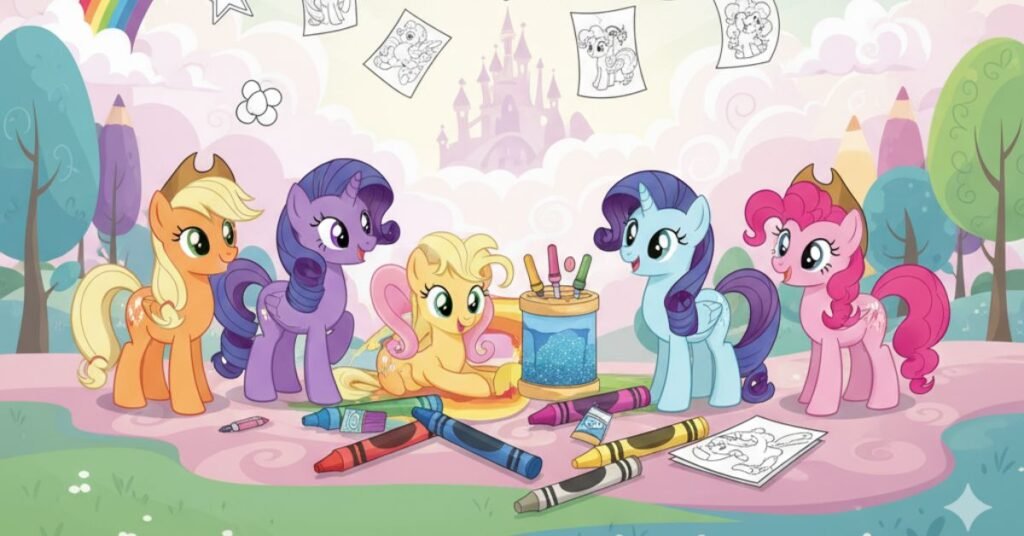
My Little Pony coloring pages give children a flexible way to explore color palettes, character traits, magical settings, and friendship stories. This ten-page collection includes individual ponies, shared adventures, a celebration, a picnic, and a group scene. Each design changes the pose and background so children can choose between a quick character study and a fuller picture with clouds, trees, ribbons, or castle details.
Fans who want to compare animated ponies with more general equine shapes can begin with PintyMinty’s horse coloring pages. The collection below suits home art sessions, party activity tables, classroom storytelling, and projects about cooperation. Children can follow familiar character colors or create an alternate version while keeping the expressions and body language at the center of the scene.
This is an independent editorial collection and is not official or affiliated with Hasbro or any rights holder. Use only artwork that the website owner is permitted to publish.
Plan a Palette Before Starting
Pony characters offer many separate color areas: coat, mane, tail, eyes, wings, horn, clothing, accessories, and background. A child can select three main colors and repeat them in different amounts across the page. Another option is to choose one mood word—cheerful, calm, brave, elegant, or mysterious—and build a palette that expresses it.
A planned palette does not remove creativity. It gives children a simple starting rule, which can make a detailed page feel manageable. Keep one pencil or crayon outside the plan for a surprise accent. That small exception often becomes the feature that draws attention to a ribbon, star, book, balloon, or magical trail.
Ten My Little Pony Coloring Pages
10 Printable My Little Pony Coloring Pages
Choose a design below, open the full-size image, and print it for your coloring activity.
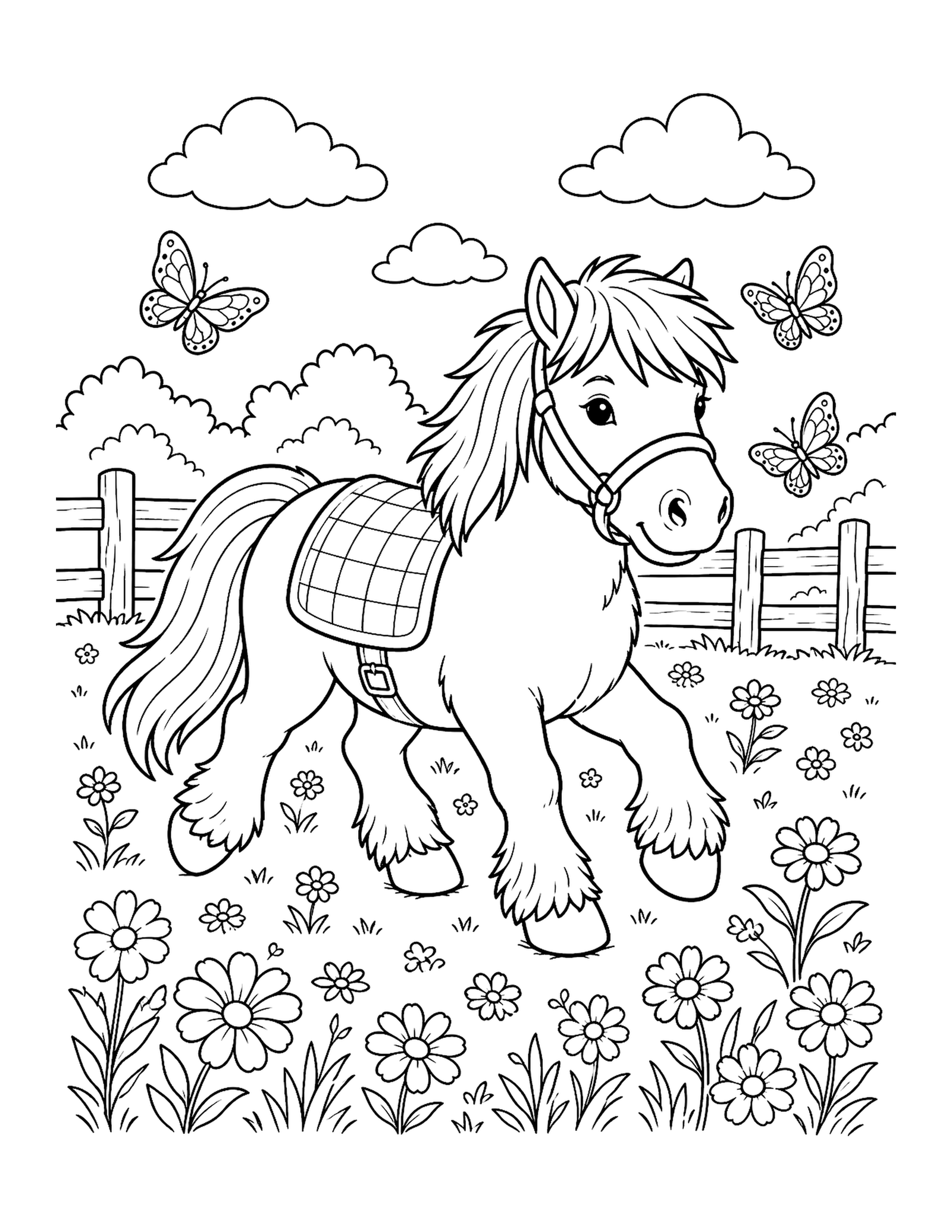
Shetland Pony in a Flower Meadow
A natural-looking pony with a tousled mane and checked saddle blanket trots among flowers and butterflies.
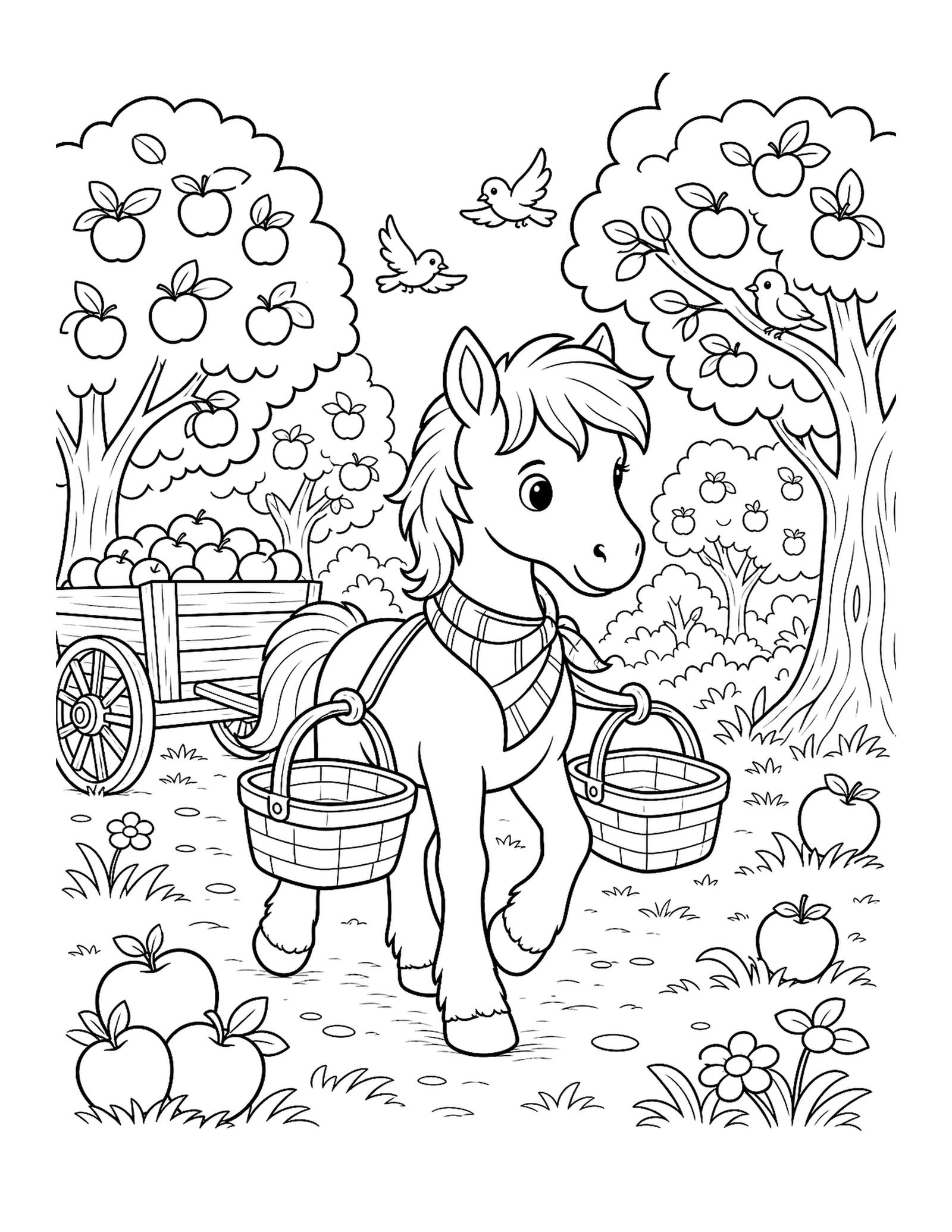
Pony Foal in the Apple Orchard
A slender foal in a striped scarf walks among apple trees, a wagon, and birds.
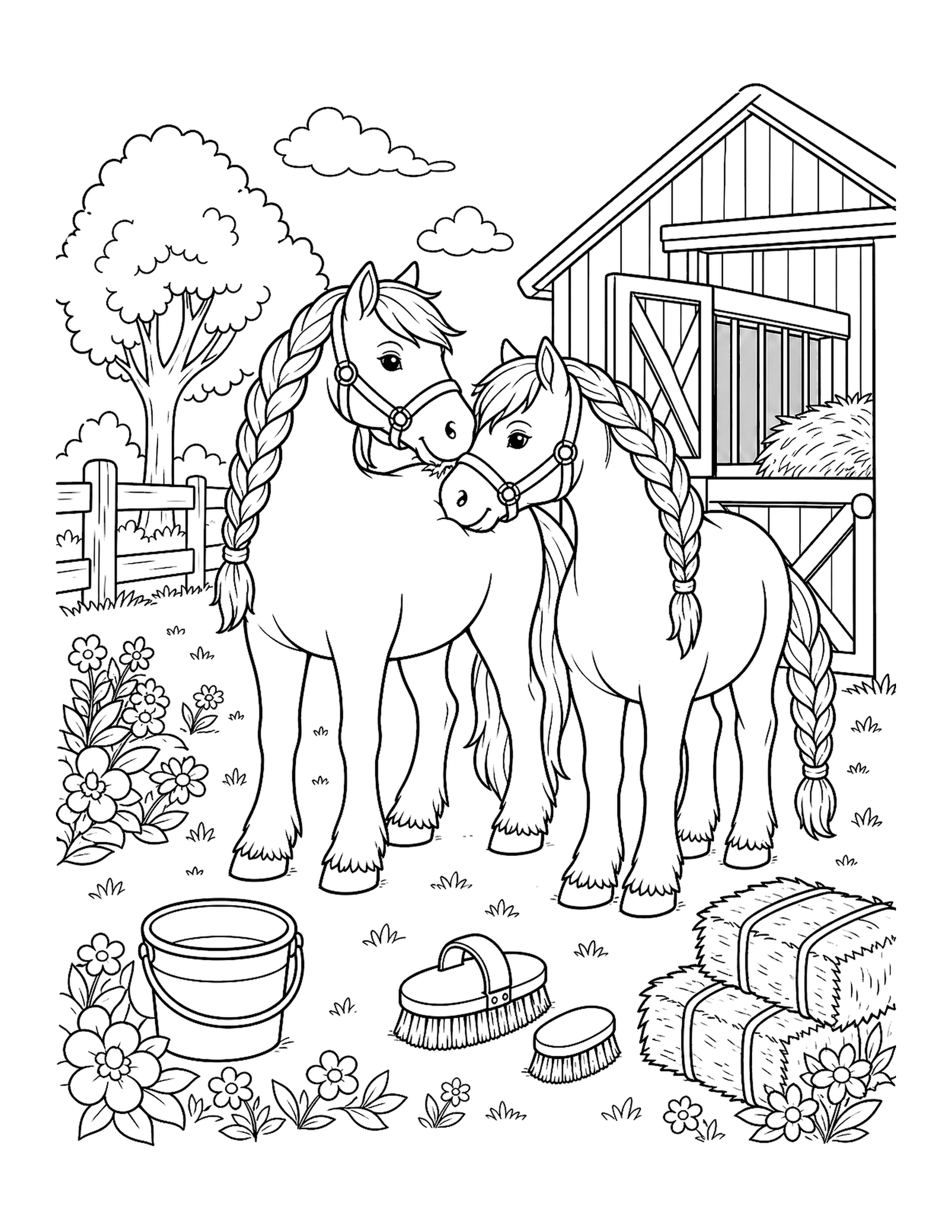
Ponies Groom Beside the Stable
Two naturally proportioned ponies stand together near brushes, a bucket, hay bales, and flowers.
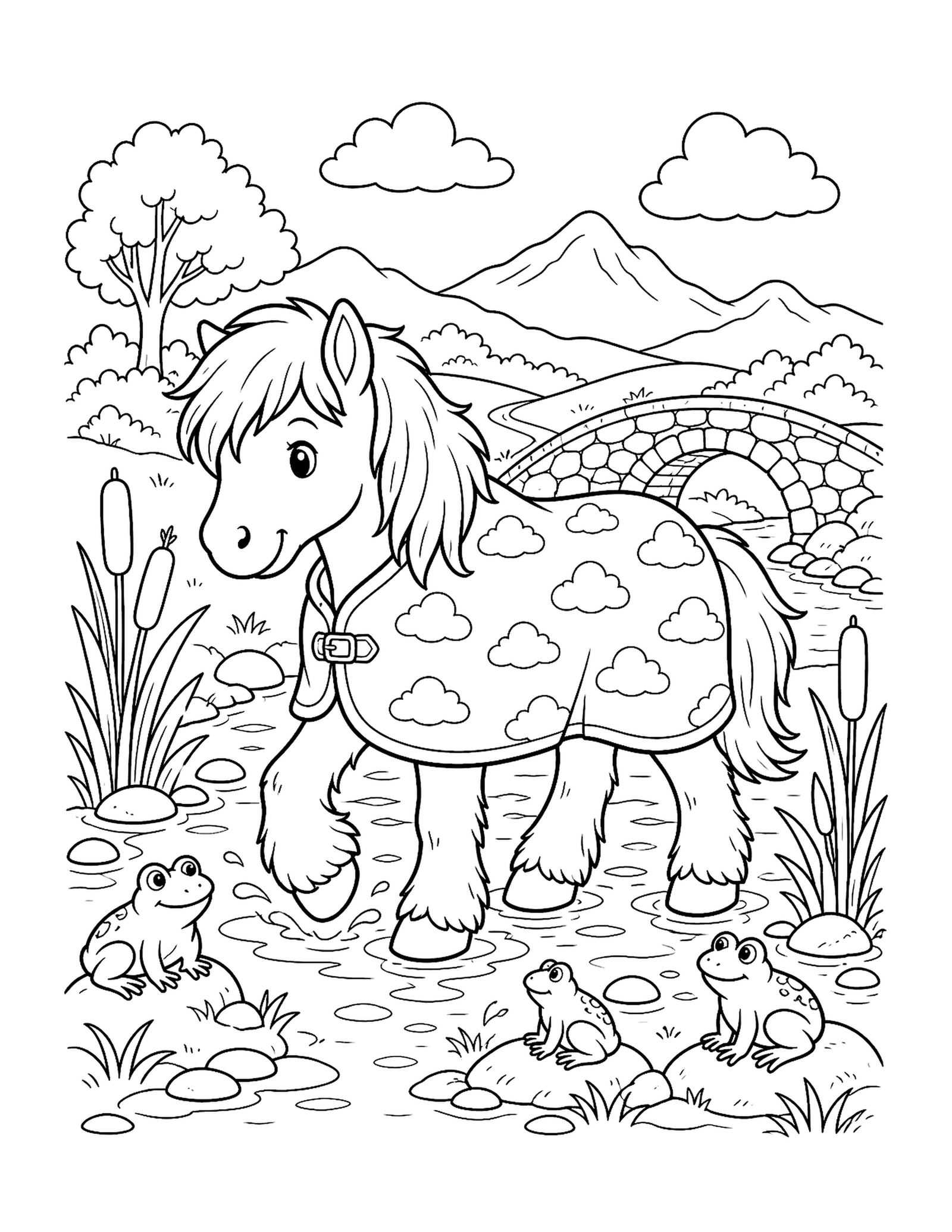
Mountain Pony on a Rainy Day
A sturdy mountain pony explores shallow puddles near frogs, reeds, a stone bridge, and hills.
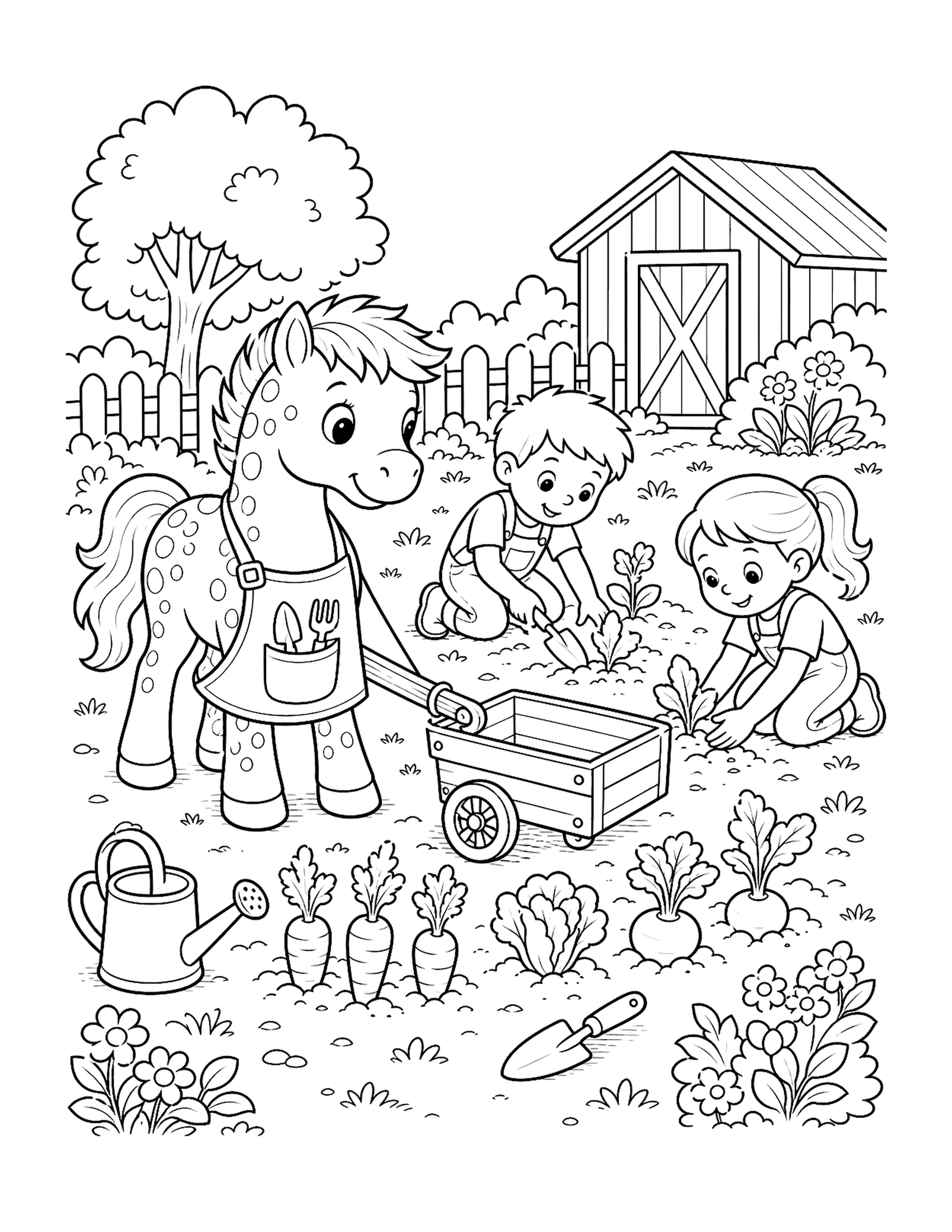
Garden Pony Pulls a Vegetable Cart
A naturally shaped pony in a gardening apron helps children beside raised beds and farm tools.
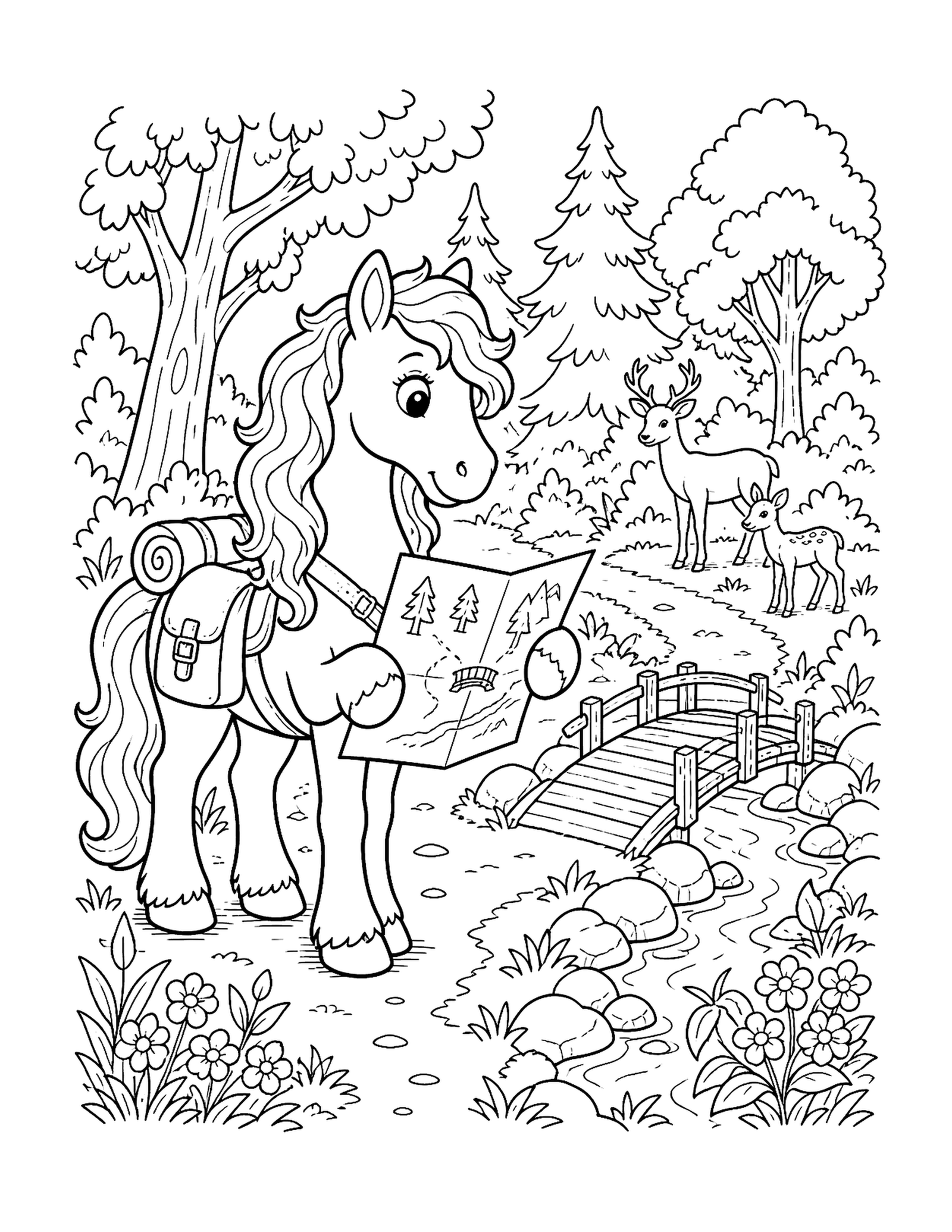
Explorer Pony Follows a Woodland Trail
A long-muzzled pony follows a symbol-only trail map through a peaceful woodland landscape.
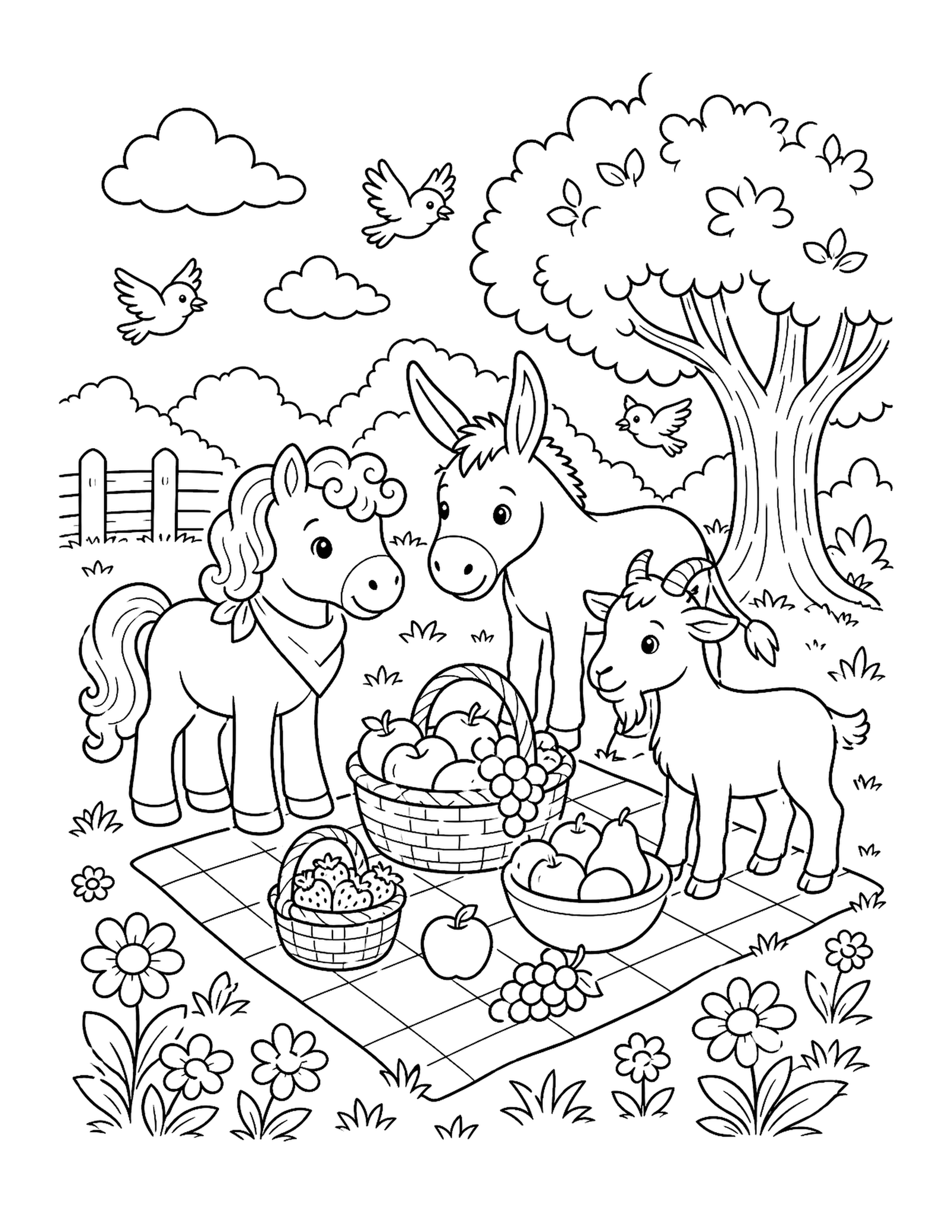
Miniature Pony Shares a Picnic
A curly-forelocked pony shares a friendly outdoor picnic with a donkey and goat.
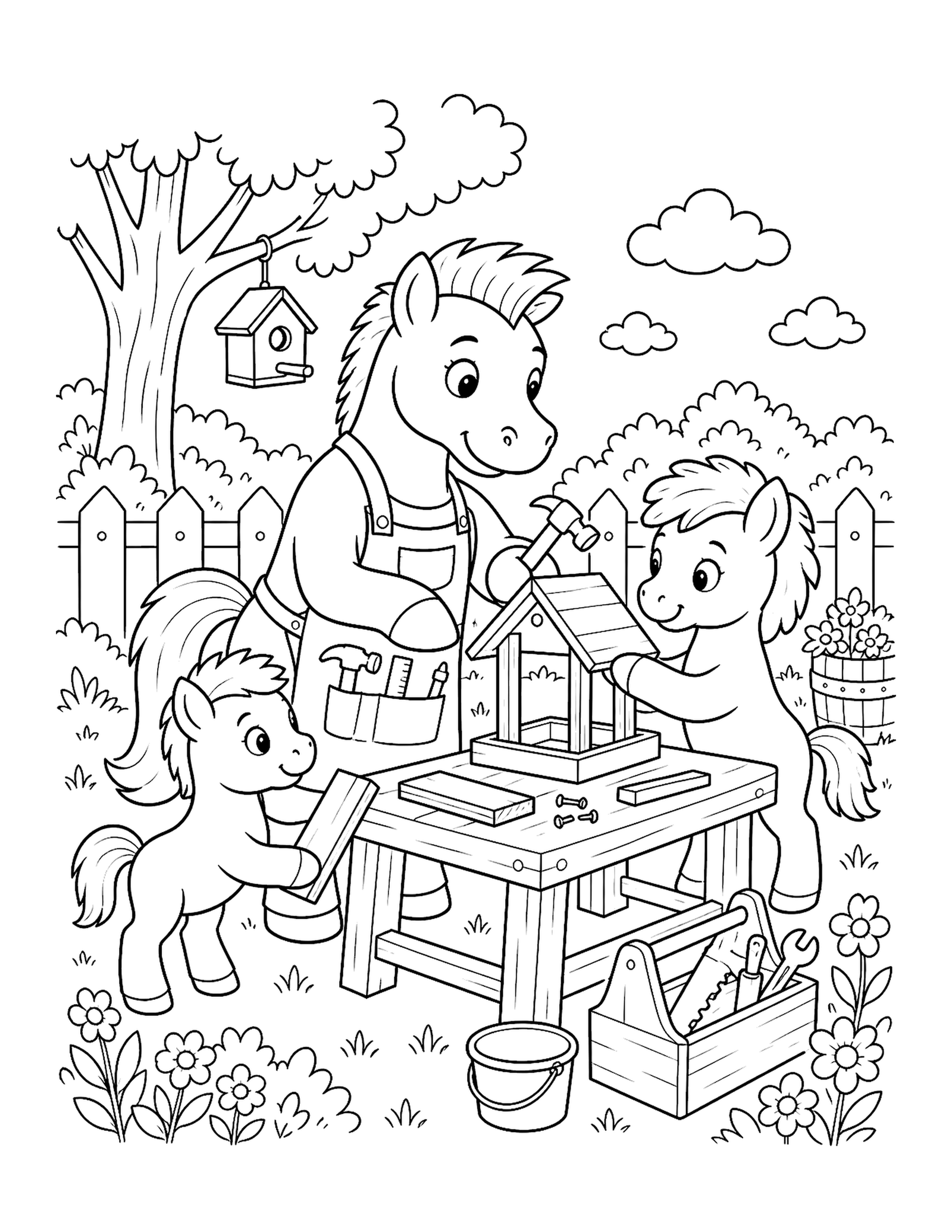
Pony Helps Build a Bird Feeder
A short-maned pony helps children use simple tools safely at an outdoor workbench.
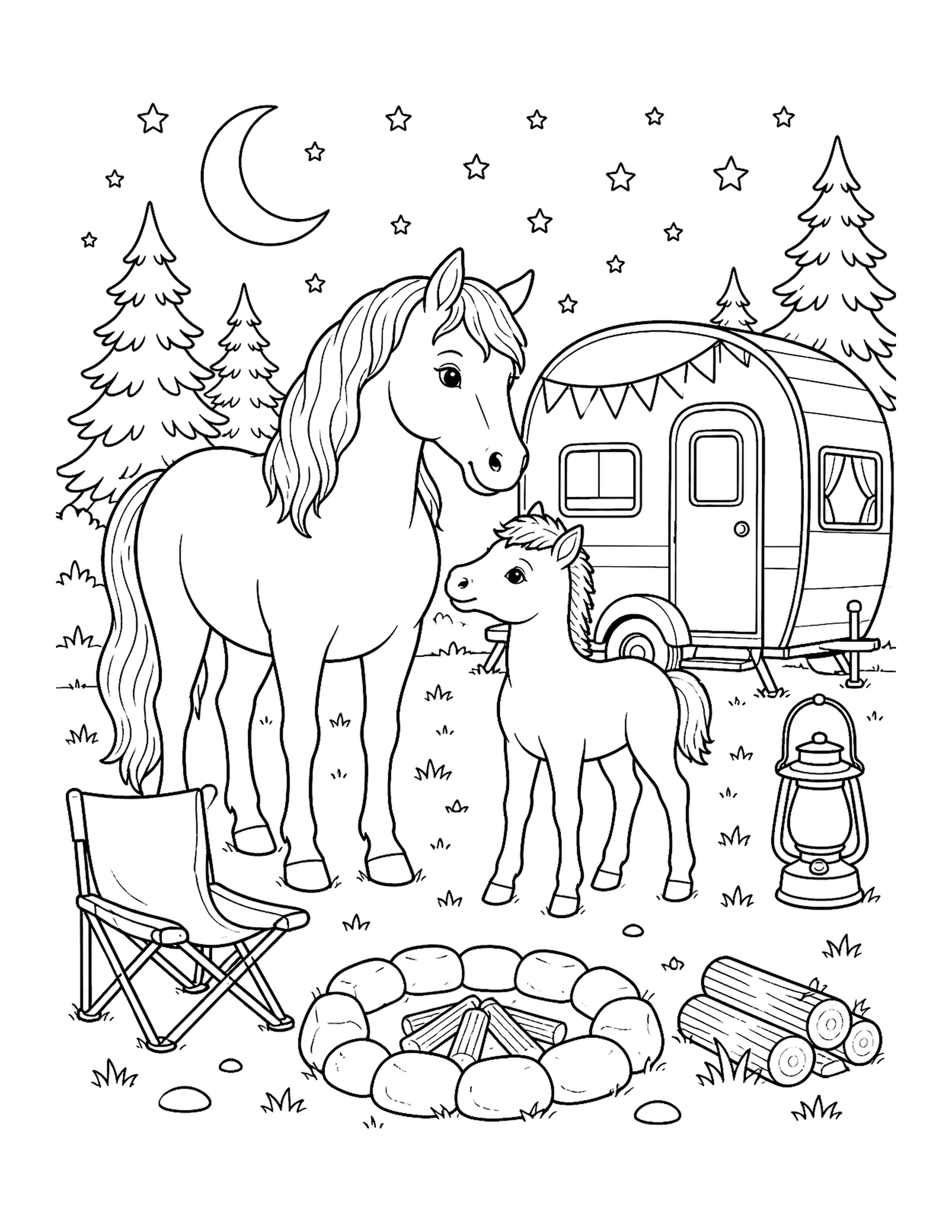
Pony Mare and Foal Go Camping
A naturally proportioned mare and foal enjoy a peaceful campsite beneath the stars.
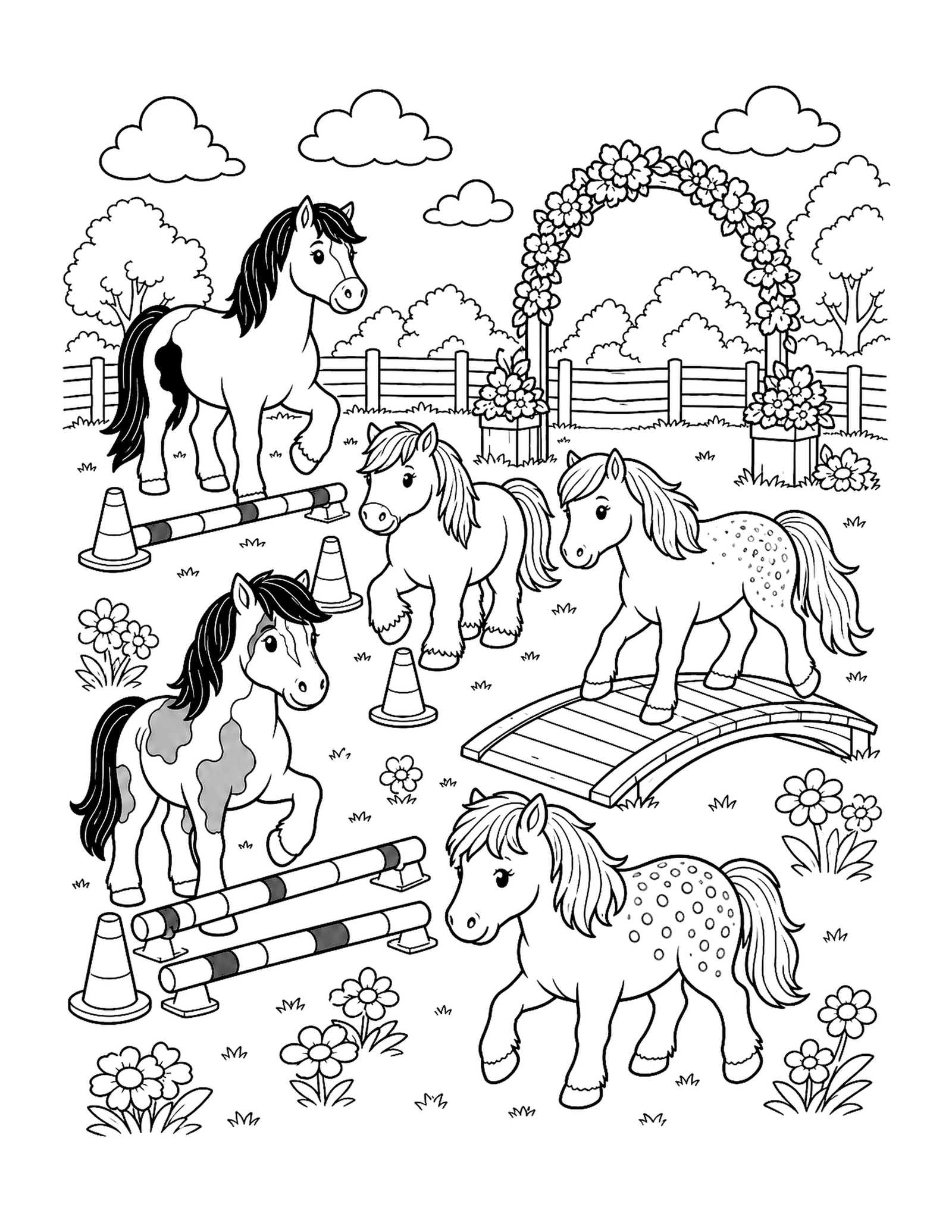
Pony Friends Complete an Obstacle Course
Five wholly original ponies navigate low poles, cones, a small bridge, and a flower-decorated finish arch.
Turn Character Traits into Creative Prompts
Choose a Strength for the Scene
Ask the child to choose one strength such as curiosity, courage, generosity, humor, patience, or honesty. They can circle or draw an object that represents it, then explain how a character might use that strength in the pictured moment. The activity stays open-ended and does not require memorizing official story details.
Write a Friendship Problem and Solution
Use the picnic, letters, party, or castle page to invent a small problem: a missing invitation, an unexpected storm, or a disagreement about decorations. Children can suggest two solutions and choose the one that treats every character fairly. A short dictated answer is enough for younger learners.
Design a New Symbol or Accessory
Invite children to add a badge, ribbon, bag, book cover, or flag connected to the story they invented. The added design should communicate something about the character’s goal. Older children can explain the color and shape choices in one or two sentences beneath the page.
Printing and Coloring Tips for Detailed Pony Art
Open the full-size image and print it in portrait orientation on US Letter paper. Keep the preview set to actual size or fit to page so no wings, tails, towers, or rainbow edges are cropped. Standard paper works for crayons and pencils; use heavier paper and a backing sheet for markers or light paint.
Colored pencils are especially useful for manes, tails, ribbons, small stars, and fabric patterns. Crayons cover broad clouds, skies, and character bodies quickly. Children can finish one area at a time—character, accessories, foreground, then background—to keep a detailed page from feeling crowded.
Projects for Parties, Families, and Classrooms
Build a Friendship Banner
Color and cut a character from several pages with adult help, then attach the figures to separate paper pennants. Add one child-chosen friendship word to each pennant. Hang the pieces as a group banner without ranking the artwork.
Make a Magical Setting Collage
Combine a pony cutout with stars, flowers, and wings inspired by PintyMinty’s fairy coloring pages. Children can decide whether the new place is a garden, library, cloud city, or festival and label three important locations.
Compare Two Friendship Collections
For another gentle friendship-centered collection, continue with our Winnie the Pooh coloring pages and invite children to compare how the characters help one another. Focus on visible actions and invented dialogue rather than asking which group is better.
Run a Short Color-Design Workshop
Collect Inspiration Without Copying
Gather three color sources from the room, such as a book cover, fabric pattern, flower, or toy. Children can borrow only the palette, not the exact design, and apply it to a pony page. This makes color selection concrete while leaving the mane, clothing, accessories, and setting open to original decisions.
Test Colors on a Planning Strip
Before touching a detailed page, draw several small boxes on scrap paper and test the chosen pencils or crayons. Place neighboring colors side by side to see whether they are easy to distinguish. The planning strip is especially useful for rainbows, layered hair, castle flags, and ribbons that will repeat across the composition.
Name the Finished Palette
After coloring, ask the child to give the palette a name such as Cloud Parade, Orchard Sunset, Library Night, or Friendship Festival. The name should come from the colors and mood, not from an adult-provided answer. Add it on a separate label so the coloring page remains free of extra writing and can be displayed cleanly.
More Printable Coloring Pages
- Food Coloring Pages You Need to Try for Endless Fun
- 20 Printable Cool Coloring Pages Collection
- 20 Printable Animal Coloring Pages Collection
Frequently Asked Questions
Which pony page is easiest for a younger child?
Spike with letters, Applejack with the basket, and Fluttershy with the bunny have clear central subjects and manageable backgrounds. Let the child color the main character first and decide whether to continue.
Should children copy the characters’ familiar colors?
They may, but they do not have to. Familiar palettes support recognition, while alternate palettes support experimentation. Children can keep one identifying feature and redesign the mane, accessories, background, or entire color scheme.
How can these pages be used at a party?
Offer several scenes and place crayons or washable pencils in shared containers. A group banner, collaborative picnic page, or short story circle is more inclusive than a speed contest or a prize for the most accurate colors.
Can a page support a writing activity?
Yes. Ask for a title, one character goal, and one line of dialogue. Older children can add a three-sentence beginning, problem, and solution. Keep the writing brief enough that the coloring remains enjoyable.
What is a simple way to display the finished set?
Arrange the pages by mood or setting—quiet, active, celebration, outdoor, or magical. Add child-created captions on separate labels so the original artwork remains uncluttered and can be reused in a book later.
Create a New Friendship Adventure
These My Little Pony coloring pages combine recognizable characters with varied settings, design choices, and storytelling prompts. Start with a page that matches the child’s favorite activity, plan a manageable palette, and let the finished colors lead into a new friendship problem, solution, or magical destination. A named palette, short caption, or shared story can preserve the child’s original idea without crowding the artwork itself.