
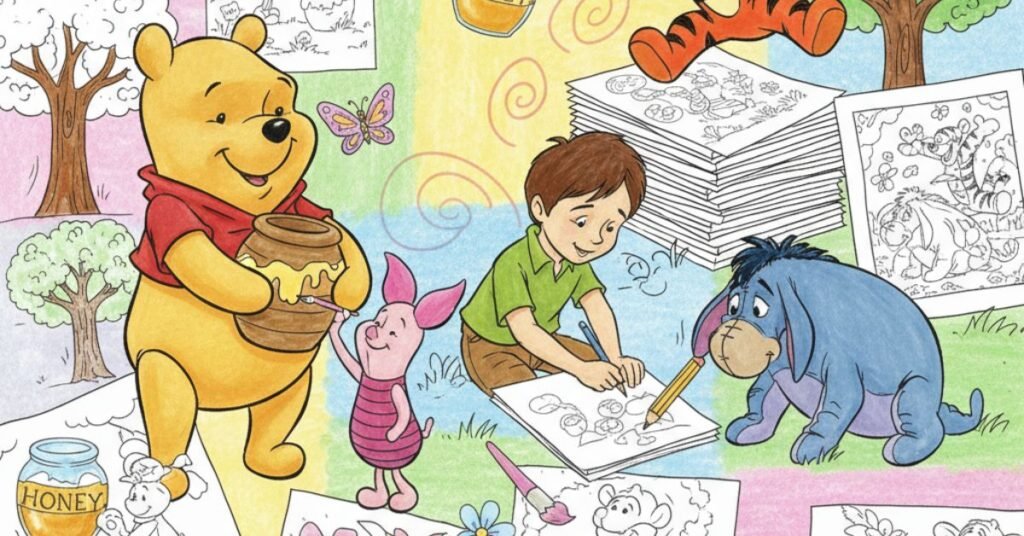
Winnie the Pooh coloring pages can turn a familiar storybook world into a calm activity centered on friendship, feelings, and imagination. This collection includes ten distinct scenes with Pooh, Piglet, Tigger, Eeyore, and other Hundred Acre Wood companions. Some pages use simple character poses, while others place friends in gentle story moments with trees, paths, picnics, balloons, and honey pots.
Children who enjoy the bear at the center of these stories may also like PintyMinty’s general bear coloring pages. The collection here is especially useful for quiet time, read-aloud follow-ups, family coloring, and prompts that help children notice expressions or imagine dialogue. Choose a page by mood rather than expecting every child to complete the whole set.
This is an independent editorial collection and is not official or affiliated with Disney, the A. A. Milne estate, or any rights holder. Use only artwork that the website owner is permitted to publish.
A Gentle Collection with Different Story Moments
Instead of repeating the same standing pose, the pages move through quiet discovery, energetic play, helping a friend, sharing food, and spending time outdoors. This range lets a child choose a scene that matches how they feel. A busy Tigger page may suit an energetic afternoon, while Eeyore beneath an umbrella can support a slower conversation about comfort and kindness.
The backgrounds are purposeful but not overwhelming. Large trees and paths frame the characters, and smaller objects such as leaves, flowers, kites, and baskets add optional detail. A young colorer can finish the characters and stop; an older child can build a fuller setting with coordinated colors.
Ten Winnie the Pooh Coloring Pages
10 Printable Winnie The Pooh Coloring Pages
Choose a design below, open the full-size image, and print it for your coloring activity.
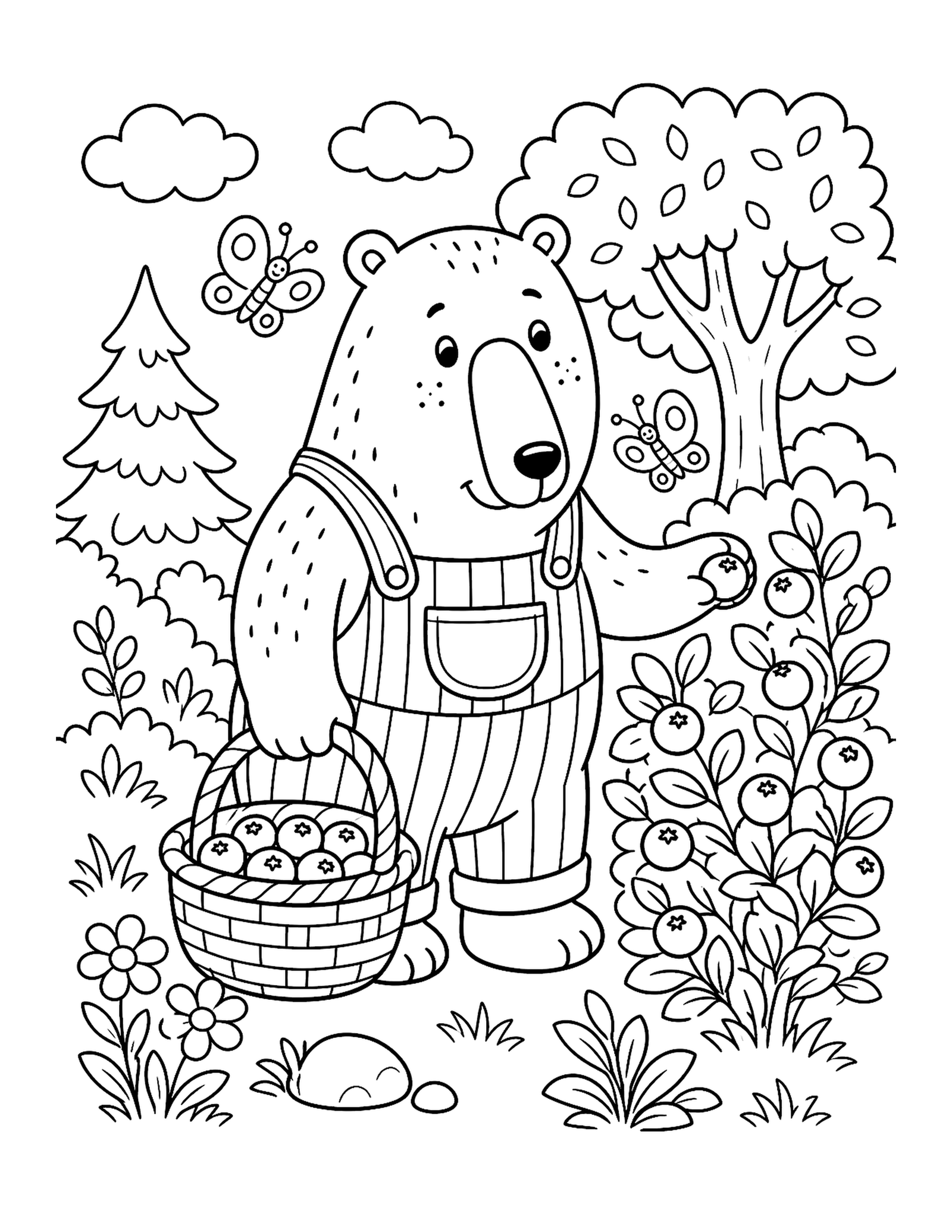
Woodland Bear Picks Blueberries
A wholly original long-muzzled bear in striped overalls gathers blueberries in a forest clearing.
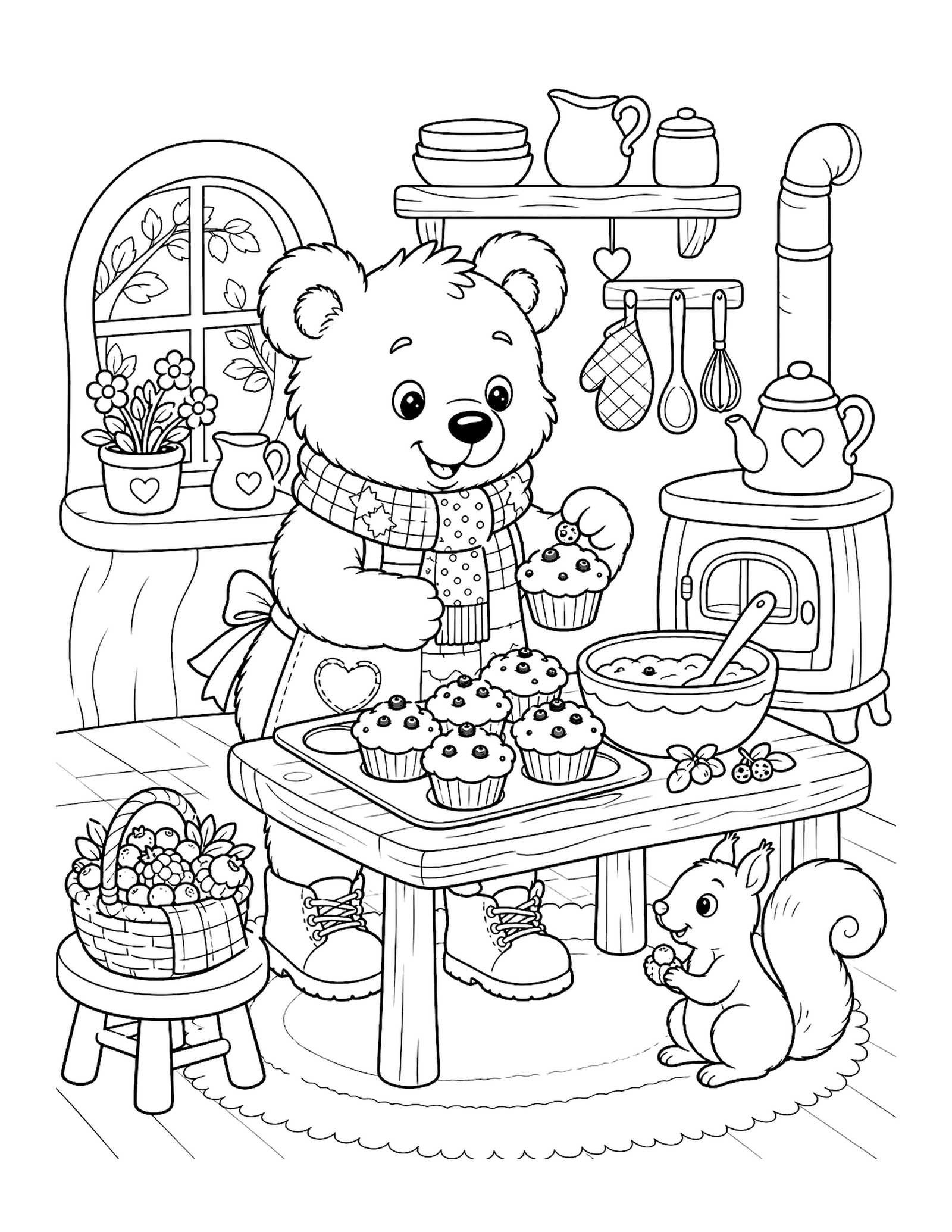
Bear Cub Bakes Berry Muffins
A new fluffy bear character prepares berry muffins among bowls, utensils, shelves, and a cozy window.
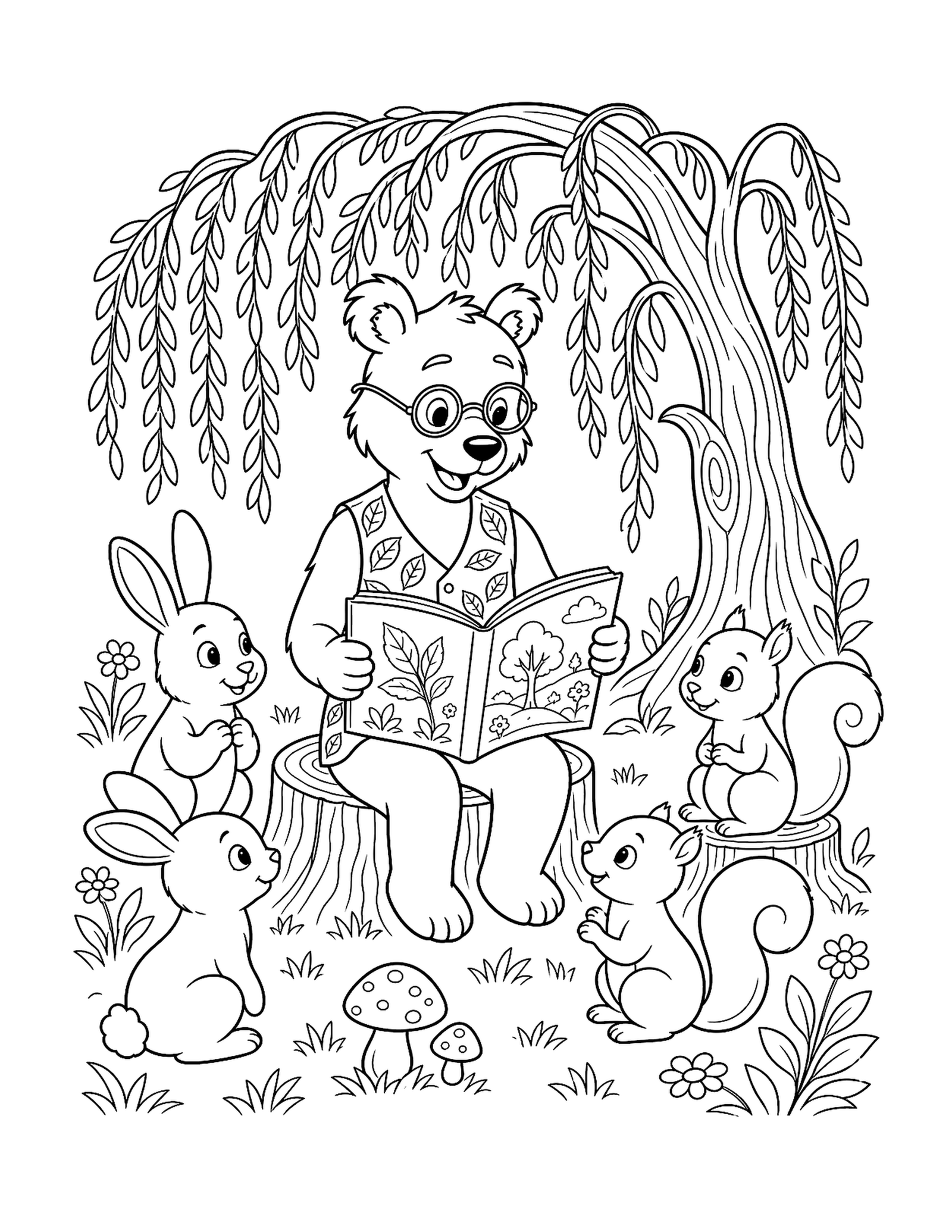
Young Bear Reads to Forest Friends
A slender original bear in a leaf vest shares a picture book beneath a willow tree.
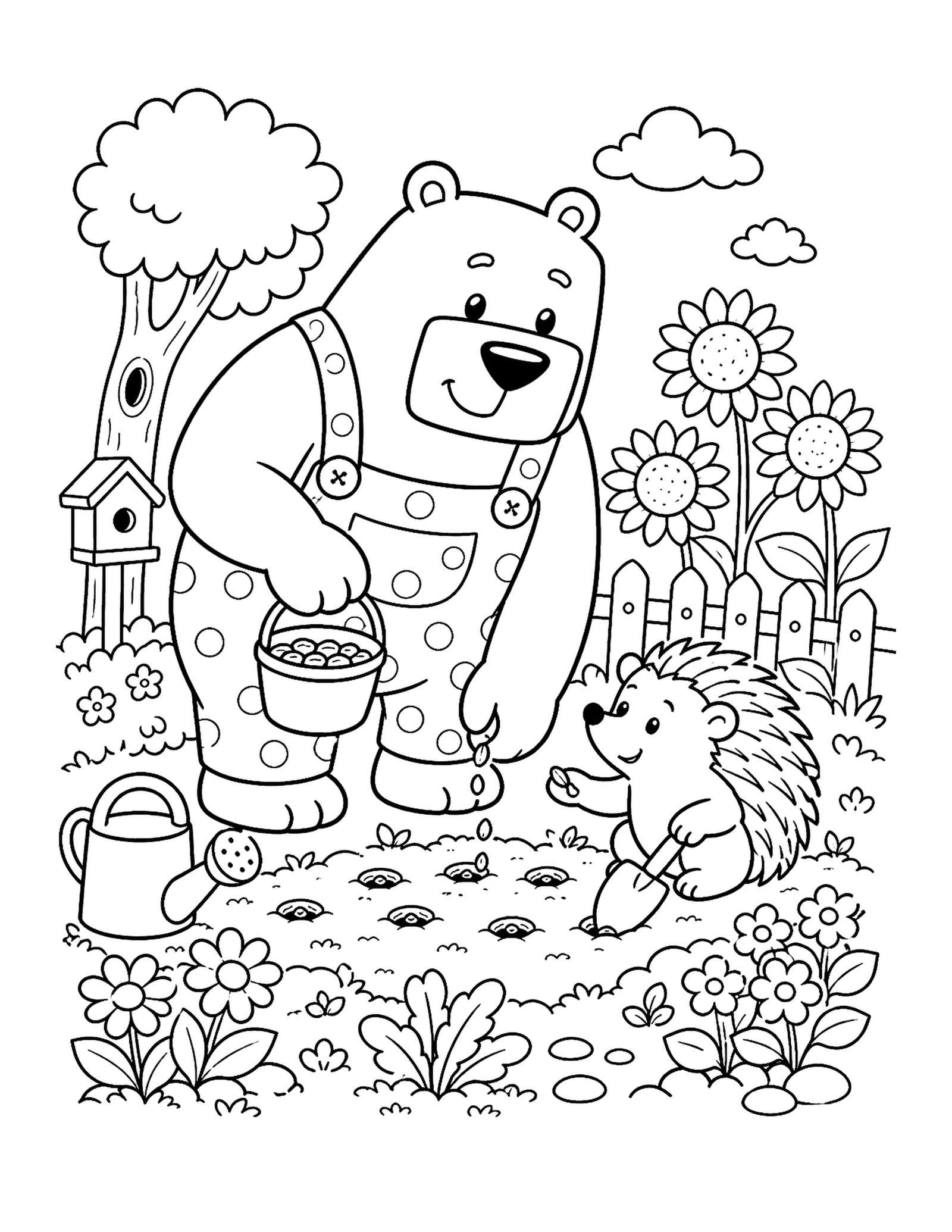
Garden Bear Plants Sunflowers
A square-muzzled original bear and a hedgehog plant sunflower seeds in a cheerful garden.
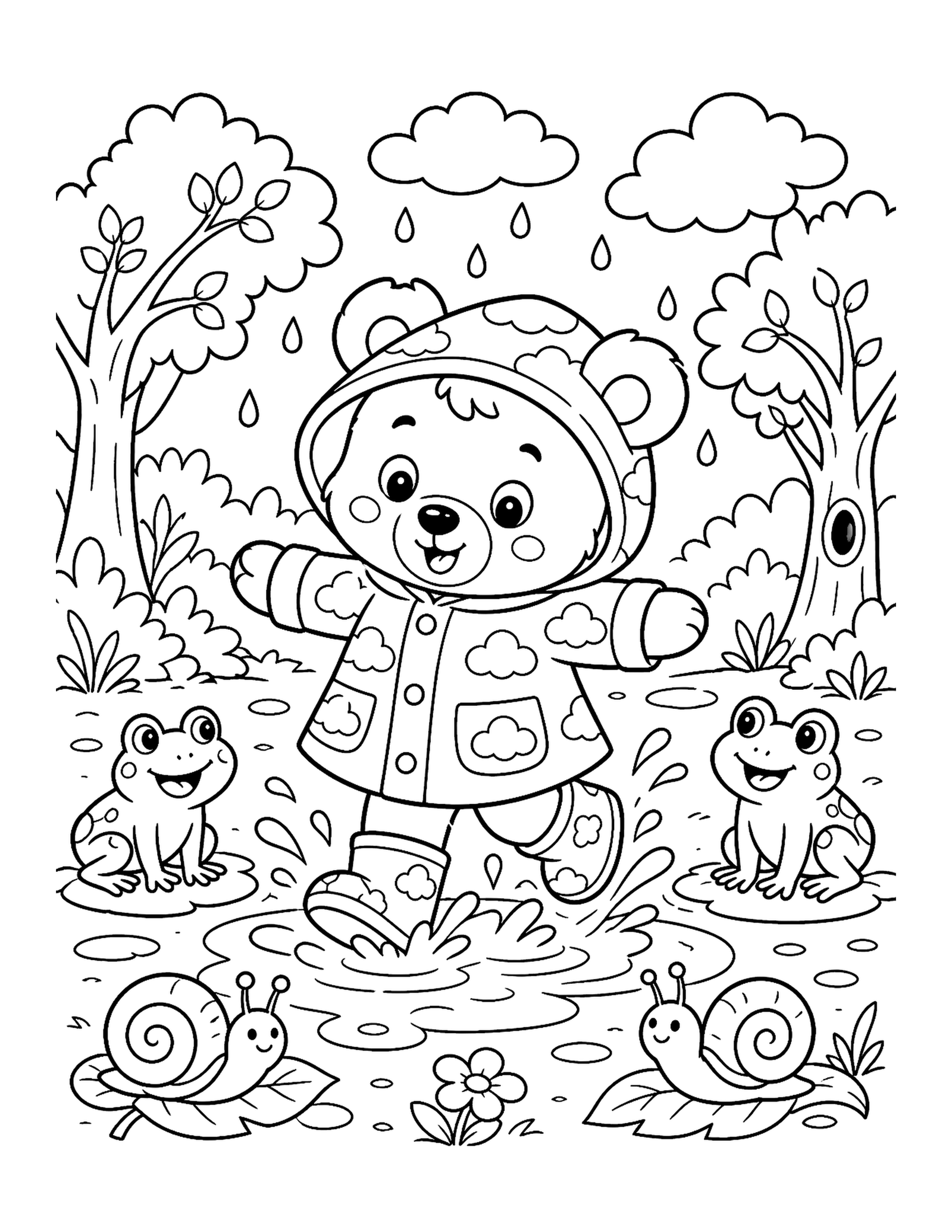
Raincoat Bear Plays in Puddles
A floppy-eared original bear enjoys a gentle rainy day among puddles, frogs, plants, and snails.
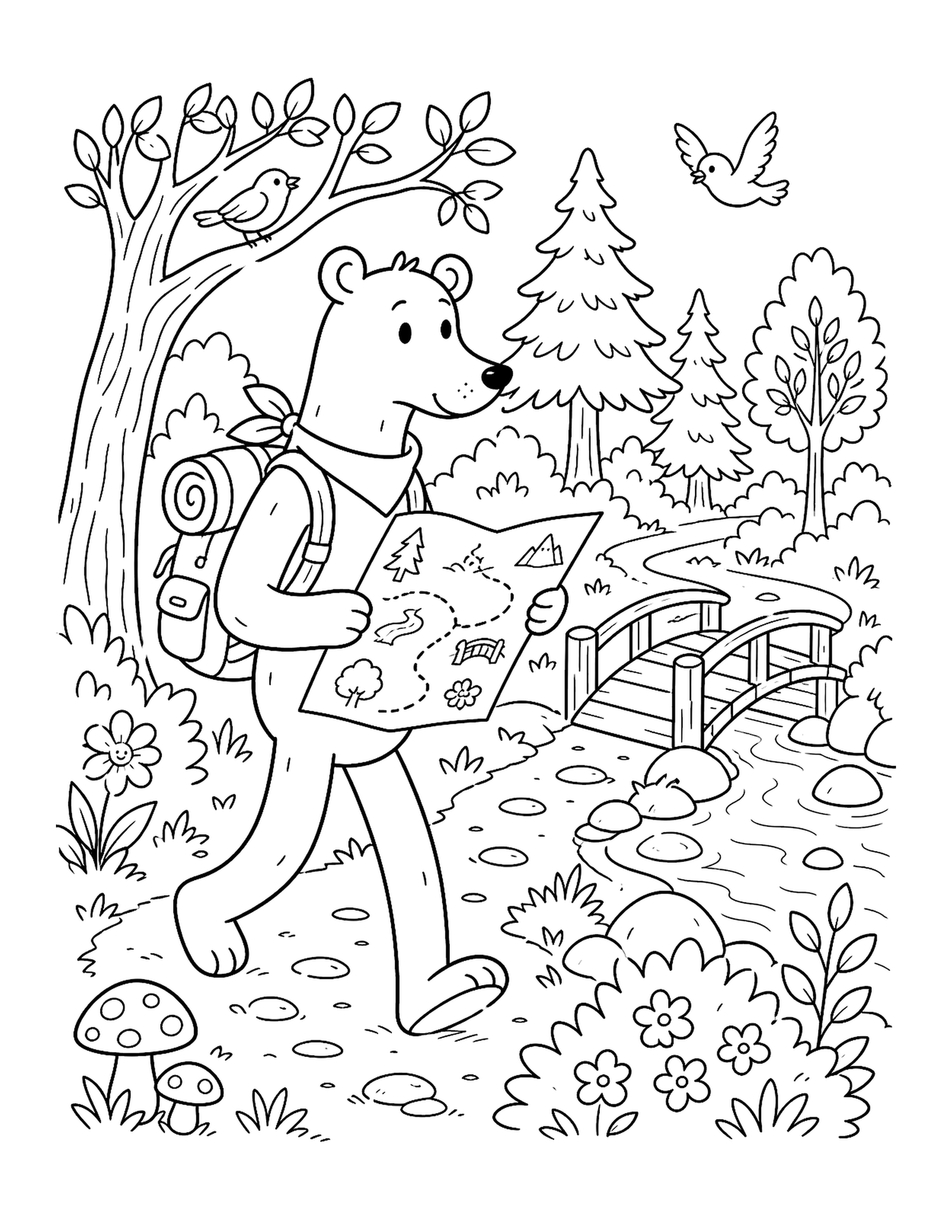
Explorer Bear Follows a Forest Trail
A long-legged original bear follows a symbol-only trail map through a forest landscape.
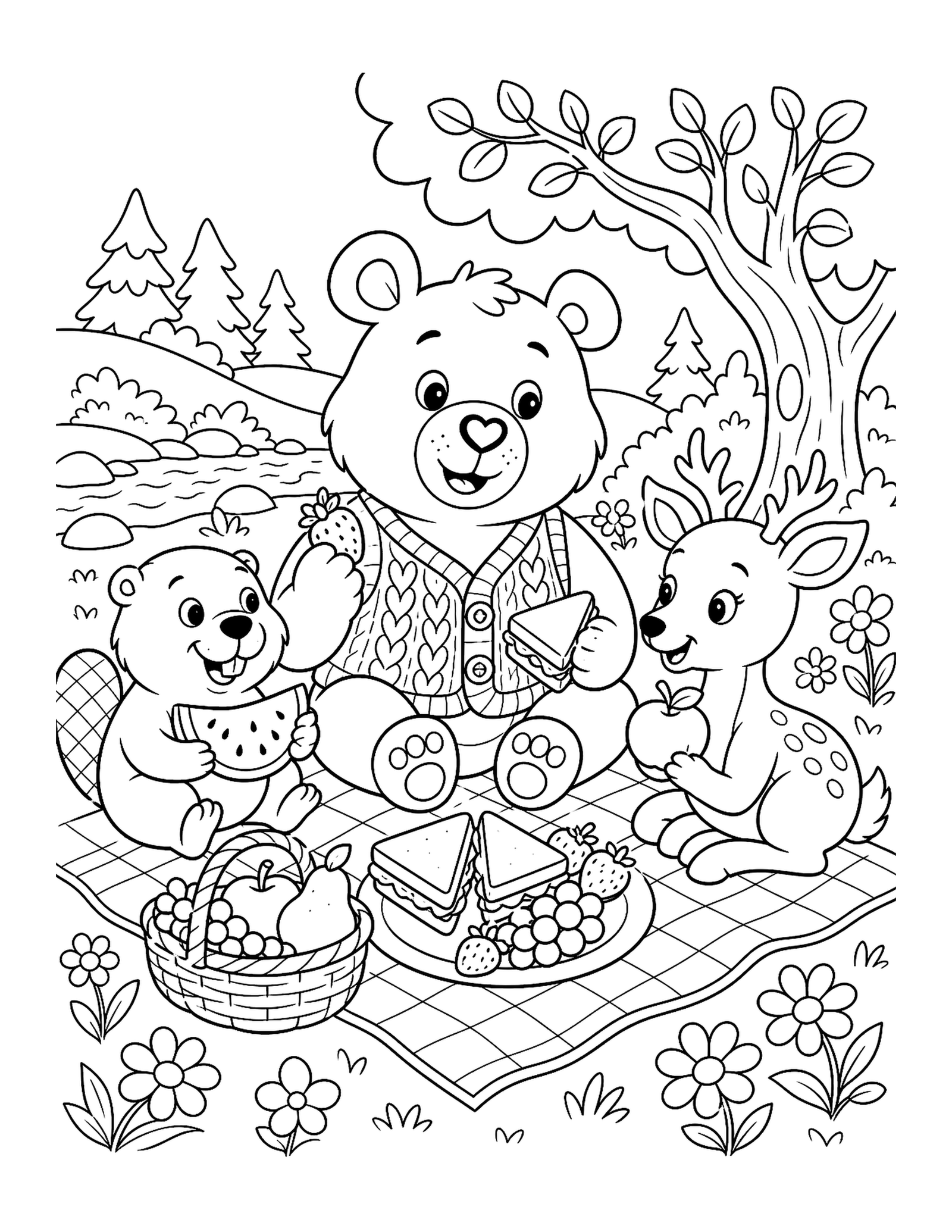
Woodland Bear Shares a Picnic
A heart-nosed original bear shares food and friendship with a beaver and deer outdoors.
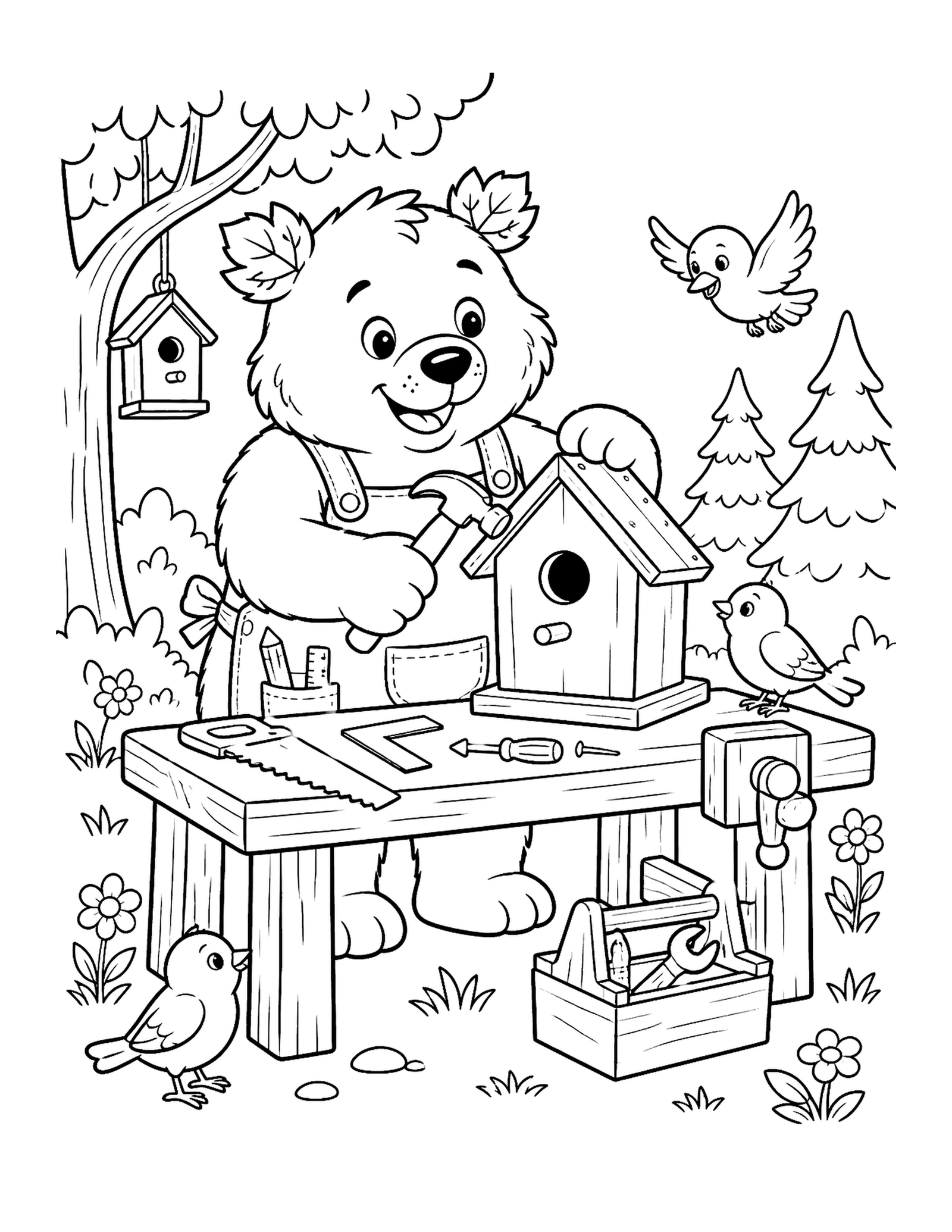
Carpenter Bear Builds a Birdhouse
A leaf-tufted original bear uses simple tools to build a birdhouse while birds wait nearby.
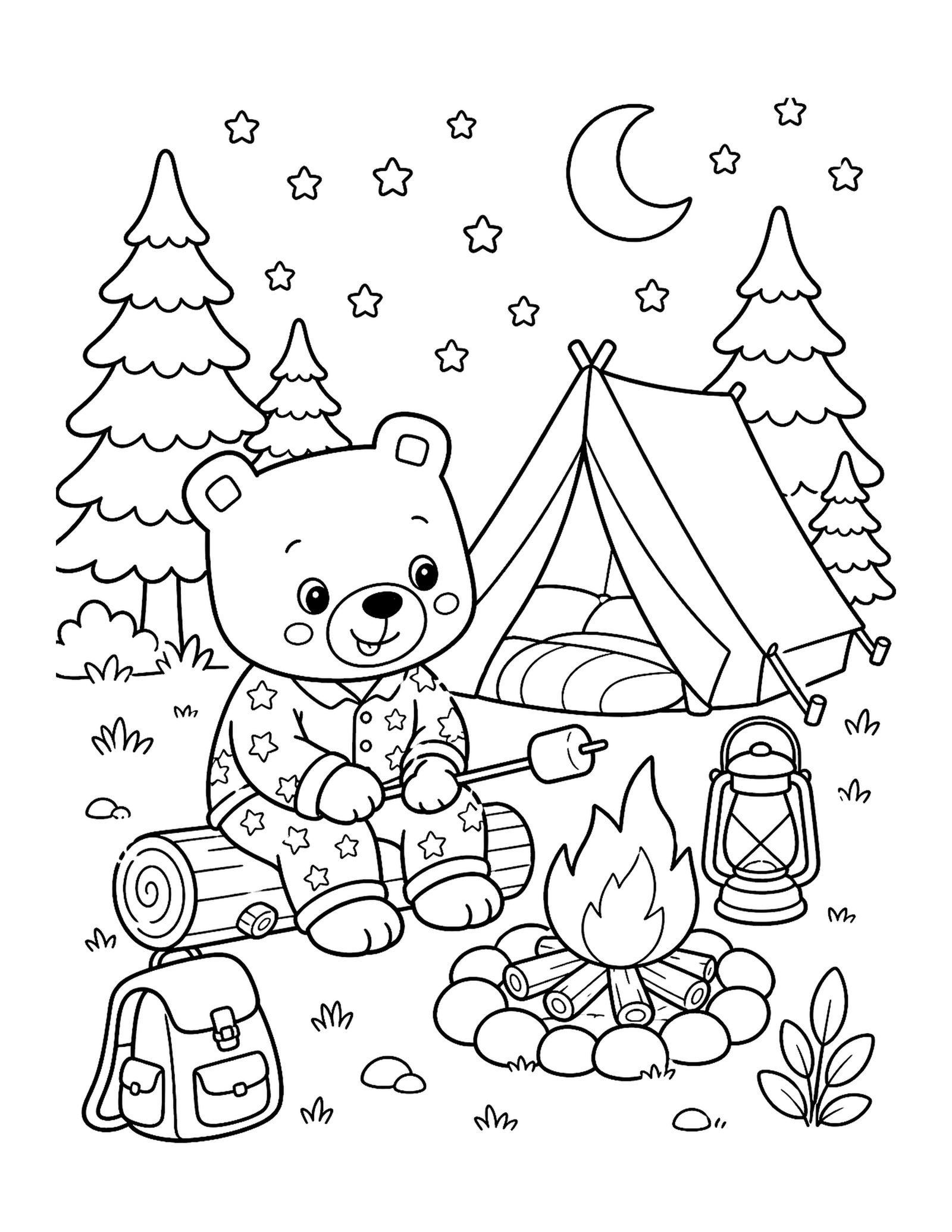
Young Bear Camps Under the Stars
An original pajama-wearing bear enjoys a peaceful campsite beneath the moon and stars.
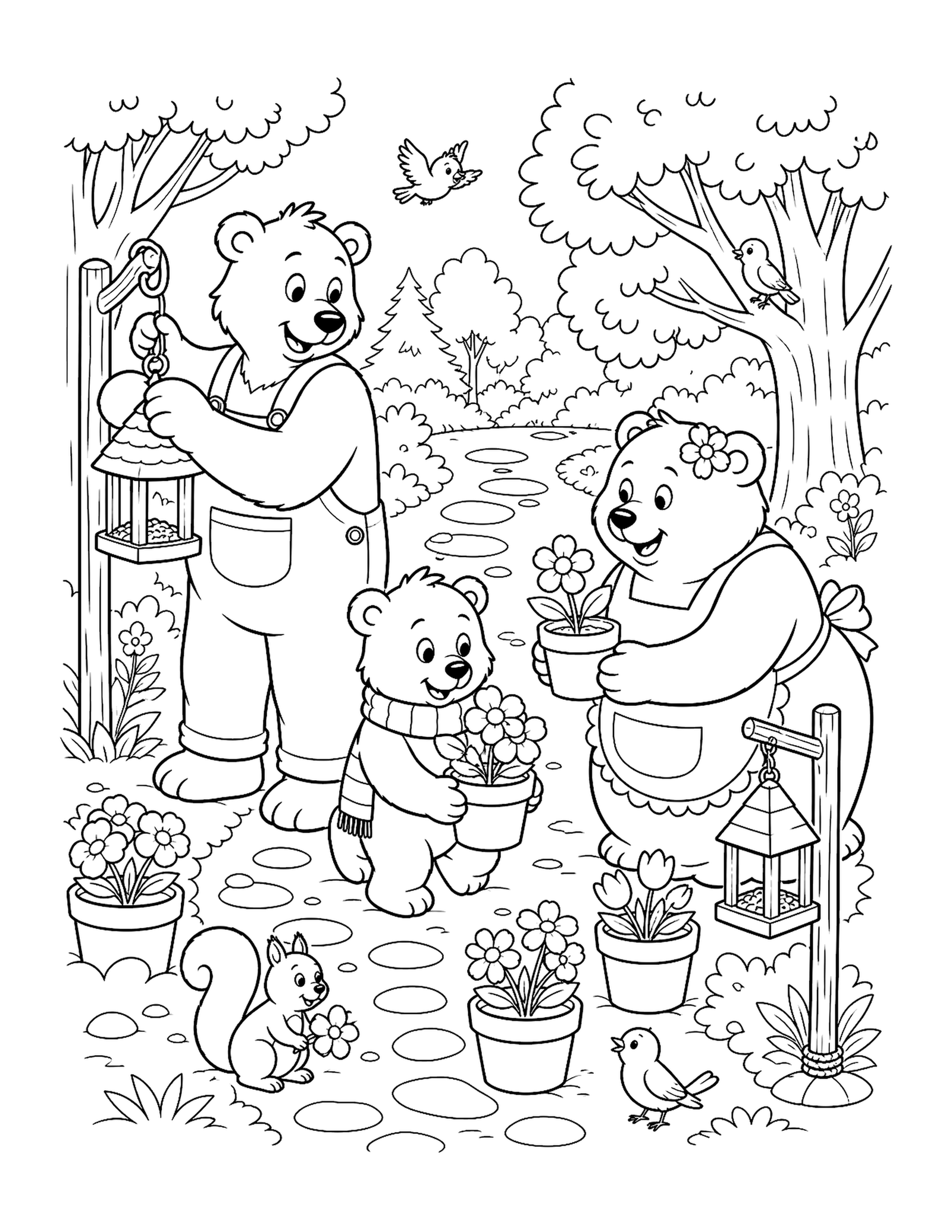
Woodland Bears Work Together
Three wholly different bear characters cooperate to arrange flower pots and bird feeders along a woodland path.
Use the Pages as Storytelling Prompts
Ask One Question Before Coloring
Choose one open question that fits the page: What is inside the picnic basket? Why is Eeyore standing in the rain? Where will the kite land? A child can answer aloud, draw one additional clue, or dictate a sentence. One focused question keeps the activity playful and avoids turning every picture into a worksheet.
Notice Feelings Without Assigning a Correct Answer
Look at eyebrows, posture, distance between characters, and objects in the scene. Ask what mood the child notices and which colors could support that mood. Accept different interpretations when the picture allows them; emotional vocabulary grows through explanation, not through guessing the adult’s preferred response.
Build a Beginning, Middle, and End
Select three pages and place them in any logical order. The kite scene might begin the story, rain may create a problem, and the picnic could finish it. Children can rearrange the same pictures to create a second story, demonstrating that sequence changes meaning.
Printing for a Comfortable Coloring Session
Open the full-size image, then preview it in portrait orientation on US Letter paper. Keep the scale at actual size or fit to page without removing the white margins. Crayons work well for broad character shapes; colored pencils help with leaves, stripes, food, and facial details. Use heavier paper and a protective backing sheet if markers are planned.
For a small group, print different scenes instead of multiple copies of one page. The variety supports conversation because each child can explain a different moment. If a page will accompany a read-aloud, print it before the session so technology does not interrupt the story.
Make Keepsakes from Finished Artwork
Friendship Book
Bind two or three finished pictures with blank pages. Children can add one sentence about helping, listening, sharing, or cheering someone up. Keep the message connected to the child’s own experience rather than presenting a character as a moral authority.
Woodland Story Display
Hang the pages in story order and connect them with paper arrows. Add short child-dictated captions below the artwork. This format works well on a classroom wall because viewers can follow the sequence without handling the original pages.
Classic Character Coloring Folder
Store the Pooh pages with other family-friendly character activities, such as this Minnie Mouse coloring page. Use dividers by character or mood so children can choose a quiet, silly, adventurous, or friendship-focused page.
Plan a Low-Pressure Group Coloring Session
Let Children Select by Mood
Lay out three or four choices rather than assigning one picture to everyone. A child may want Tigger’s movement, Piglet’s balloons, or the calm story-time scene. When the choice reflects mood and energy, children are more likely to settle into the activity without comparing how quickly their neighbors work.
Share Materials, Not Artistic Decisions
Place common pencils and crayons in the center, but let each child control the colors on their own page. If two children share a group scene, agree on boundaries before starting. One can color characters while the other works on the setting, or each can choose specific characters and share the bridge, sky, or picnic blanket.
Finish with a Story Circle
Invite each participant to show one detail and say one sentence about the scene. Speaking is optional; a child may ask an adult to read a dictated caption. Keep the circle brief and do not rank pages. The purpose is to recognize different interpretations of the same character world and give the artwork a meaningful ending.
More Printable Coloring Pages
- Food Coloring Pages You Need to Try for Endless Fun
- 20 Printable Cool Coloring Pages Collection
- 20 Printable Animal Coloring Pages Collection
Frequently Asked Questions
Which page is best for a short quiet-time activity?
Pooh with the honey pot, Piglet with balloons, and Eeyore under the umbrella have clear central subjects. A child can finish the main character first and leave the background for another day.
Can the pages be used after reading a Pooh story?
Yes. Choose a scene with a similar feeling or relationship, then ask the child to explain what is different. Avoid claiming that an original coloring scene comes directly from a particular book or episode unless that connection is verified.
How can siblings or classmates color together?
Use the picnic, bridge, or story-time page and divide responsibility by character or background area. Agree on shared landscape colors first, then let each child make individual choices within their section.
What colors should be used for the characters?
Children may follow familiar character colors or invent a new palette. If recognition matters for a display, keep one or two identifying features consistent and experiment with backgrounds, clothing, balloons, leaves, and other accessories.
Can finished pages become greeting cards?
A cropped portion of a completed page can decorate a personal, noncommercial card for a friend or family member. An adult should help with cutting, and the child can add an original message inside.
Return to the Hundred Acre Wood
These Winnie the Pooh coloring pages offer a calm mix of character art, woodland details, and friendship-centered story prompts. Select one scene that fits the day’s mood, prepare a few simple coloring tools, and leave enough room for the child’s own explanation, dialogue, or added drawing. Keeping the session unhurried makes it easier for children to notice expressions, share an idea, and stop when their picture feels complete.
Pingback: 20 Minnie Mouse Coloring Page Free Printable Sheets for Kids