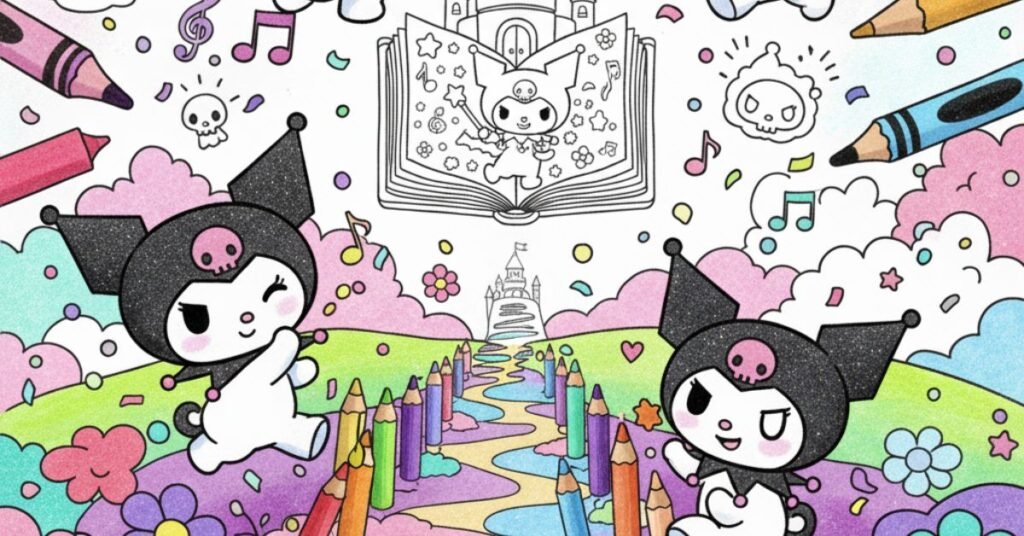
These Kuromi coloring pages focus on expressive poses, bold accessories, sweet treats, and the playful contrast between cute and mischievous style. Across ten sheets, colorists can work with large character shapes, patterned clothing, tiny stars, a birthday scene, and a dramatic moonlit setting. The variety makes it easy to choose a quick page or settle into a more detailed design.
Children and older fans can follow Kuromi’s familiar dark-and-pink palette or create an entirely new look in lavender, teal, red, or soft pastels. The collection is an unofficial fan-oriented creative activity and is not affiliated with or endorsed by the character’s rights holder. Readers who enjoy related kawaii themes may also like our Hello Kitty printable coloring pages.
A Collection Built Around Mood and Personality
Kuromi’s expressive face makes small color choices feel important. A bright background can make a confident pose feel energetic, while moon colors and deeper shades create a more dramatic result. Hearts, bows, skull motifs, stars, and dessert details offer plenty of accent areas without requiring every page to be complicated.
The set progresses from a centered portrait and a simple wave to busier scenes involving fashion, music, baking, and a celebration. Younger children can focus on the main figure and leave the background white. More experienced colorists can build coordinated palettes and add highlights to small decorative elements.
10 Printable Kuromi Coloring Pages
Choose a design below, open the full-size image, and print it for your coloring activity.
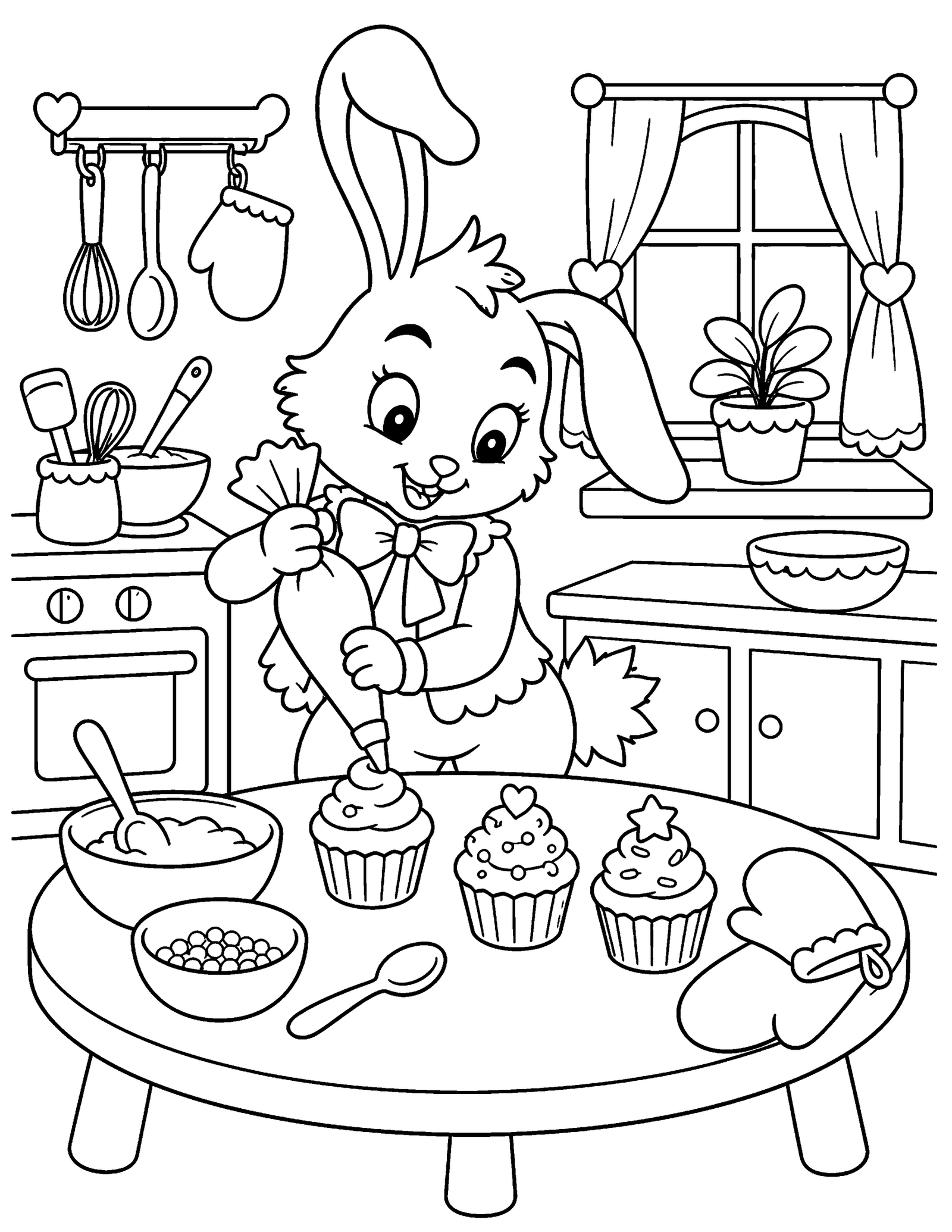
Original Bunny Decorating Cupcakes
A playful generic bunny uses a piping bag to decorate treats in a cozy kitchen.
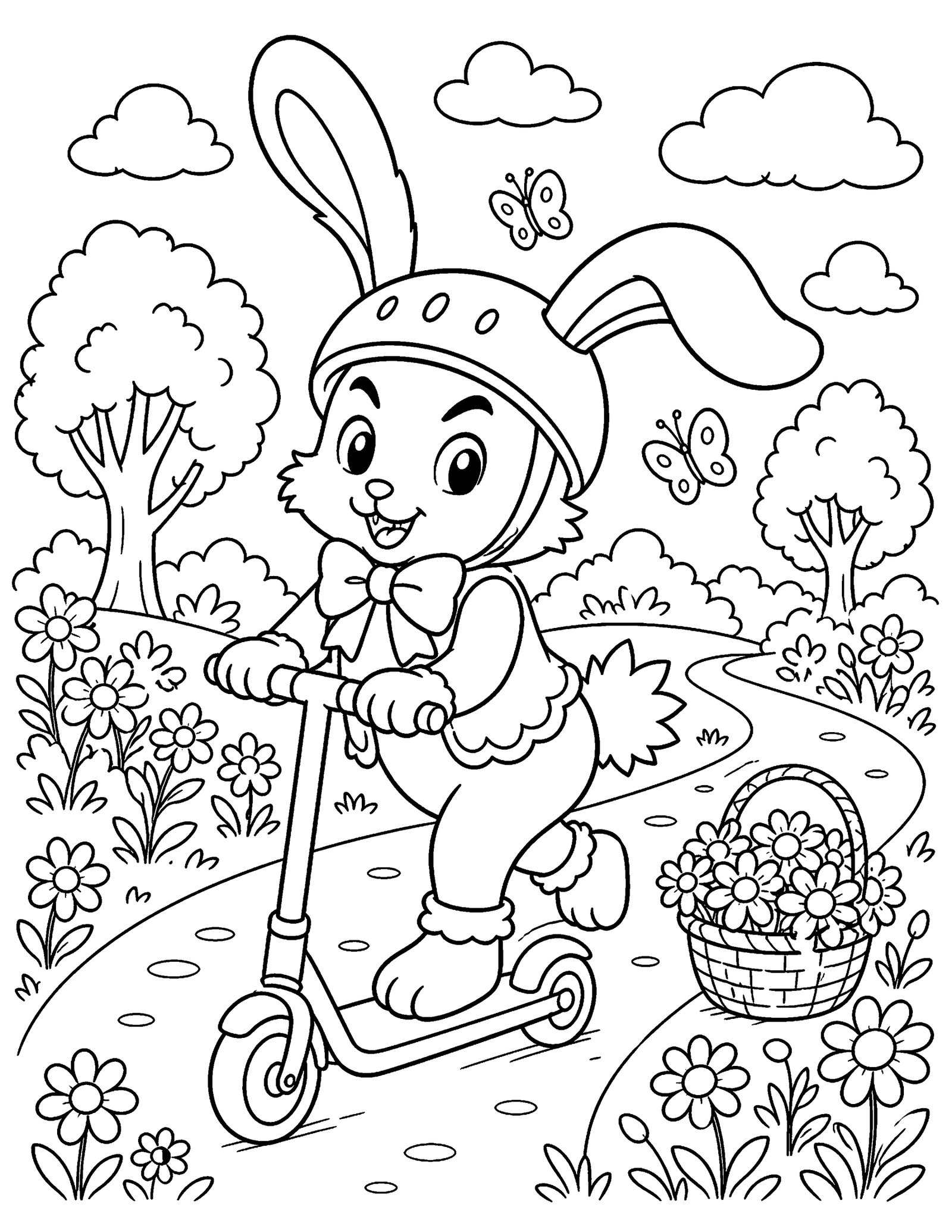
Original Bunny Riding a Scooter
A cheerful generic bunny enjoys a safe scooter ride along a winding garden path.
Original Bunny’s Flower Garden
A mischievous but kind generic bunny tends a whimsical garden beneath fluffy clouds.
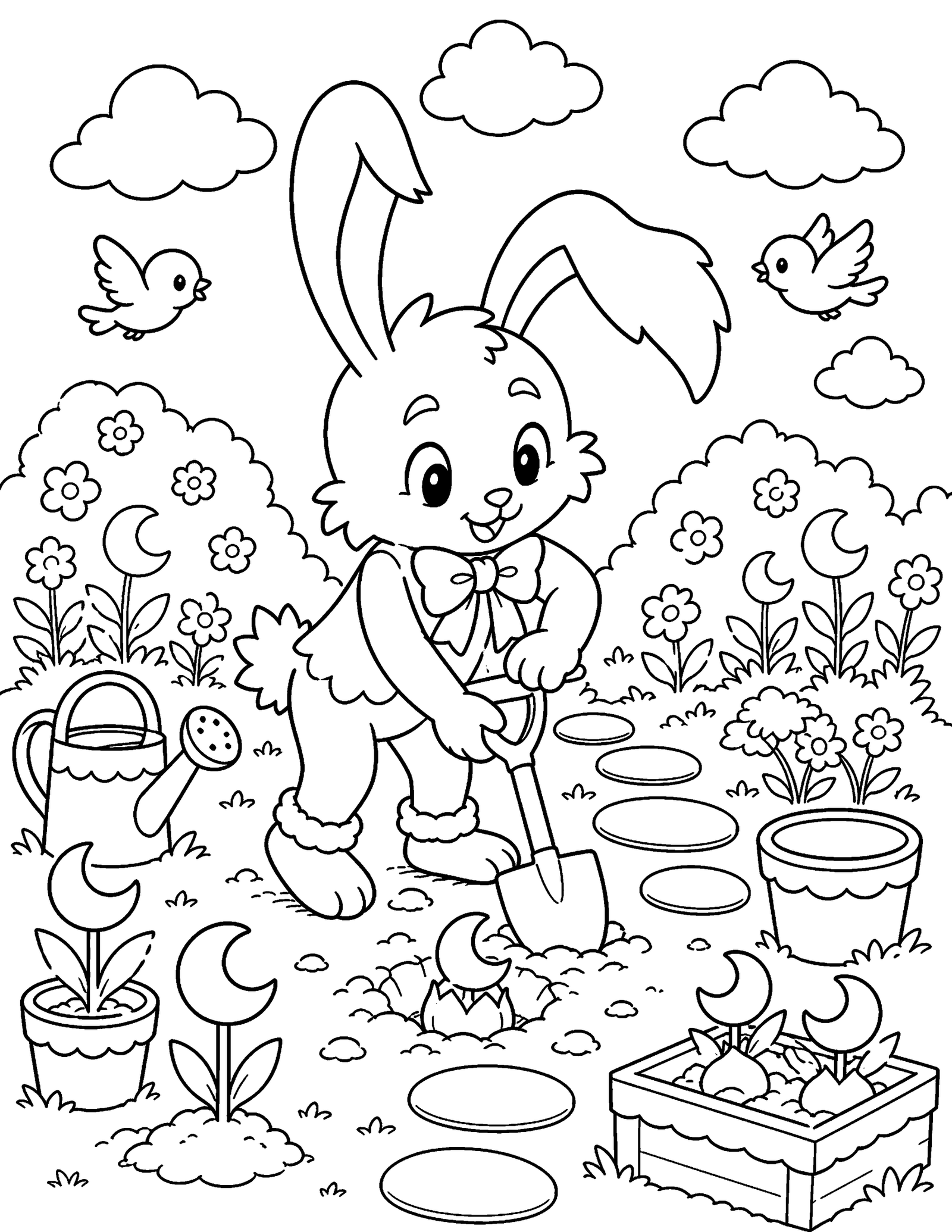
Original Bunny Friends Tea Party
Three original animal friends enjoy a friendly garden tea party.
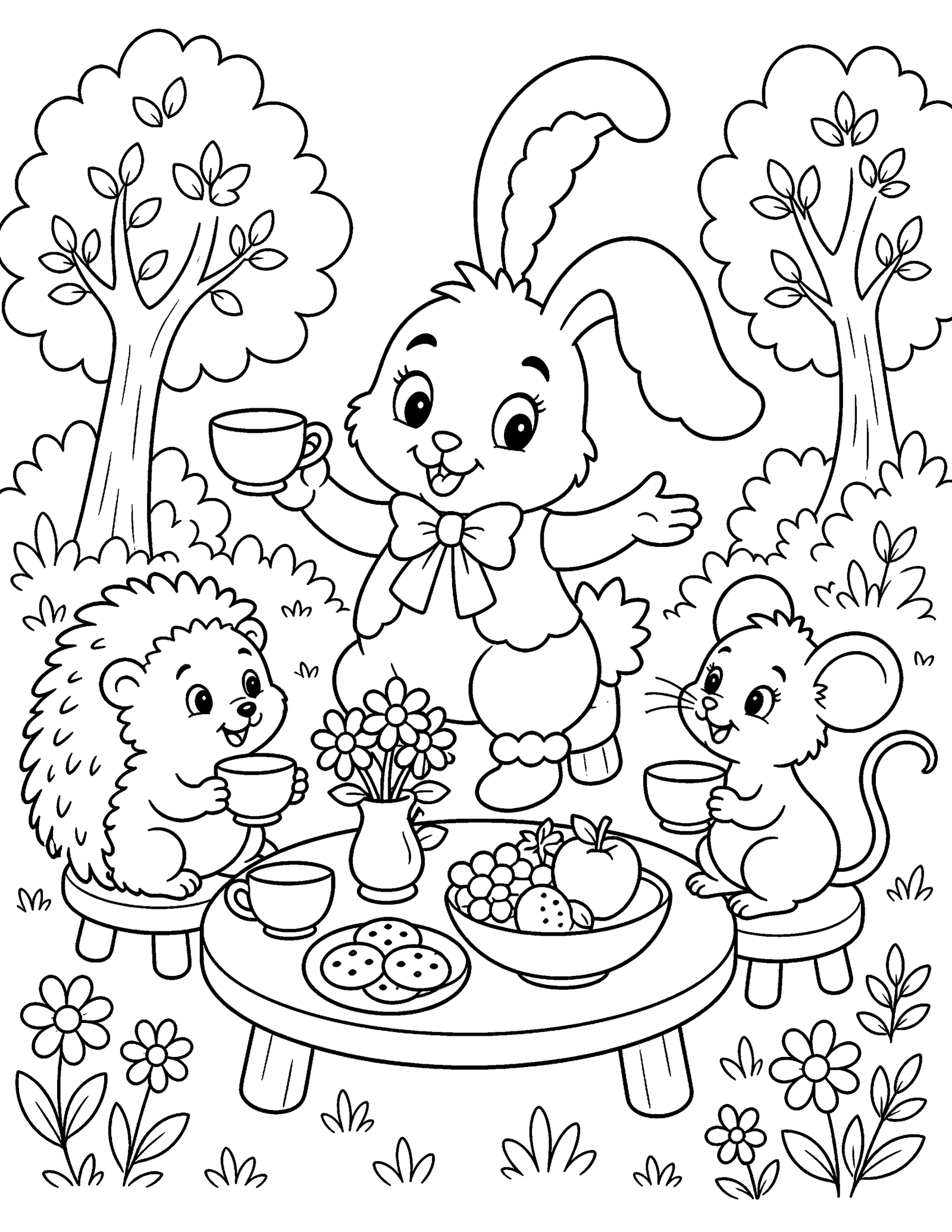
Original Bunny’s Blanket Fort
A creative generic bunny builds a cozy indoor hideaway from chairs and blankets.
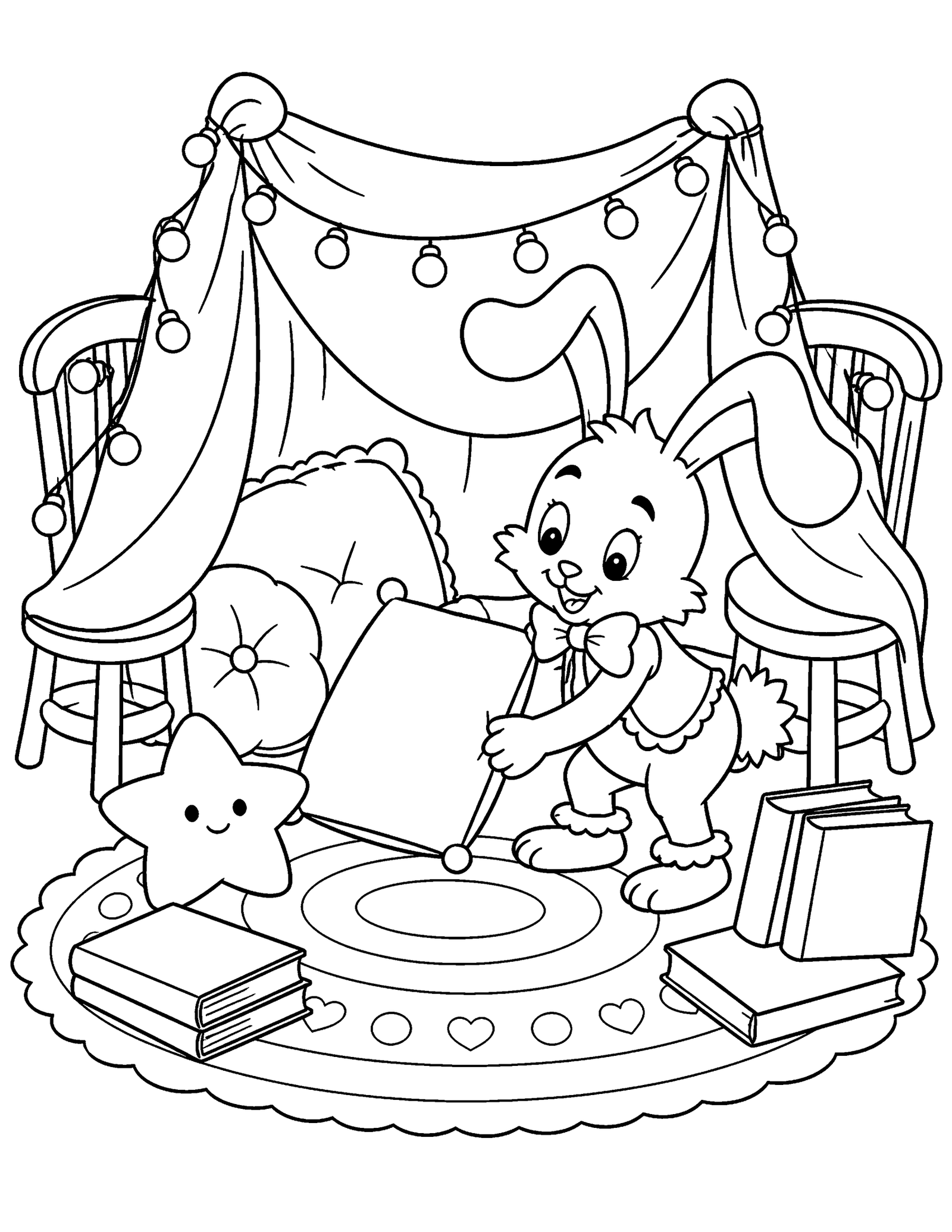
Original Bunny’s Outdoor Music Show
A generic bunny performs cheerful outdoor music for a group of woodland friends.
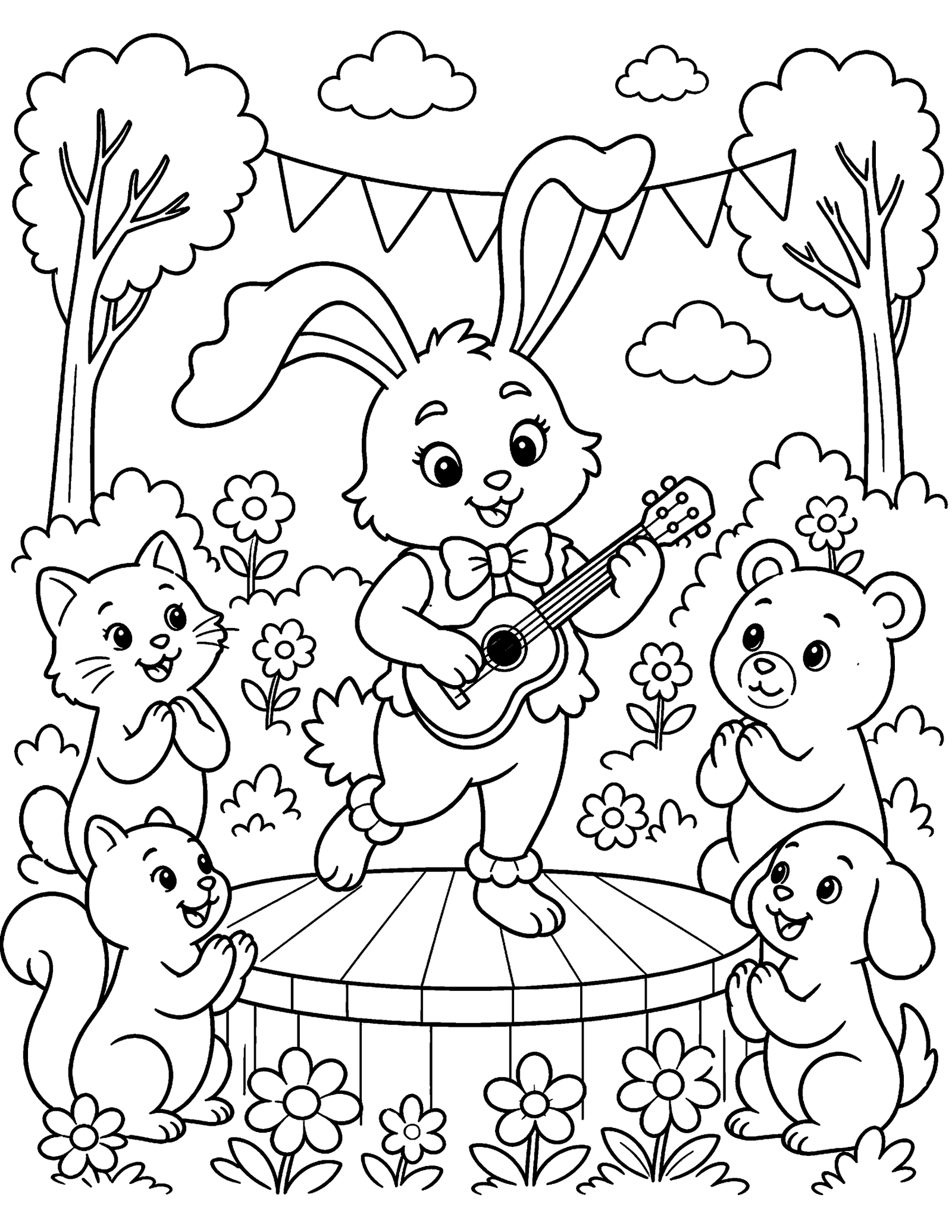
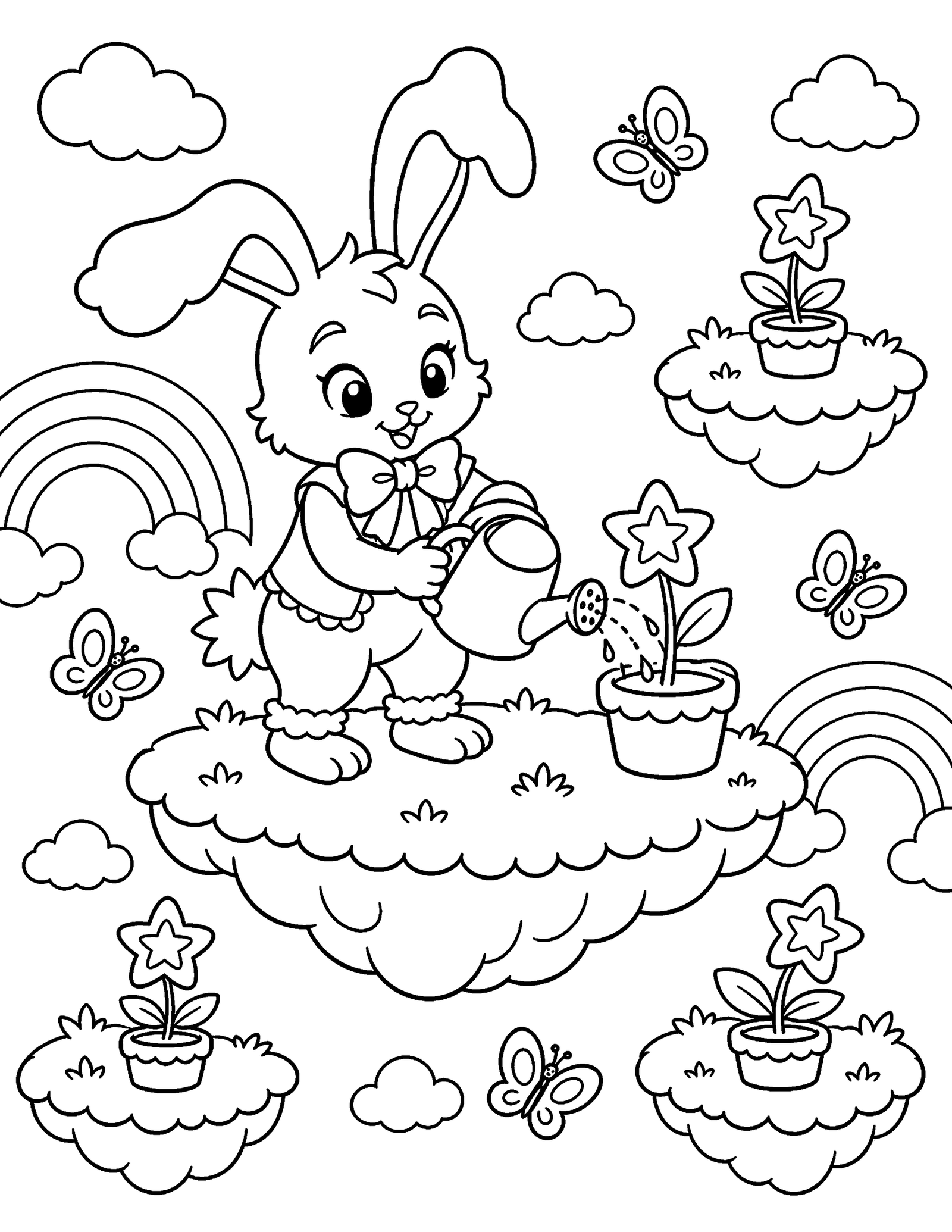
Original Bunny’s Cloud Garden
A playful generic bunny cares for magical plants among clouds, butterflies, and outline rainbows.
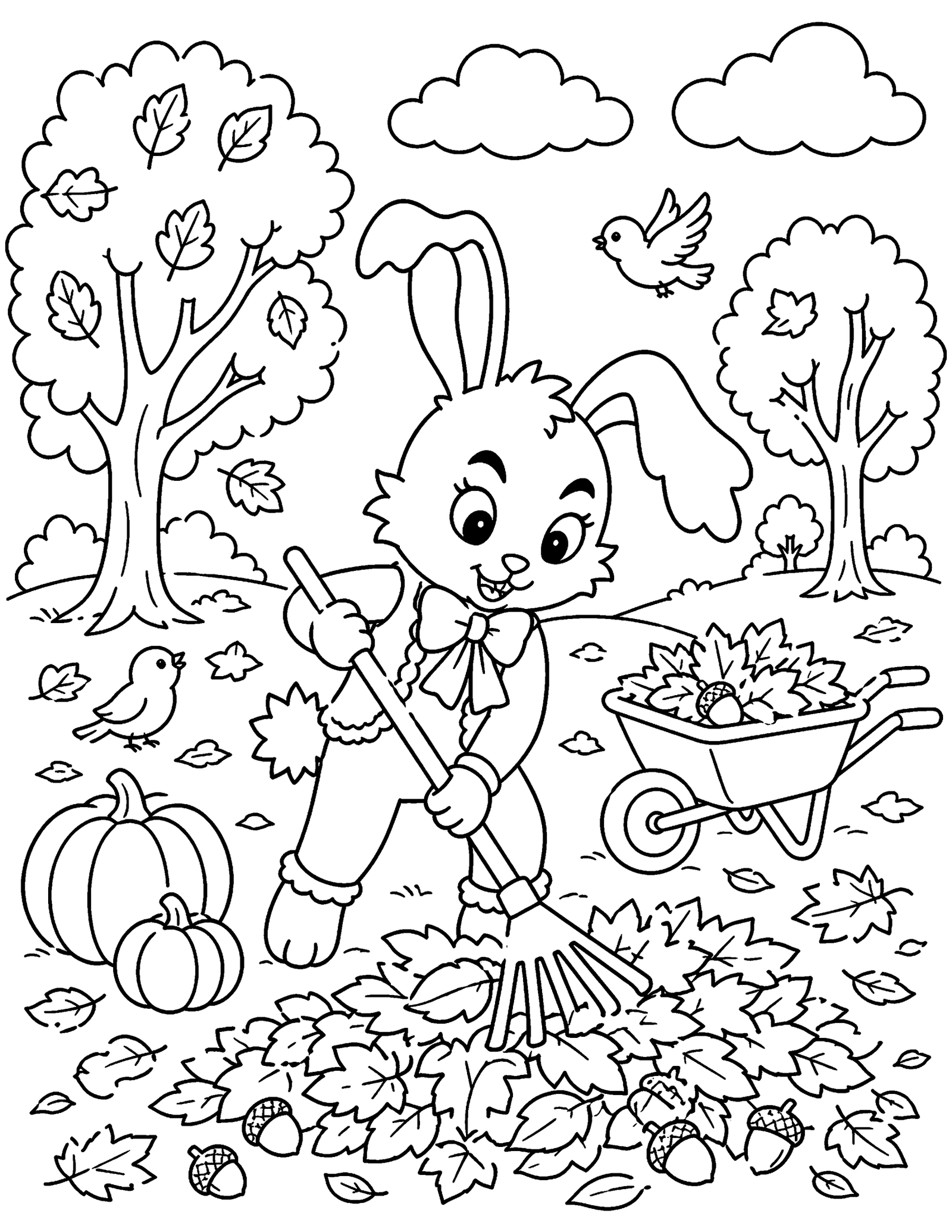
Original Bunny Raking Autumn Leaves
A hardworking generic bunny tidies an autumn park filled with fallen leaves and acorns.
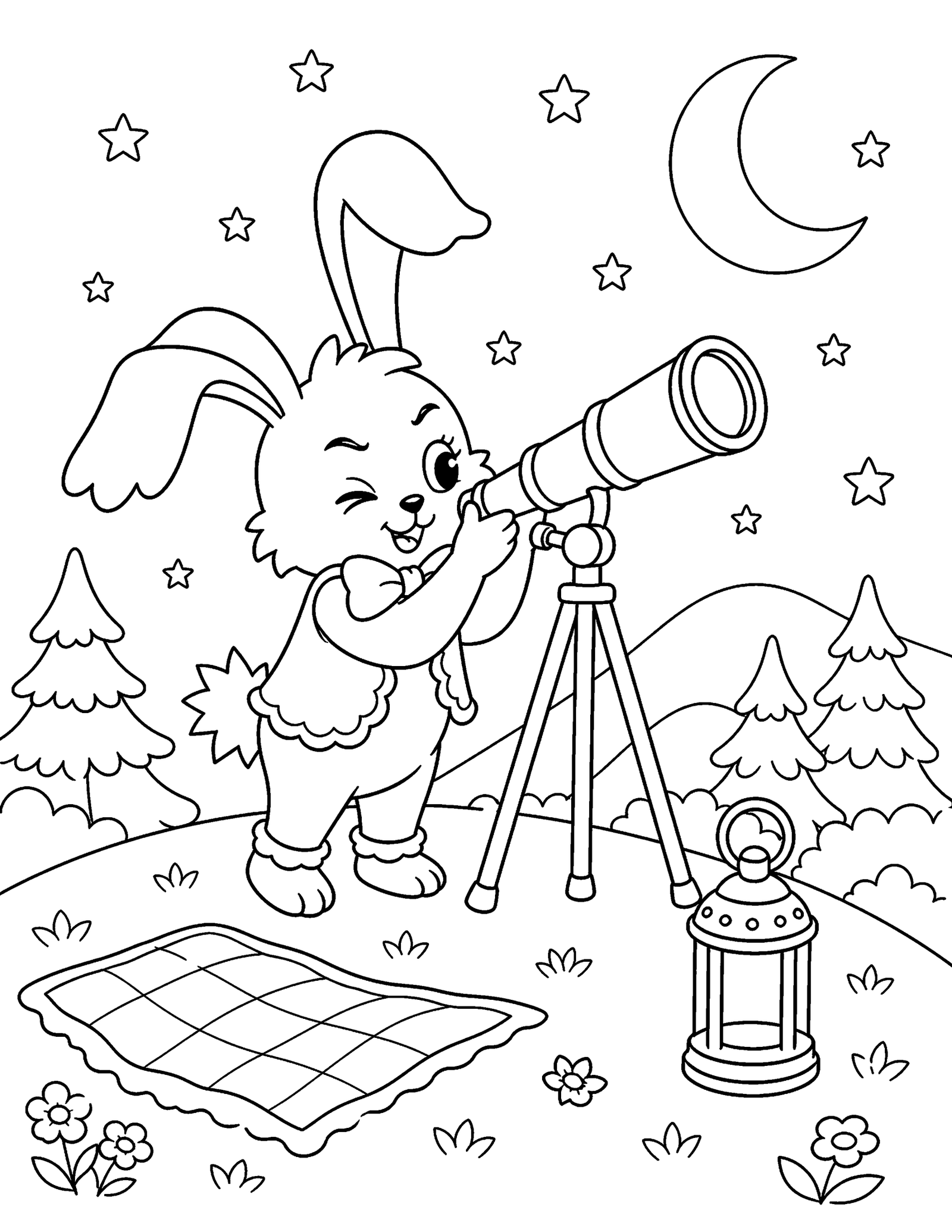
Original Bunny Stargazing
A curious generic bunny explores the night sky from a peaceful hilltop.
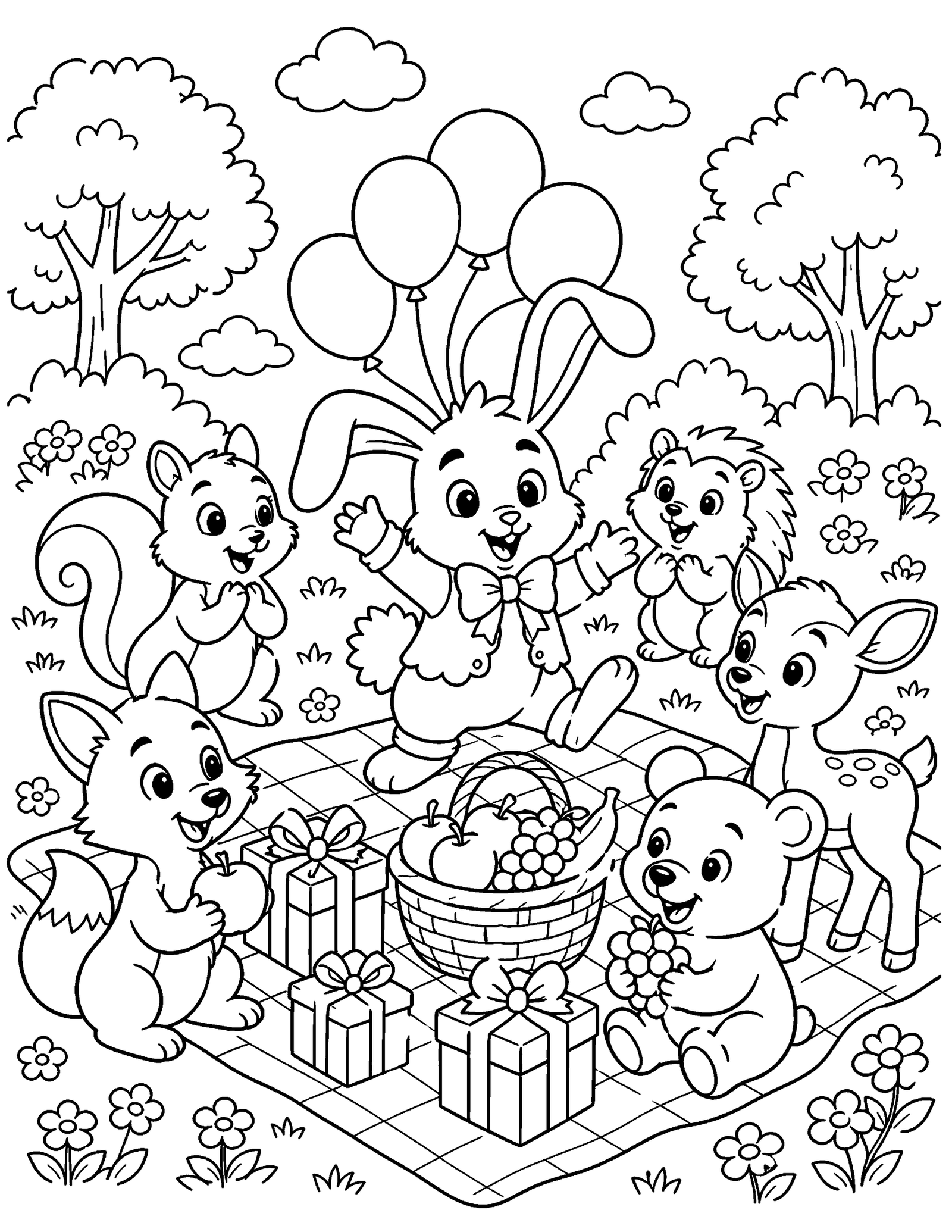
Original Bunny Friends Celebration
Six original animal friends share a festive outdoor picnic without words or age markers.
Choose a Punk-Cute Color Palette
Begin with three colors: one dark anchor, one bright signature shade, and one pale background tone. Black, raspberry, and blush create a recognizable high-contrast result, but navy, turquoise, and silver can feel just as bold. A limited palette keeps detailed accessories from competing with one another.
For softer pages, try lilac outlines, peach hearts, and mint backgrounds. For a night scene, combine indigo with magenta and a small amount of yellow for stars. Test markers on spare paper, especially when coloring adjacent dark sections that could blend together.
Expression, Fashion, and Storytelling Prompts
Instead of treating each sheet as an isolated picture, ask the colorist what happened just before the scene. Why is Kuromi holding a gift? What song is playing at the microphone? What flavor is the cupcake? These questions turn visual details into a short story without adding text to the artwork itself.
Fashion pages can become a design exercise. Select repeating colors for the hat, cuffs, bag, and shoes; then introduce one patterned area such as stripes or checks. A child can sketch two alternative palettes on scrap paper and decide which one best matches the character’s expression.
Older children might compare these rounded kawaii forms with the sharper action lines found in anime coloring pages. Discuss how eye shape, pose, and background symbols change the mood even before color is added.
How to Print and Color Small Details
Open the full-size sheet and print using “fit to printable area” if your printer trims page edges. Colored pencils are the most controlled choice for facial features, tiny stars, and patterned accessories. Crayons work well on the larger portrait and waving pose, while fine-tip washable markers suit older colorists using heavier paper.
Color the palest areas first, then add medium shades and finish with the darkest sections. This order reduces accidental smudging and makes it easier to preserve highlights. Leave a narrow white edge beside dark shapes when two similar colors touch.
Turn Finished Pages Into Kawaii Crafts
A completed portrait can be trimmed and mounted as a notebook cover. Smaller character sections can become bookmarks, gift tags, or journal decorations when copied onto sturdy paper. For a party activity, let each guest choose one palette and display the finished versions side by side to show how color changes personality.
Keep original pages intact by photographing them before making crafts. You can also combine one Kuromi sheet with several cute printable coloring pages to create a rotating art wall organized by color palette rather than by character.
Coordinate Details Without Losing the Main Character
Busy kawaii scenes often include many appealing mini-details, but coloring every star, bow, sprinkle, and heart in a different bright shade can make the character difficult to notice. Choose one dominant character color, one supporting background color, and two small accent colors. Use the accents repeatedly rather than introducing a new color for every object. The result will still feel lively while keeping Kuromi as the visual focus.
Facial expression can guide the surrounding shapes. A cheeky grin might pair with zigzags, bold checks, or high-contrast stars. A sleepy cloud scene may look better with rounded patterns, soft transitions, and fewer dark accents. Children can circle two words that describe the mood on a separate planning note, then select colors that seem to match those words.
If a marker palette is limited, texture can create variety. Fill one accessory with dots, another with narrow stripes, and leave a third as solid color. Keep patterns large enough to fit comfortably inside the outlines. Colored pencil can then add a second layer without soaking the paper or obscuring the printed line art.
A useful display idea is a three-page “mood row.” Choose one energetic design, one sweet scene, and one calm night picture. Give all three the same four colors but change which color is dominant. Viewers will see how proportion—not just the list of colors—changes the personality of the finished artwork.
A One-Page Palette Challenge
Choose one page and limit the supplies to four pencils: a dark neutral, a bright accent, a soft companion color, and a skin or background tone. Before coloring, decide where each pencil will appear at least twice. This small constraint encourages planning and makes even a detailed design manageable. Repeat the challenge with a different four-color set and compare which version feels bolder, sweeter, calmer, or more dramatic.
One More Way to Personalize the Activity
When displaying the finished artwork, leave a little space between pages with dark backgrounds so each silhouette remains clear. A pale sheet can sit between two heavily colored designs. Children can also make a tiny palette key on a separate card, naming colors with creative mood words such as midnight purple, candy pink, or storm blue. The key adds a design-story element without placing extra words inside the coloring image.
More Printable Coloring Pages
- Food Coloring Pages You Need to Try for Endless Fun
- 20 Printable Cool Coloring Pages Collection
- 20 Printable Animal Coloring Pages Collection
Frequently Asked Questions
Do Kuromi pages need to use black and pink?
No. Those colors are familiar choices, but purple, teal, red, or pastel combinations can create an original interpretation. A three-color palette is an easy way to keep the design balanced.
Which design has the fewest small details?
The waving pose and centered portrait use larger, clearer areas. The birthday, fashion, and baking scenes contain more accessories for colorists who prefer detail.
What tool is best for tiny stars and facial features?
A sharp colored pencil or fine-tip washable marker offers the most control. Complete the light areas first so dark ink does not smudge into them.
Can the colored sheets be used in a journal?
Yes. Trim a copied or printed section for a journal card, bookmark, or notebook cover. Photograph the full finished page first if you want to preserve a record.
Are these official character pages?
No. This is an unofficial creative collection for fans and is not presented as an official or endorsed product.
A Creative Finish
Kuromi coloring pages are especially fun when color is used to shape the mood. Work through the simple poses, fashion details, treats, and night scenes with one coordinated palette, or give every sheet a completely different personality.