


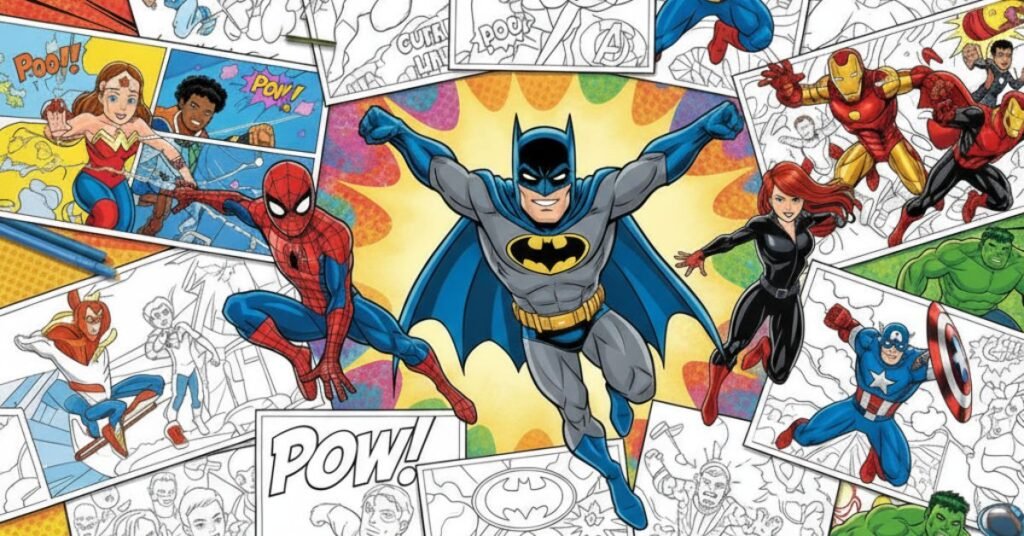
Superhero printables to color give children a framework for inventing brave characters instead of asking them to copy one fixed costume. The ten pages in this collection include emblems, capes, rescue scenes, teamwork, gadgets, and city backgrounds. Broad shapes help younger artists begin confidently, while smaller panels and action lines give older children room to practice contrast and shading.
The most valuable question is not “Which famous hero is this?” but “What does this hero help with?” A child might design a storm helper, an animal rescuer, a library protector, or a hero who solves arguments fairly. Fans who enjoy familiar web-themed action can also explore Spiderman coloring pages, while this collection remains focused on original identities and stories.
Build a Hero from Purpose to Palette
Start by choosing a helpful purpose. A nighttime rescuer may need reflective accents; a nature protector might use leaf shapes and earth colors; a water-safety hero could use bright, easily seen panels. Connecting costume choices to a purpose makes the design feel thoughtful and avoids a random collection of colors.
Next, select an emblem made from one simple symbol. A shield can suggest protection, a lantern can suggest guidance, and joined hands can suggest teamwork. Repeat the emblem once on the costume and once in the background so the page has a clear visual theme.
Original Hero Scenes Ready for Color
Create a Hero Emblem
A large blank chest emblem sits above several simple symbol ideas. Combine two shapes, test them on scrap paper, and choose colors that remain clear from a distance.
Cape on the Rooftop
A caped figure watches a quiet city from a rooftop. Use a strong silhouette, a limited night palette, and small warm windows to create depth without filling every area heavily.
Neighborhood Rescue
A hero helps return a lost pet while neighbors point toward home. Friendly expressions and daylight colors keep the scene focused on service rather than conflict.
Two-Hero Teamwork
Two original heroes lift a fallen branch from a path together. Give each costume a separate accent color, then repeat both colors in the shared teamwork emblem.
Flying Above the Park
A flying hero passes trees, a pond, and a playground below. Lighter distant colors and stronger foreground outlines help the high viewpoint feel spacious.
Gadget Workshop
A young inventor hero arranges a flashlight, map, rope, and communication device. Shade each material differently and label one original non-weapon tool beside the workbench.
Weather Helper Hero
Wind lines, clouds, and rain surround a hero securing loose objects. Bright safety colors can make the character visible against the gray-blue weather.
Secret Identity Desk
A backpack, glasses, notebook, and folded cape offer clues without showing a famous character. Choose everyday colors and hide the emblem in one small object.
Comic Action Panels
Three empty comic panels show a leap, a rescue, and a celebration. Use a repeated palette and add short sound words or speech bubbles to connect the sequence.
Community Hero Parade
Several original heroes walk with firefighters, teachers, caregivers, and volunteers. Vary clothing colors while repeating a banner palette across the full group.
How to Color Capes, Masks, and City Shadows
A cape looks dimensional when folds alternate between a base color, a darker shade, and a narrow highlight. Masks need clean edges around the eyes, so colored pencils are often easier than broad markers there. City scenes benefit from contrast: keep distant buildings lighter and use darker values on the nearest rooftop or street edge.
Try one dramatic light source rather than shading every direction. A streetlamp, sunset, moon, or workshop lamp can guide which side of the hero remains bright. Artists interested in darker city palettes can compare capes and silhouettes with Batman coloring pages, then return to the original hero design with a different emblem and purpose.
Four Ways to Use the Pages in a Group
Hero Profile Card
On the back of a finished page, write the hero’s name, helpful skill, one limitation, and the person or place they protect. A limitation such as needing teamwork, clear weather, or time to plan makes the character more interesting and encourages problem-solving.
Kindness Mission Board
Turn several colored emblems into a board of ordinary helpful actions: put away supplies, welcome a new classmate, read to a younger child, or thank a community worker. Avoid attaching rewards or competition; the purpose is to connect heroic imagery with achievable care.
Comic Sequence Swap
Each participant colors one panel, then passes the sequence to another person who adds captions. The group must create a safe solution that uses communication or cooperation. Dynamic pose inspiration can come from gaming-inspired action pages without copying a game character.
Costume Design Conference
Partners explain why they chose particular colors, symbols, and tools. The listener asks one question and suggests one practical detail, such as a pocket, light, helmet, or weather layer. The artist decides whether to use the suggestion.
10 Printable Superhero Printables To Color
Choose a design below, open the full-size image, and print it for your coloring activity.
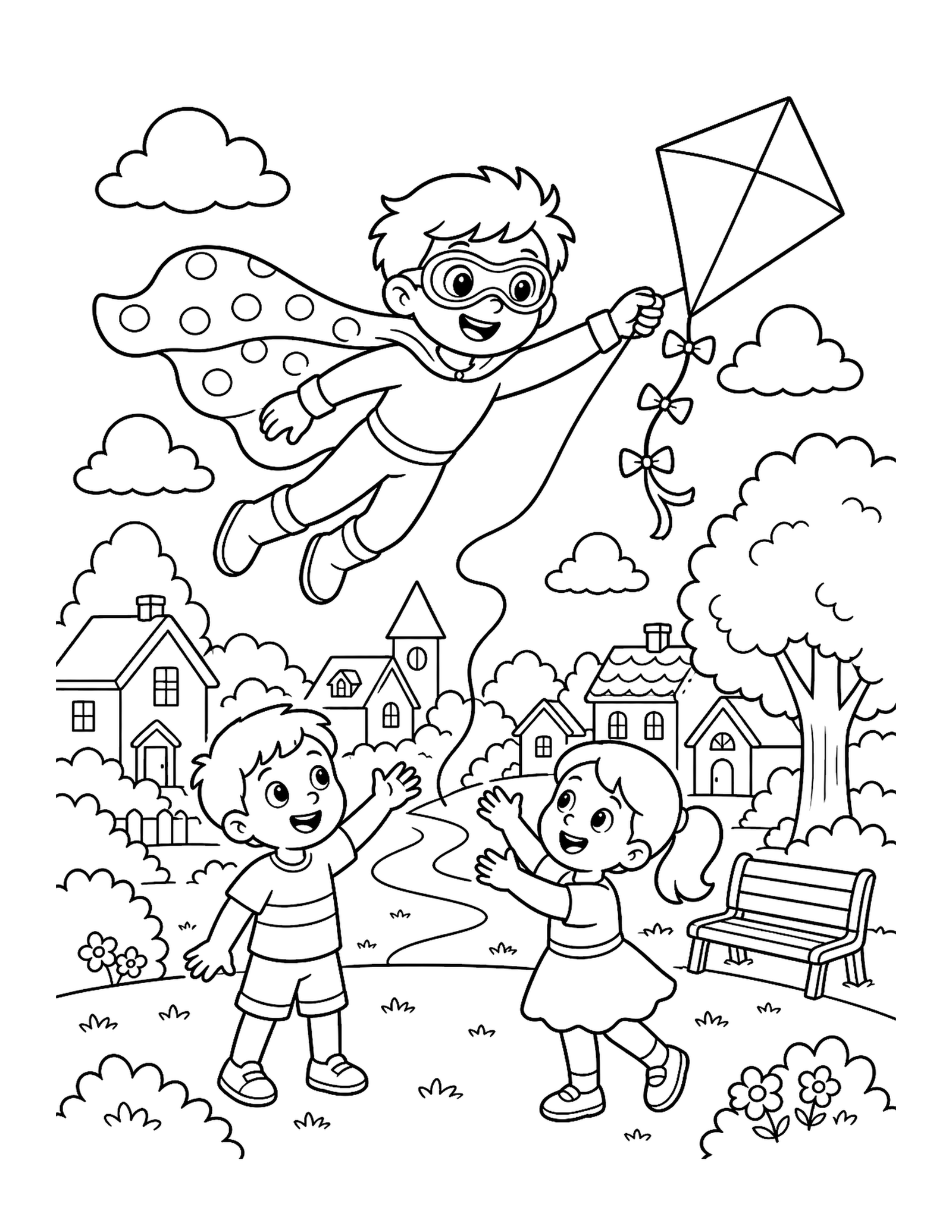
Flying Hero Returns a Kite
A cheerful original flying hero soars above town to return a lost kite to children in the park.
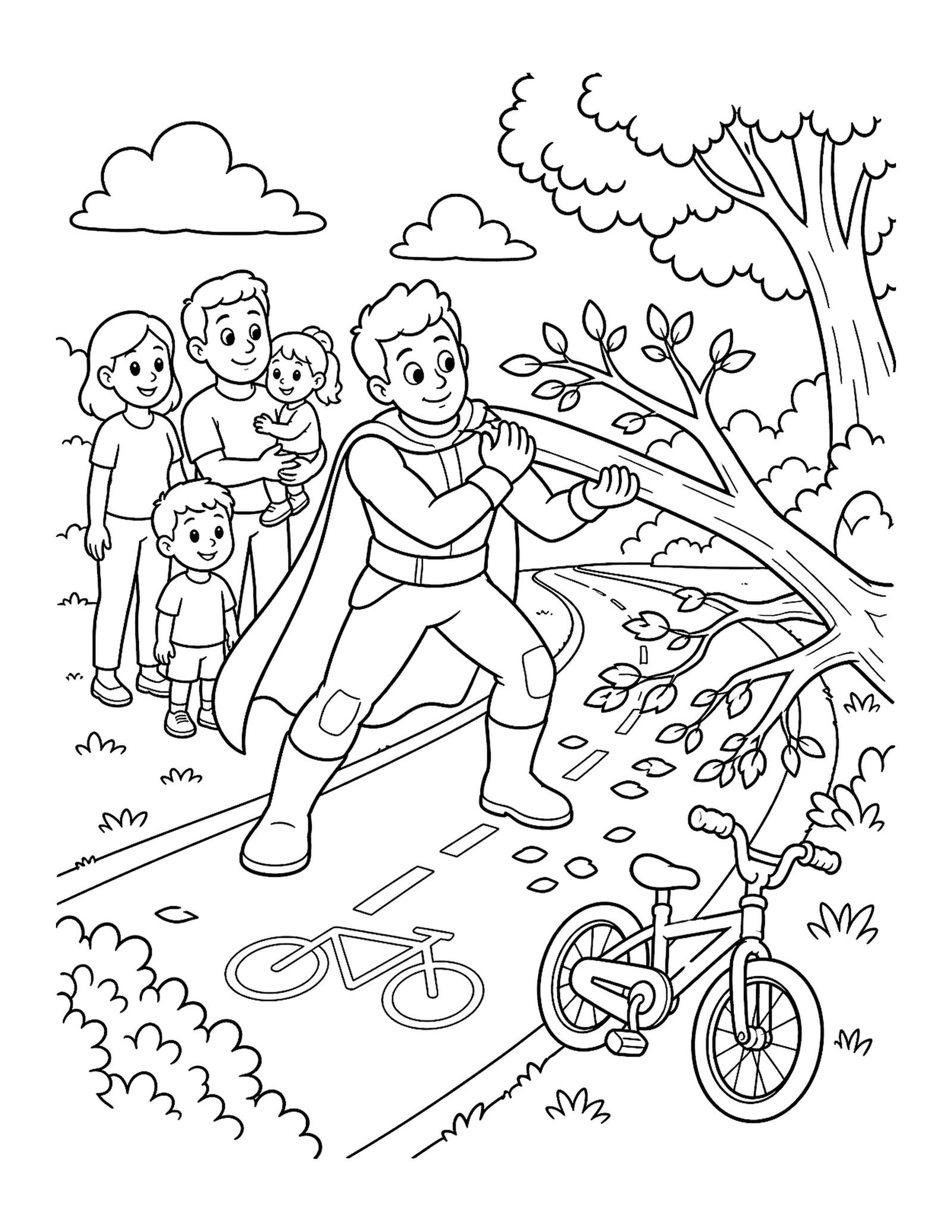
Strong Hero Clears the Bike Path
A community-minded hero safely lifts a fallen tree branch so families can use the bicycle path again.
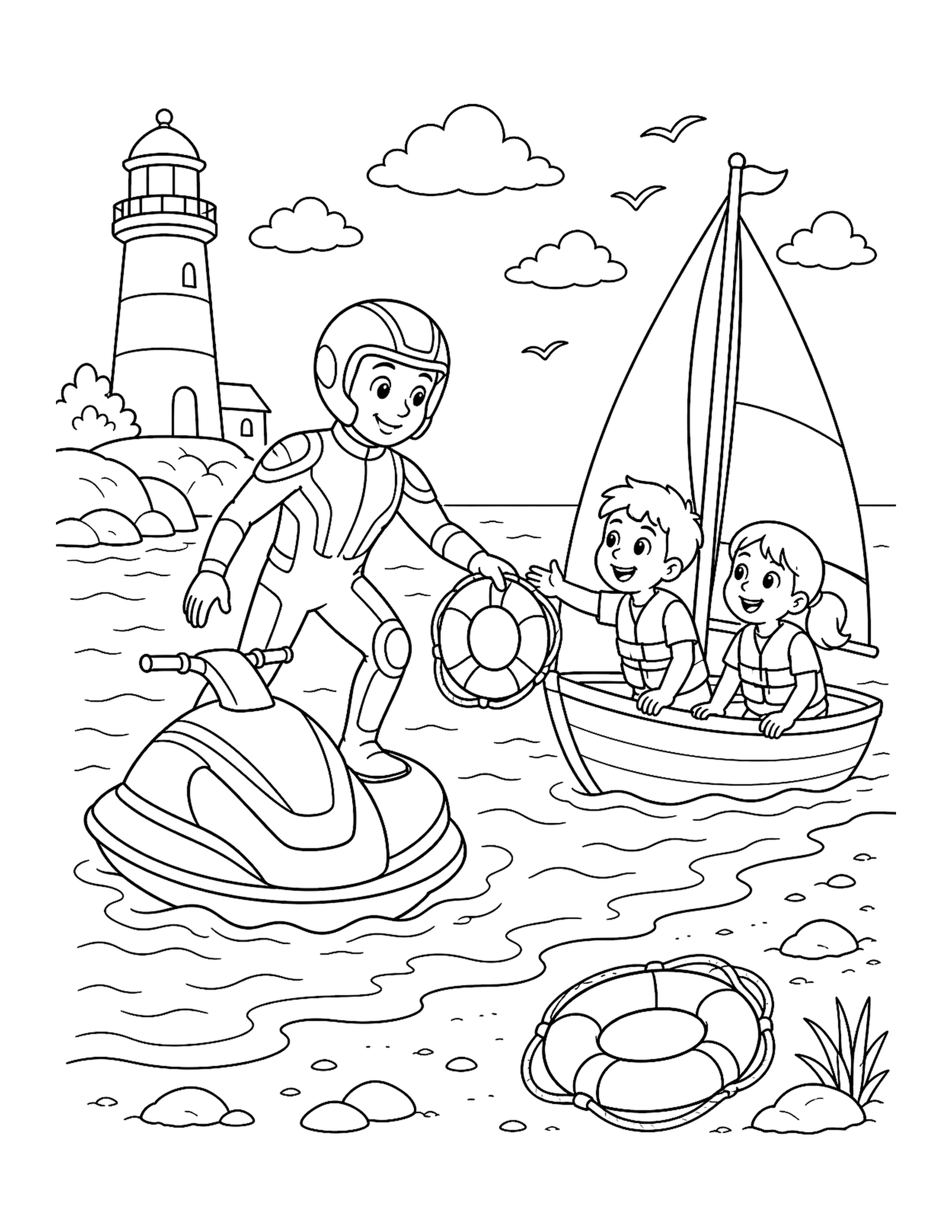
Water-Rescue Hero Helps a Sailboat
A helmeted water-rescue hero guides a small sailboat toward shore beside calm waves and a lighthouse.
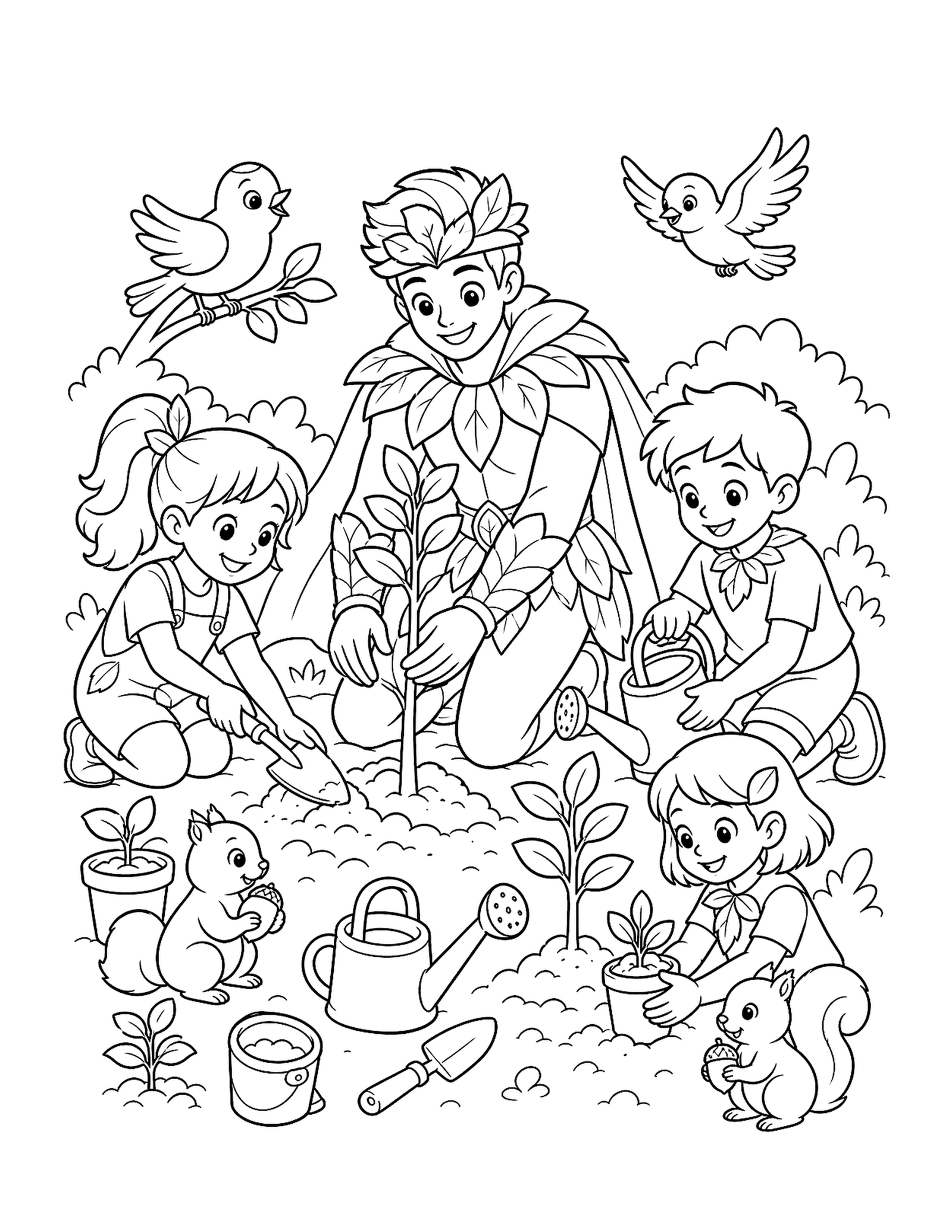
Nature Hero Plants Trees
A leaf-inspired hero and children plant and water young trees while woodland animals watch nearby.
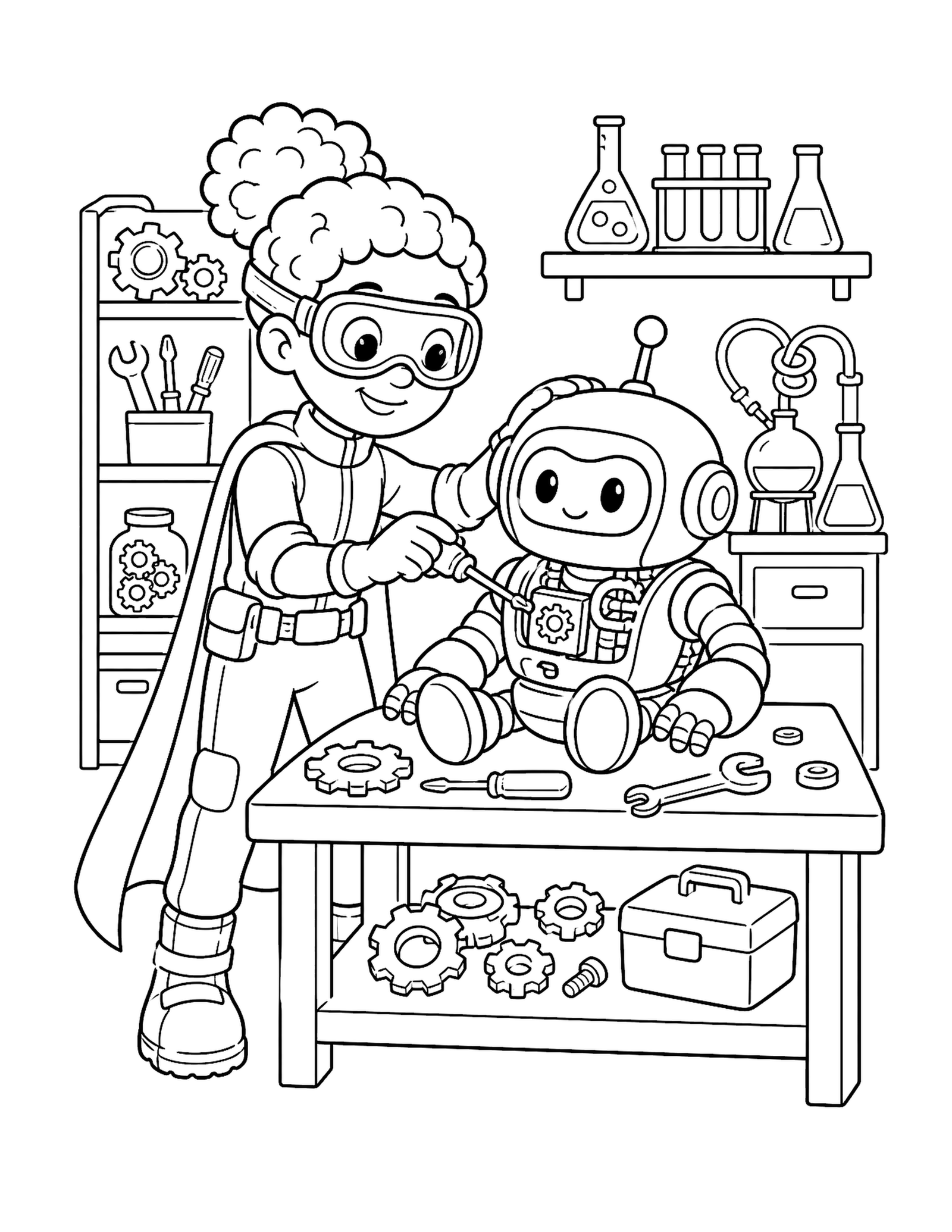
Science Hero Repairs a Robot
A creative science-powered hero repairs a friendly helper robot at a workbench filled with useful tools.
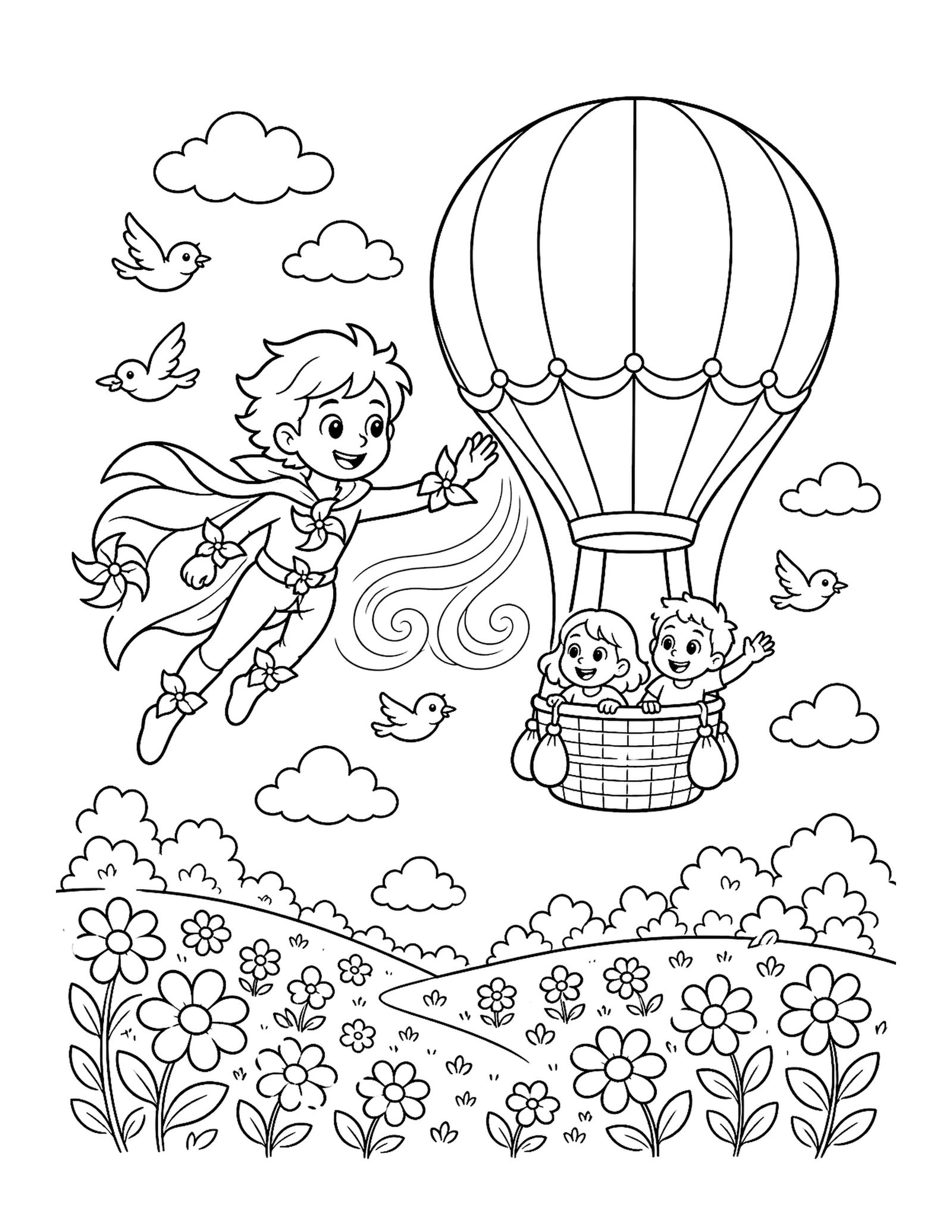
Wind Hero Guides a Balloon
A wind-powered hero gently guides a hot-air balloon past fluffy clouds and birds toward a safe landing.
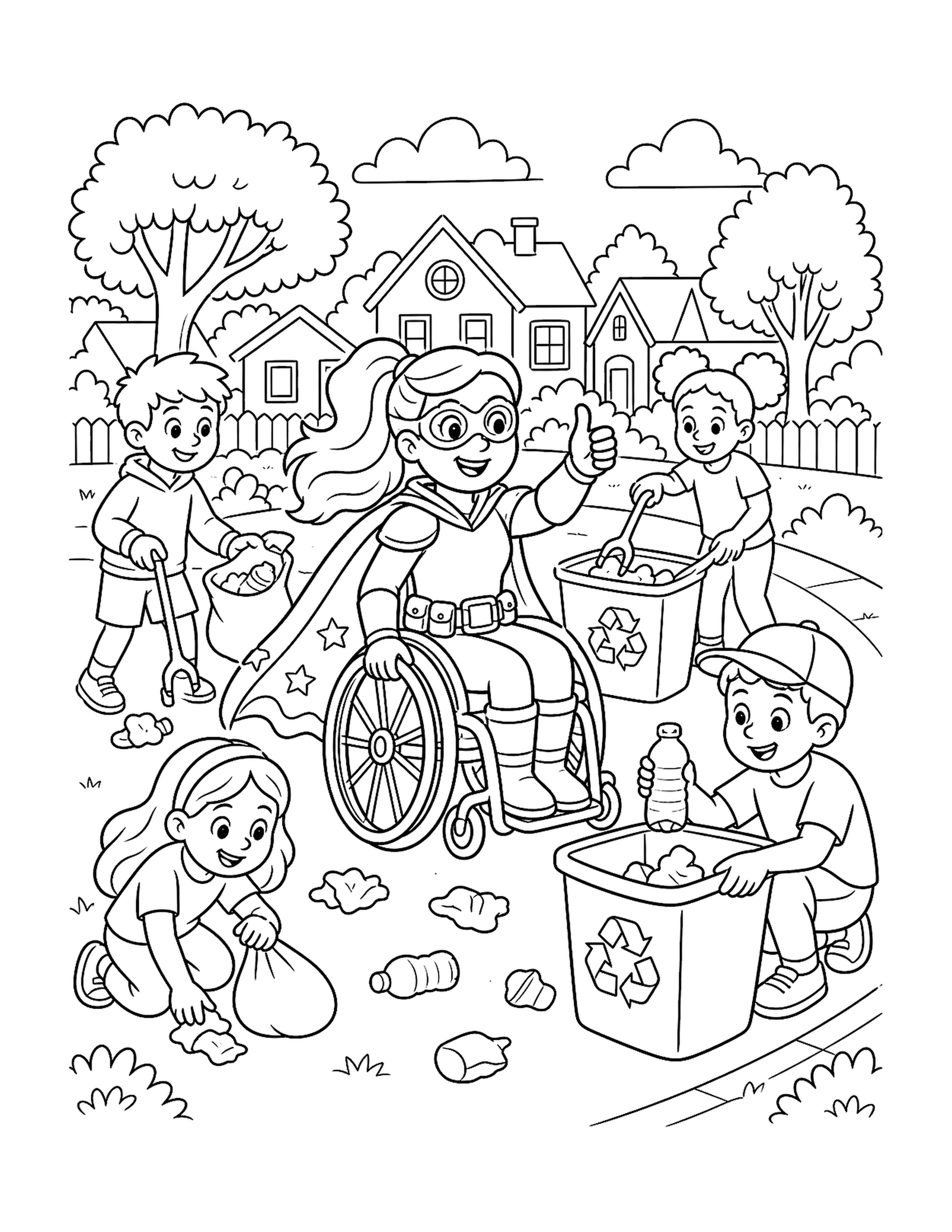
Wheelchair Hero Leads a Cleanup
A wheelchair-using hero leads a cheerful community cleanup as children sort litter into recycling bins.
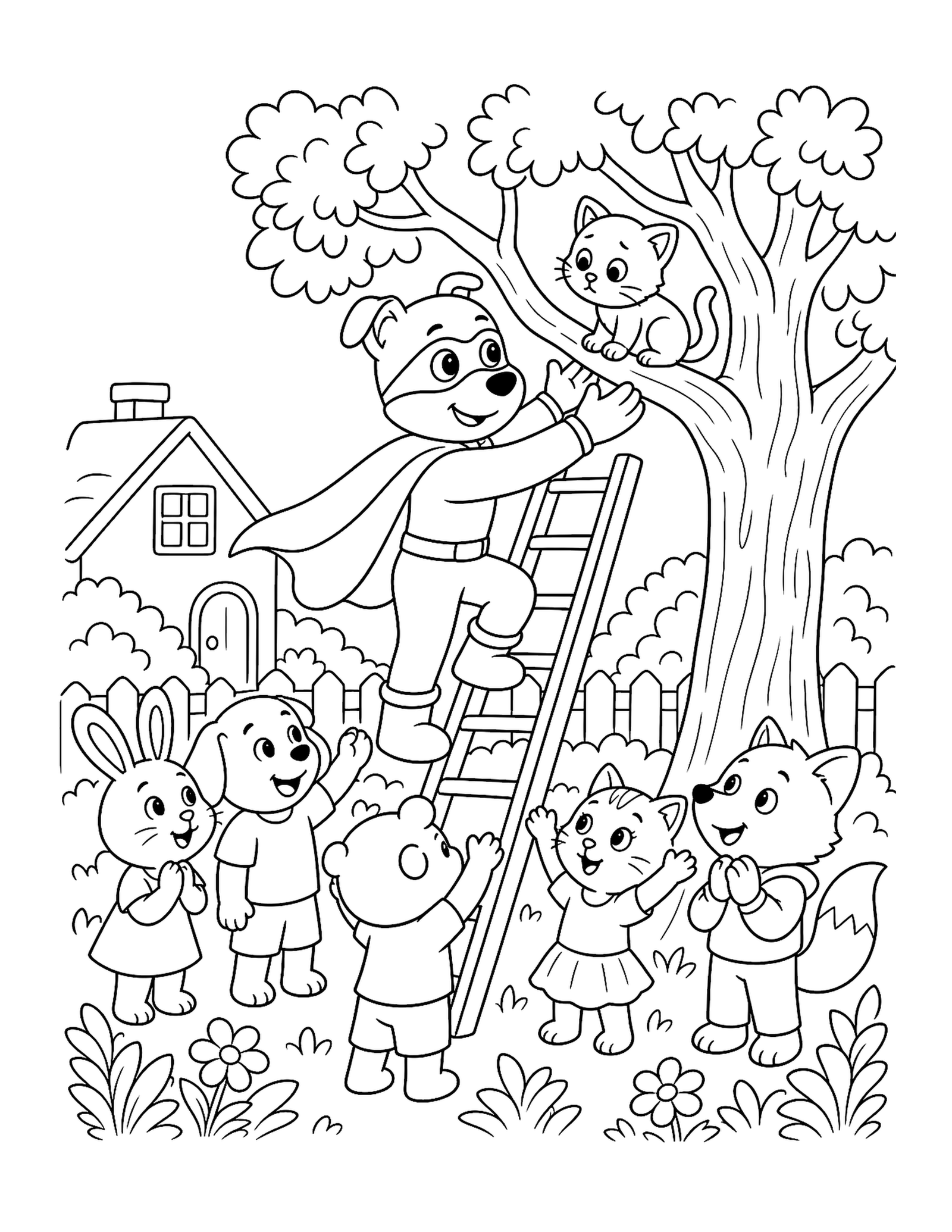
Animal-Helper Hero Rescues a Kitten
A kind hero uses a secure ladder to help a kitten down from a low tree while neighbors cheer.
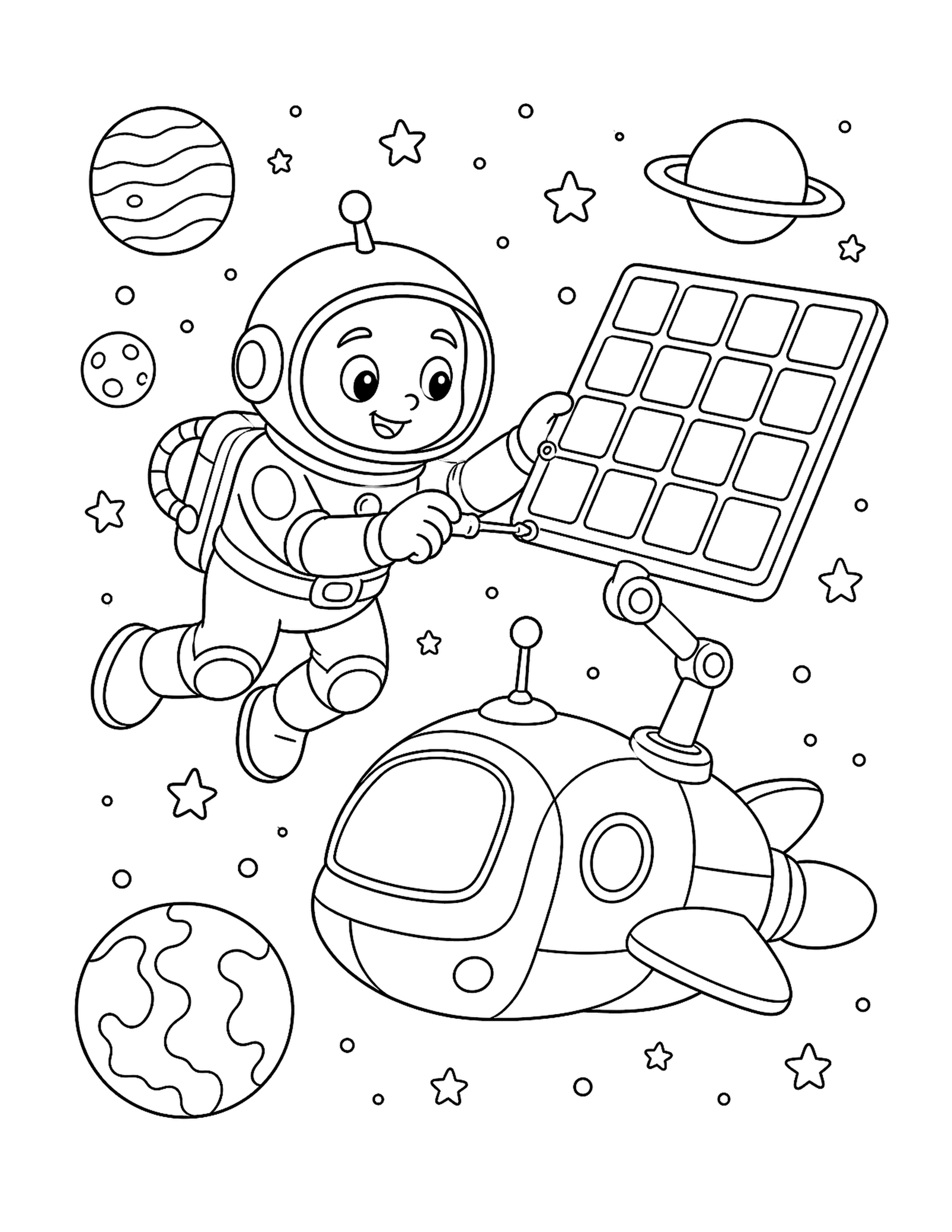
Space Hero Repairs a Solar Panel
A rounded-suit space hero floats beside a small spacecraft while carefully repairing its solar panel.
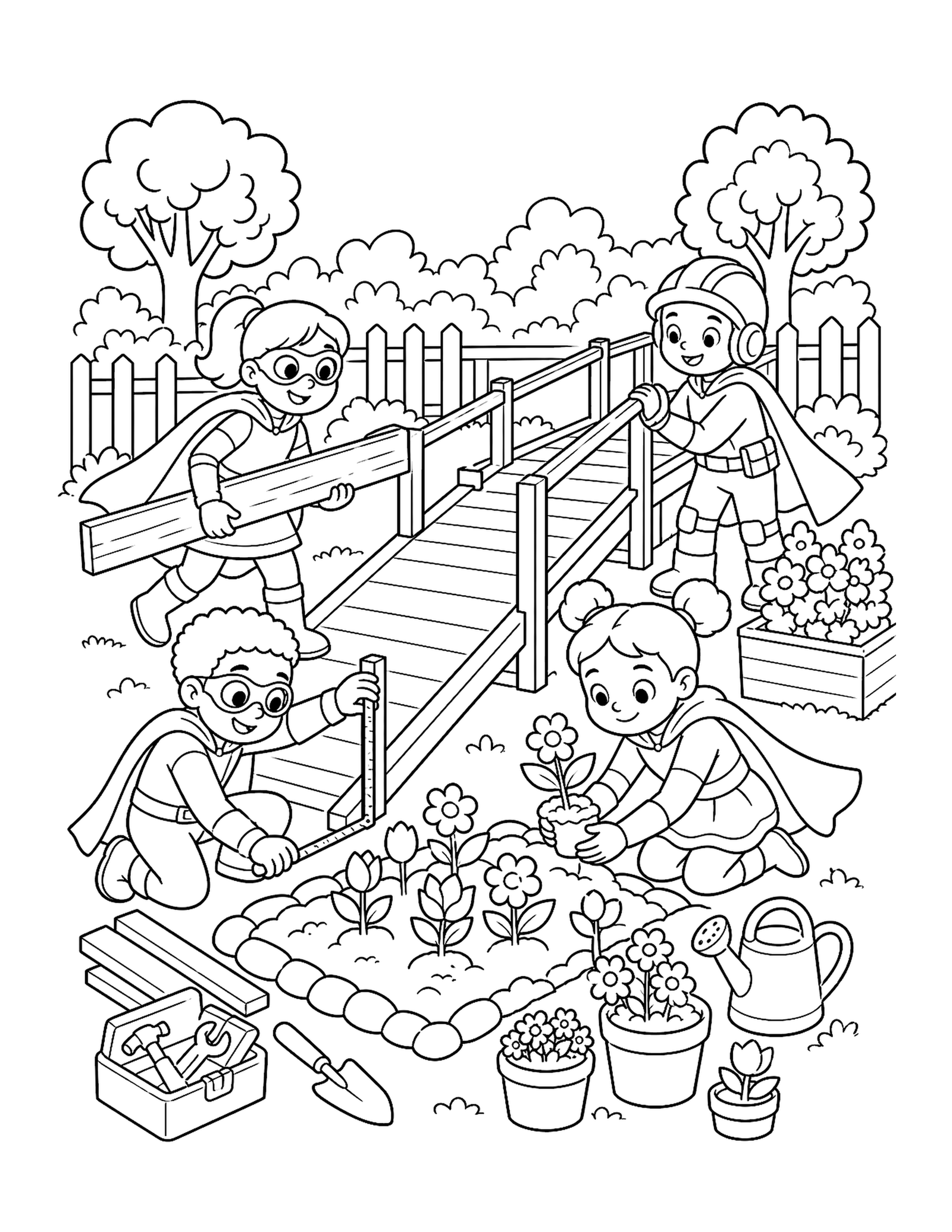
Superhero Team Builds a Garden Ramp
Four distinct young heroes measure, carry materials, and plant flowers while building an accessible garden ramp.
Printing and Craft Preparation
Open the full-size image, choose portrait orientation, and check that the border fits inside the printable area. Copy paper is convenient for crayons and quick classroom work. Card stock or another printer-approved heavier sheet is better for masks, badges, puppets, or pages that will be displayed. Print a test sheet before producing a group set.
Use child-safe scissors and adult supervision when cutting emblems or figures. Avoid wearing paper masks while running or near stairs. For a puppet, attach the finished figure to a craft stick with tape on the back and keep the edges smooth. Markers should dry before cutting or stacking.
Questions About Superhero Printables to Color
Do these pages feature one specific hero?
The collection emphasizes original superhero ideas, even when a pose or setting uses familiar comic-book visual language. Children can create names, symbols, powers, and community roles that belong to their own stories.
How can I help a child choose costume colors?
Ask for one main color, one supporting color, and one small accent. Then connect the palette to the hero’s purpose or environment. This keeps the design readable while preserving creative control.
Are action scenes suitable for younger children?
Choose cooperative rescue scenes with broad outlines and discuss the safe outcome. Younger children can focus on clothing and background shapes without needing to understand every action line or panel.
Can the pages support writing practice?
Yes. A hero profile, three-panel caption set, or short “problem and solution” paragraph gives the artwork a natural writing purpose. Let emerging writers dictate part of the story when needed.
What is the simplest craft to make?
Color and cut out a large emblem, mount it on card stock, and add a loop of paper to create a desk badge or wall sign. This requires less precise cutting than a full figure.
Write a Heroic Problem That Does Not Need a Fight
Interesting superhero stories can begin with a blackout, a blocked path, a frightened animal, a missing library book cart, or a storm that scatters signs around a park. The hero succeeds by observing, planning, communicating, and accepting help. These problems are easy to represent with ordinary objects in the coloring-page background and give children a wider idea of what courage can look like.
Use four questions to shape the story: Who needs help? What makes the problem difficult? Which skill does the hero use? Who else contributes to the solution? Write one short answer beside the page or on the back. If the child wants a longer comic, turn each answer into a panel and make the final panel show the community returning to normal.
Make Costume Details Easy to Read
Busy costumes benefit from a visual hierarchy. Place the strongest contrast around the face and emblem, use medium contrast on the torso and cape, and keep small accessories quieter. Repeating every available color in every section can hide the silhouette. Instead, allow plain areas to separate stripes, symbols, pockets, and protective pieces.
A costume can also communicate movement. Long diagonal stripes make a running pose feel faster, curved cape bands emphasize turning, and vertical panels support a calm standing pose. Test the direction with a light pencil line before filling the area. If a pattern competes with the emblem, simplify the pattern rather than adding another outline.
Community Interview Prompt
Ask a trusted community helper what preparation matters in their work. A librarian may organize information, a caregiver may notice small changes, and a firefighter may practice procedures with a team. Translate one real skill into the fictional hero’s tools or pose without claiming that the coloring page teaches professional duties. The conversation keeps the story grounded in service and respect.
Color the Kind of Hero You Would Trust
The strongest superhero printables to color leave room for a child’s own values. A memorable hero may be patient, observant, inventive, or good at asking for help. Choose a purpose, build a clear emblem, and use color to make that purpose visible. When the page is complete, tell the small story behind it and celebrate the decisions that made the hero original.

Pingback: Star Wars Coloring Pages: A Creative Way to Engage with the Galaxy