


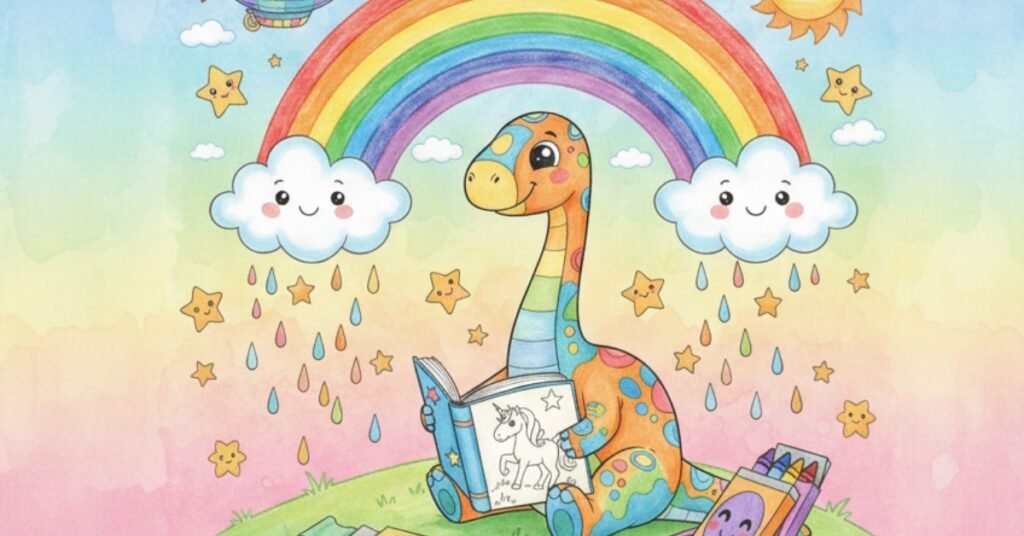
A rainbow coloring page gives young artists a familiar shape with almost unlimited room for invention. Some children want to place colors in a traditional spectrum order; others prefer pastel stripes, nighttime colors, or patterns that turn every band into a different texture. This ten-page collection combines clouds, weather, landscapes, animals, and decorative designs so families and teachers can select a page that fits the available time and skill level.
The activity can stand alone, support a simple weather discussion, or become the starting point for a classroom display. The goal is not to memorize one “perfect” rainbow. It is to notice color relationships, practice steady hand movement, and make thoughtful choices. A child who enjoys magical sky scenes can continue with unicorn coloring pages after finishing a favorite design.
A Quick Rainbow Color Guide
A common visible-light sequence is red, orange, yellow, green, blue, indigo, and violet. Children do not need to reproduce it exactly, but the sequence offers a useful starting point. Ask them to identify warm colors, cool colors, and the place where the two groups meet. Then let them reverse the order, repeat a favorite shade, or invent an extra band.
For smooth pencil bands, begin lightly and add pressure in a second pass. When using markers, color neighboring bands after the first area has dried so the edges remain controlled. White space around clouds can make saturated colors appear brighter, while a pale blue background creates the feeling of open sky.
Choose a Rainbow Scene to Color
Rainbow Between Two Clouds
A large arch joins two soft clouds, leaving broad bands for beginners. Add tiny raindrops below one cloud and sunlight around the other to show changing weather.
Sunshine After Rain
This scene combines a smiling sun, retreating drops, and a bright arch. Use warm color near the sun and cooler gray-blue tones near the last rain cloud.
Rainbow Over Rolling Hills
Layer green hills beneath the sky, then add flowers, paths, or a tiny house. The landscape provides a natural way to practice foreground and background color choices.
Rainbow and Butterfly Garden
Butterflies and flowers repeat the curved shapes and bright colors of the rainbow. Try symmetrical wing patterns, then borrow two spectrum colors for each blossom.
Rainbow Rocket Trail
A playful rocket leaves a striped rainbow trail across stars and planets. Dark blue or purple space makes the bright trail stand out, while planets can use invented color combinations.
Rainbow Umbrella Walk
A child-sized umbrella echoes the arch overhead while puddles reflect bands of color. Use pencil shading for reflections and reserve bold marker color for the umbrella panels.
Patterned Rainbow Bands
Each band contains dots, zigzags, waves, stars, or checks instead of an empty stripe. Choose a limited palette so the many patterns remain easy to read.
Rainbow Castle Sky
Cloud towers and a small fantasy castle sit beneath the arch. Pastels create a gentle storybook mood, while stronger jewel tones make the same scene feel adventurous.
Rainbow Animal Parade
Friendly animals walk below a wide rainbow carrying simple flags. Give each animal one spectrum color, then repeat those colors across the flags to unify the scene.
Rainbow Mandala Sun
Curved bands form a circular sunburst with repeated droplets and cloud shapes. Older colorists can shade each repeated section gradually from light to dark.
Turn One Page into a Color-Learning Activity
Before coloring, make seven small swatches on scrap paper. Place them in an order that feels balanced, then test which colors remain distinct when side by side. This simple planning step teaches comparison without requiring formal color theory. A teacher can ask students to explain one choice using words such as brighter, darker, warmer, cooler, or softer.
The butterfly garden page pairs especially well with butterfly coloring pages. Fold a blank strip of paper down the center, create a matching wing pattern on both sides, and place it beside the rainbow. The exercise links symmetry with color sequencing and gives children a manageable reason to repeat shapes carefully.
Weather Talk While You Color
Rainbows appear when sunlight is refracted and reflected through water droplets. For a child-friendly explanation, compare each droplet to a tiny helper that bends and separates light. Avoid promising that every sun shower will produce a visible rainbow; viewing angle, droplet position, and light direction all matter. The coloring page can illustrate the idea without pretending to be a scientific diagram.
Ask where the light source might be and which clouds are moving away. Invite children to add evidence of recent rain: wet grass, puddles, umbrellas, or drops on a window. These additions turn a simple arch into a weather story and reinforce observation of everyday surroundings.
Print, Protect, and Display the Artwork
Open the full-size page and check the print preview before printing. Select “fit to printable area” when the border looks too close to the edge. Copy paper is suitable for crayons and pencils; heavier paper is helpful for markers, paint, or a display that will be handled often. Place a protective sheet under wet media and allow it to dry before adding labels or mounting tape.
For a classroom rainbow, assign one page or color family to each small group. Arrange the finished work from warm to cool colors rather than ranking it by skill. At home, cut a window from a plain paper frame so the child can reveal one interesting detail at a time. Fantasy-minded artists can add a companion from fairy coloring pages to the castle or garden scene.
Creative Projects Built Around a Rainbow
Weather Wheel
Attach a colored rainbow to a cardboard circle divided into sunny, rainy, cloudy, and windy sections. Add a movable paper arrow with a split pin. A child can update the wheel after looking outside and explain which colors match the day’s mood.
Spectrum Scavenger Hunt
After coloring, search the room for one safe object that matches each band. Place the objects in order or make a written list. This encourages color recognition and comparison while keeping the printed page as a visual reference.
Kindness Arc
Write one small helpful action inside each rainbow band: share supplies, invite someone to play, tidy a space, thank a helper, or listen carefully. The completed page becomes a personal reminder rather than a generic decoration.
Window Light Experiment
Hold a clear glass of water near a sunny window with adult supervision and observe where light falls on white paper. Do not look directly at the sun. The result may be subtle, but it creates a useful conversation about light, water, and the simplified rainbow on the coloring sheet.
10 Printable Rainbow Coloring Page
Choose a design below, open the full-size image, and print it for your coloring activity.
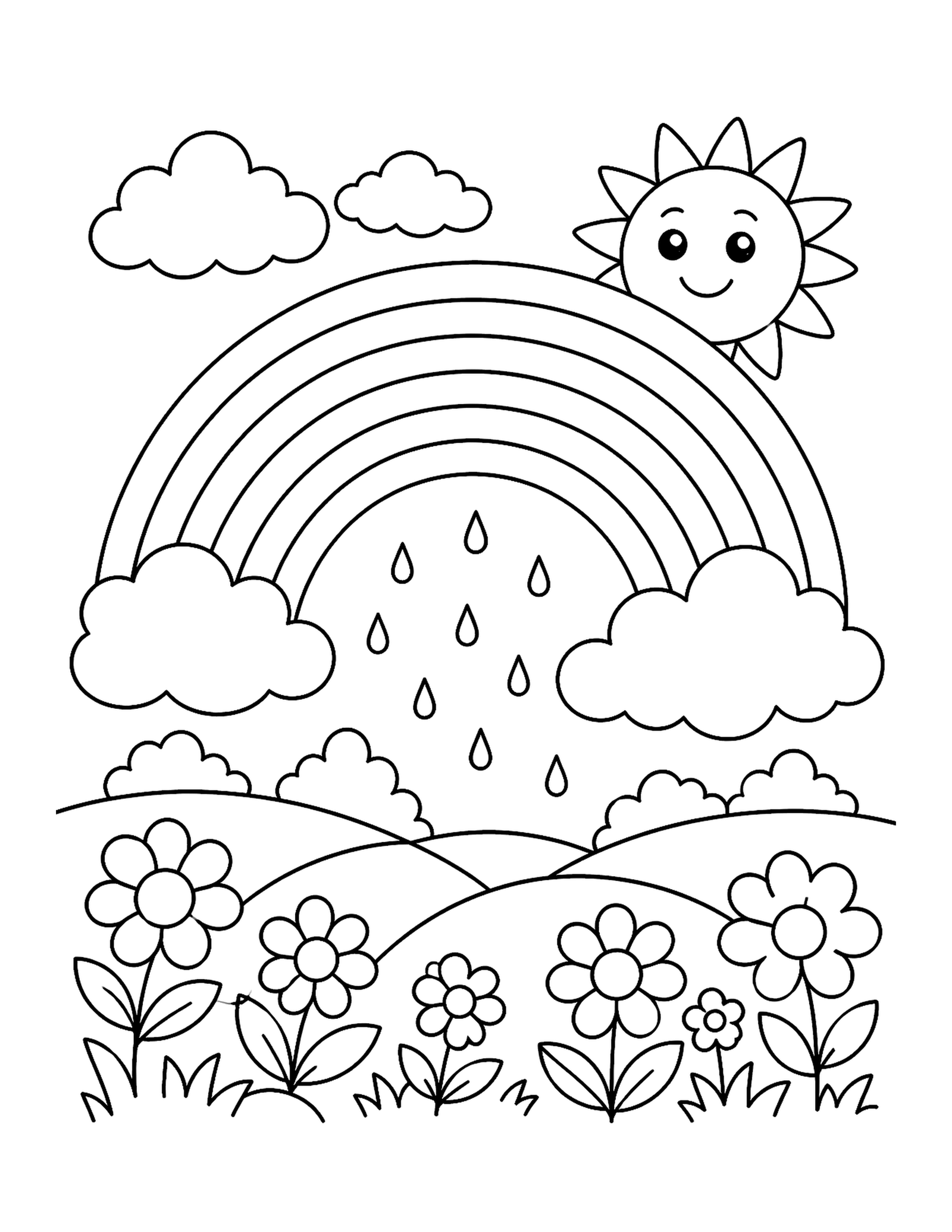
Rainbow, Clouds, and Sunshine
A bright rainbow arches above clouds, flowers, raindrops, and gentle hills in a cheerful outdoor scene.
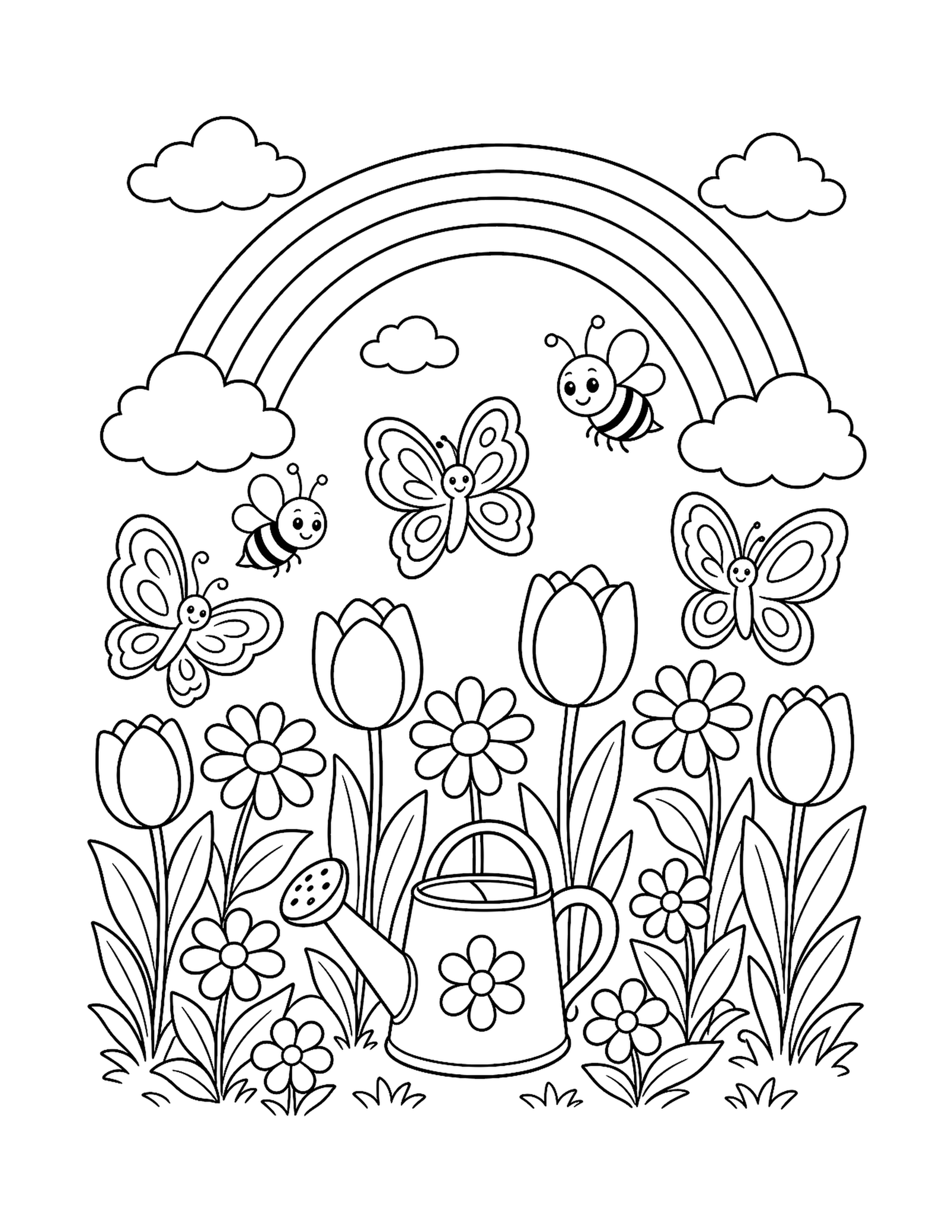
Rainbow Flower Garden
A broad rainbow overlooks a lively flower garden filled with butterflies, bees, blossoms, and a watering can.
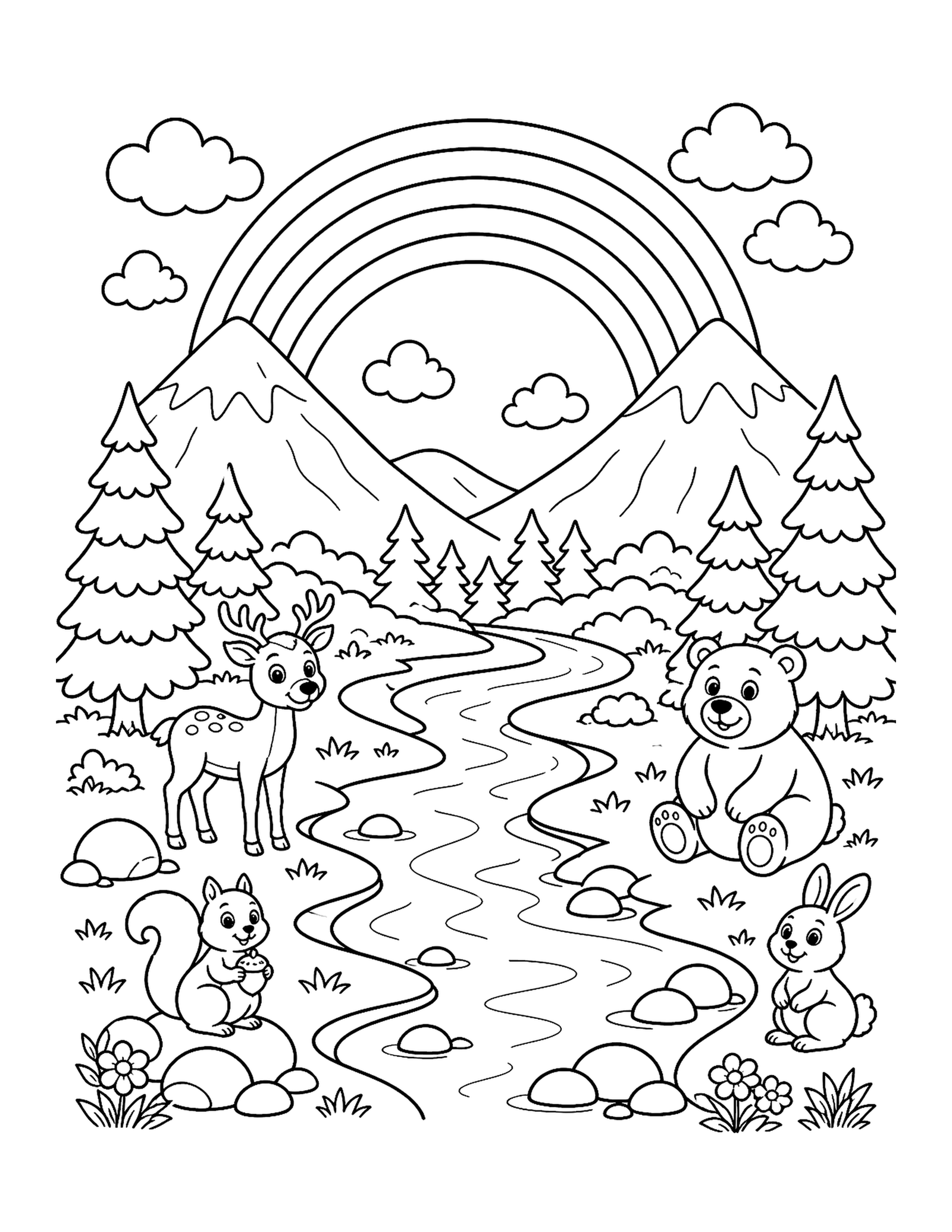
Rainbow Over Mountains and River
A rainbow stretches between mountain peaks above a winding river and a friendly woodland landscape.
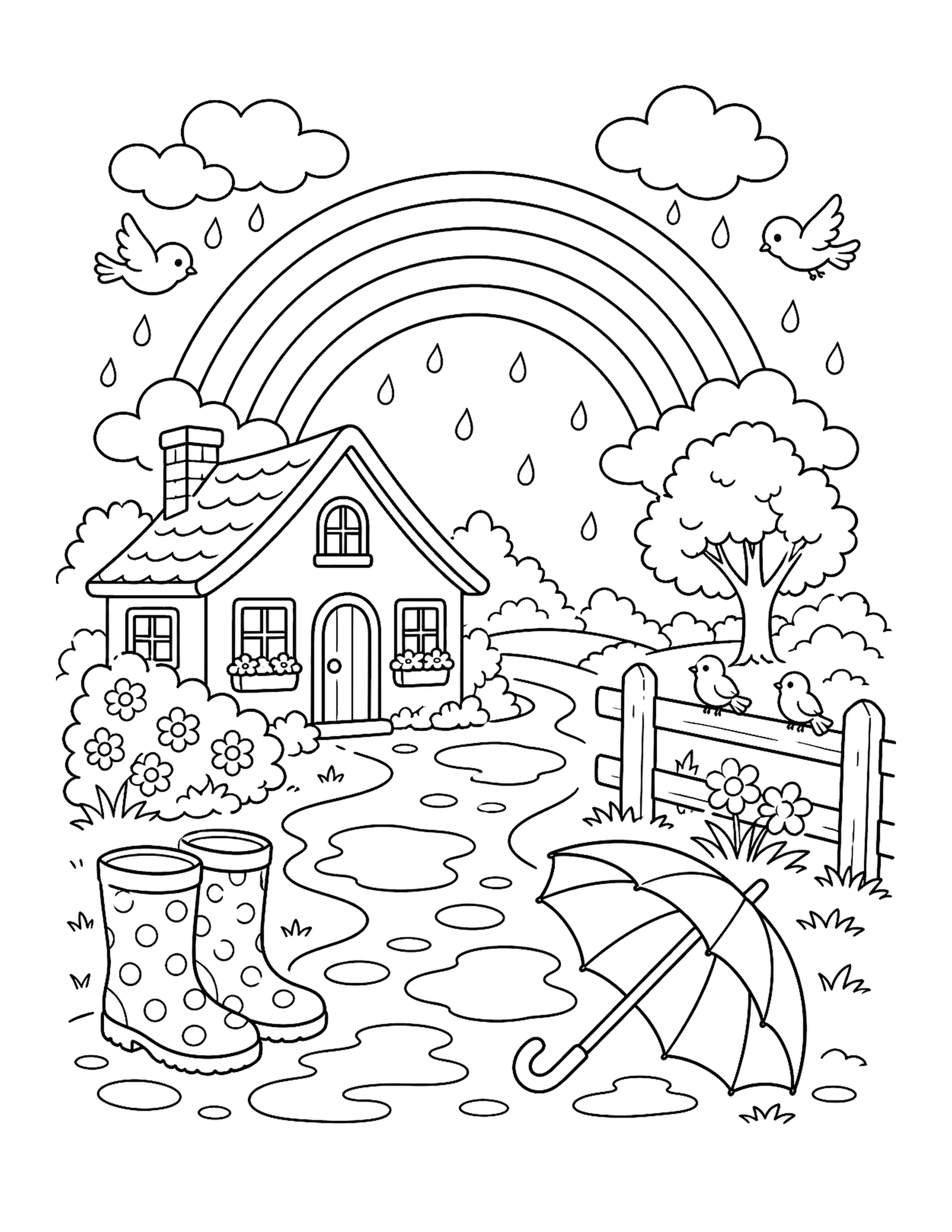
Rainbow After a Rainy Day
A countryside rainbow appears after the rain beside puddles, boots, an umbrella, a fence, and little birds.
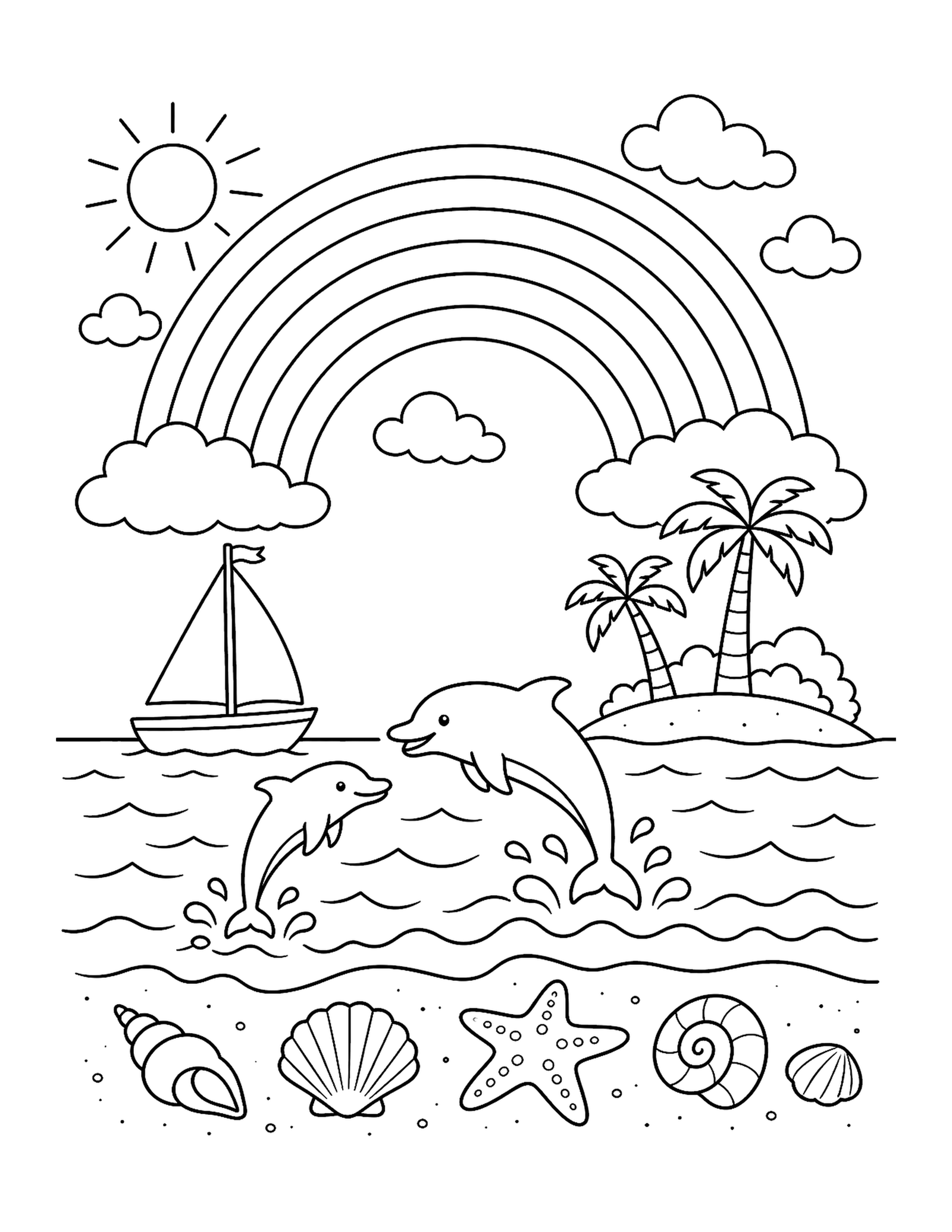
Rainbow Ocean Adventure
A rainbow rises over a playful ocean scene with jumping dolphins, a sailboat, shells, waves, and an island.
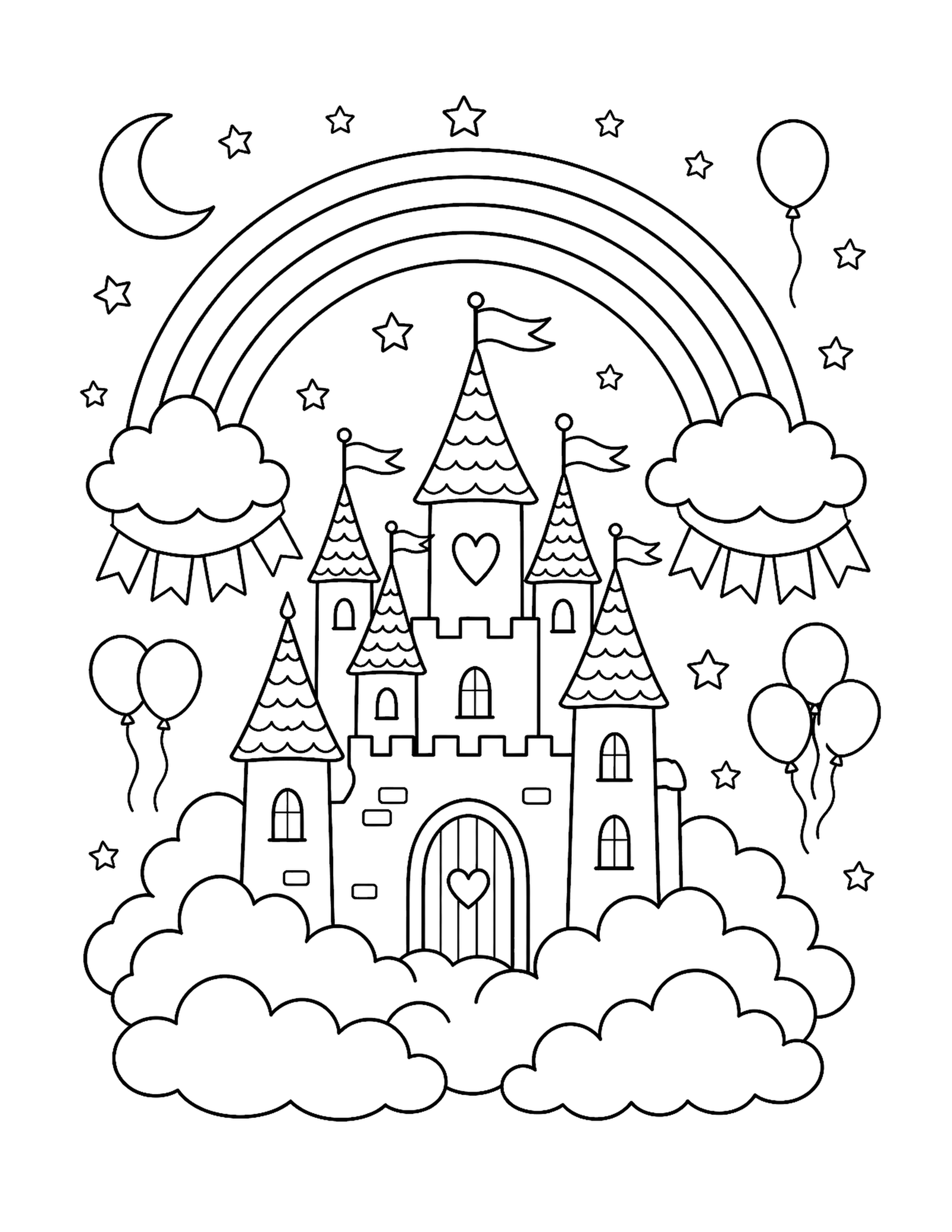
Rainbow Castle in the Clouds
A magical original castle floats among clouds beneath a rainbow, surrounded by stars, a moon, and balloons.
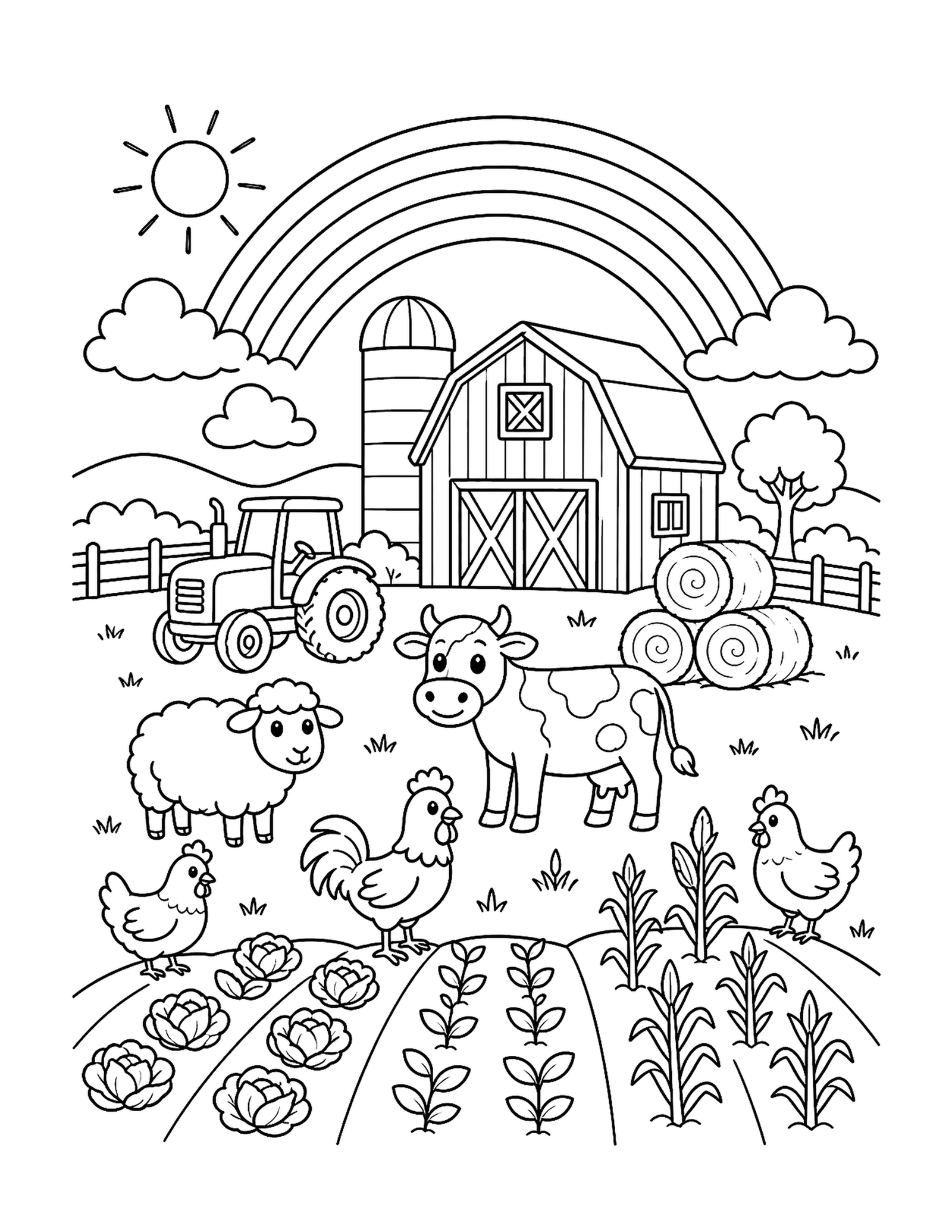
Rainbow Farm and Animals
A rainbow shines over a friendly farm scene with a barn, tractor, hay bales, animals, and crop rows.
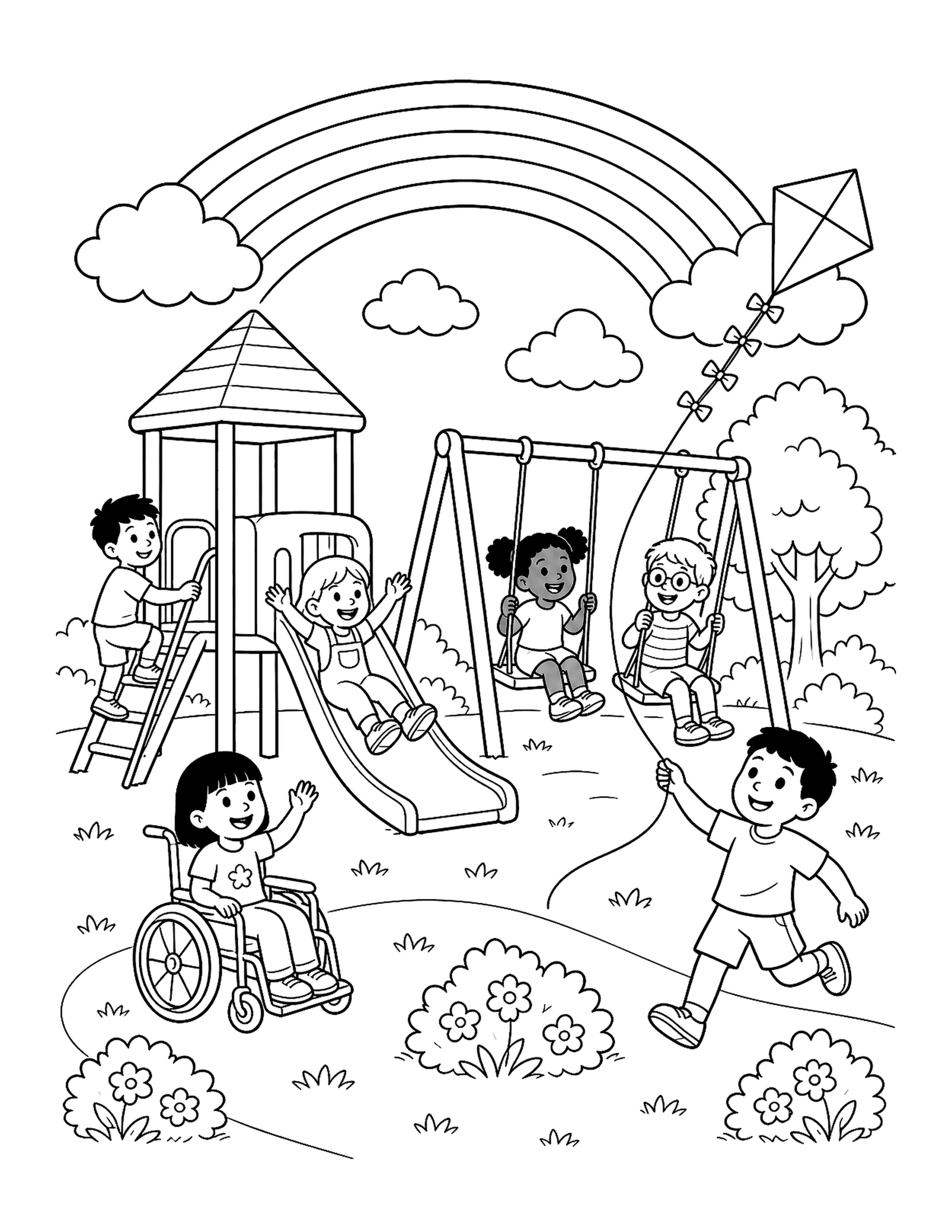
Rainbow Playground Fun
Children enjoy swings, a slide, and kite flying together at a welcoming playground beneath a rainbow.
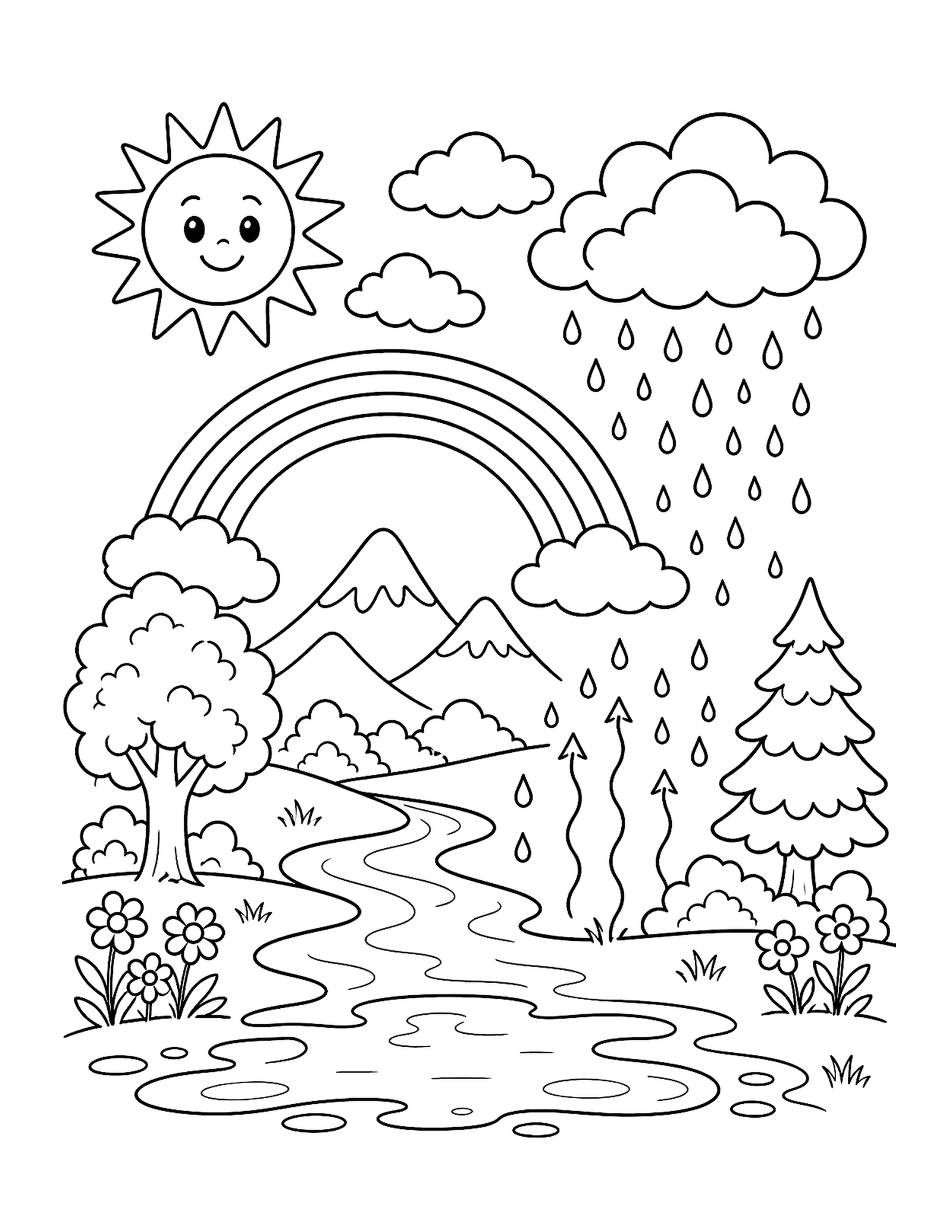
Rainbow Weather Cycle
A word-free weather scene visually connects sunshine, clouds, falling rain, puddles, and rising water droplets.
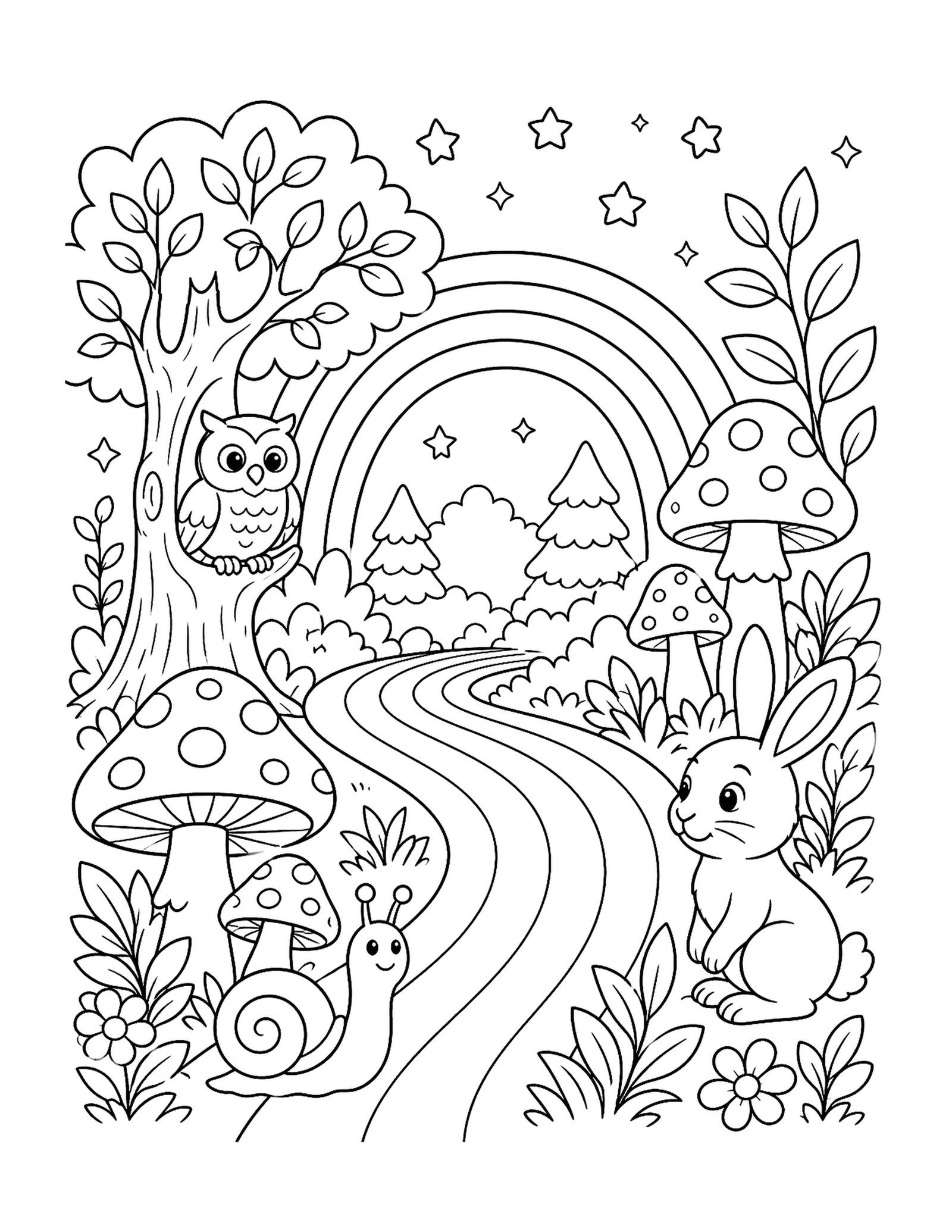
Rainbow Fantasy Forest
A rainbow-shaped path winds through a whimsical forest inhabited by friendly animals, mushrooms, leaves, and stars.
More Printable Coloring Pages
- Food Coloring Pages You Need to Try for Endless Fun
- 20 Printable Cool Coloring Pages Collection
- 20 Printable Animal Coloring Pages Collection
Rainbow Coloring Page FAQs
Must children use seven colors?
No. Seven bands are common, but the artwork can use fewer, more, or repeated colors. A limited three-color palette can look especially strong on a patterned page and may be easier for younger children to complete.
Which tools make smooth rainbow bands?
Colored pencils allow gradual layering and clean edges. Crayons cover broad areas quickly. Washable markers produce strong flat color, but testing them on spare paper helps prevent unexpected bleeding.
How can I adapt the page for preschoolers?
Choose the broadest arch, offer only a few tools at once, and name colors during natural conversation. Avoid correcting the sequence. The useful practice comes from choosing, gripping, moving, and completing a manageable section.
Can the pages support a weather lesson?
Yes, as an activity prompt. Pair the picture with age-appropriate discussion of sunlight and water droplets, then observe current weather. Treat the illustration as creative reinforcement rather than a precise scientific model.
What is an easy way to display several pages?
Mount each sheet on the same color of backing paper and arrange them as a horizontal sky gallery. Consistent backing ties together very different palettes and patterns.
Mix a Palette Without Making Muddy Colors
When blending pencils, overlap neighboring colors lightly instead of pressing hard at the start. Red can move toward orange through a small yellow overlap; blue can move toward violet through gentle layers. If the paper begins to look waxy or flattened, stop adding pressure and work on another area. A narrow white highlight between very dark bands can also keep the sequence readable.
Paint requires a different rhythm. Prepare the needed colors first, use a separate water cup when possible, and let one band dry before painting the next. Younger painters can use a cotton swab or small sponge for clouds while an adult protects the table. The objective is controlled exploration, not a perfectly even commercial finish. Let the final sheet dry flat before writing a title beneath it.
Make the Sky Your Own
The most useful rainbow coloring page is one that invites a decision. Choose a realistic weather palette, a dreamy pastel set, or a surprising collection of patterns, then carry that idea through the clouds and background. Whether the page becomes a science prompt, a kindness activity, or a bright family artwork, its curved bands offer a clear structure for exploring how colors work together.

Pingback: 20 Printable Fairy Coloring Pages with Enchanted Designs
Pingback: Minion Coloring Pages for Goofy Stories and Bright Ideas - pintyminty.com