


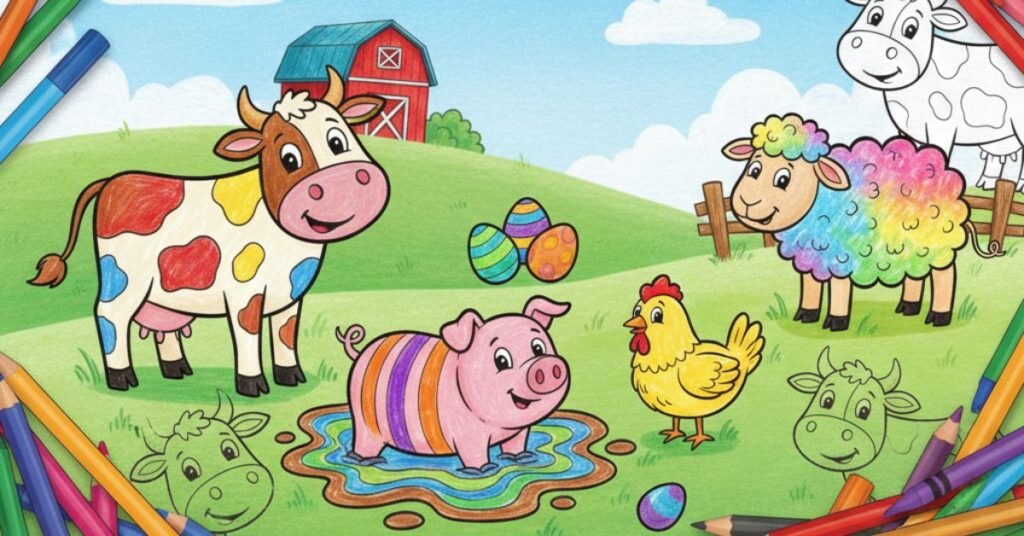
Farm animal coloring pages give children a friendly way to explore the busy life of a barn while making their own color choices. This collection brings together cows, horses, pigs, sheep, chickens, ducks, a farmer, and familiar country details in ten printable scenes. Younger children can focus on the large enclosed shapes, while older children can add patterns to fences, fields, feed sacks, and wooden buildings.
Families can use the pages for quiet time, and teachers can connect them to animal names, sounds, homes, and daily care. If a child wants to compare barnyard creatures with wildlife and pets, PintyMinty’s broader animal coloring pages collection provides a useful next step. Each scene below can also become a prompt for a short story about what happens before or after the pictured moment.
What the Barnyard Collection Includes
The set balances simple portraits with fuller farm scenes. Some pages place one animal at the center so preschoolers can color without navigating a crowded background. Other pages include gates, hay, crops, tools, and groups of animals, giving elementary-age children more small areas to complete.
The scenes also show that a farm is a connected place rather than a random group of animals. A cow stands near a barn, a hen watches over chicks, a farmer brings feed, and ducks gather beside water. Children can notice where each animal lives, what it may eat, and how people care for it while still treating the activity as relaxed creative play.
Ten Farm Animal Coloring Pages to Explore
10 Printable Farm Animal Coloring Pages
Choose a design below, open the full-size image, and print it for your coloring activity.
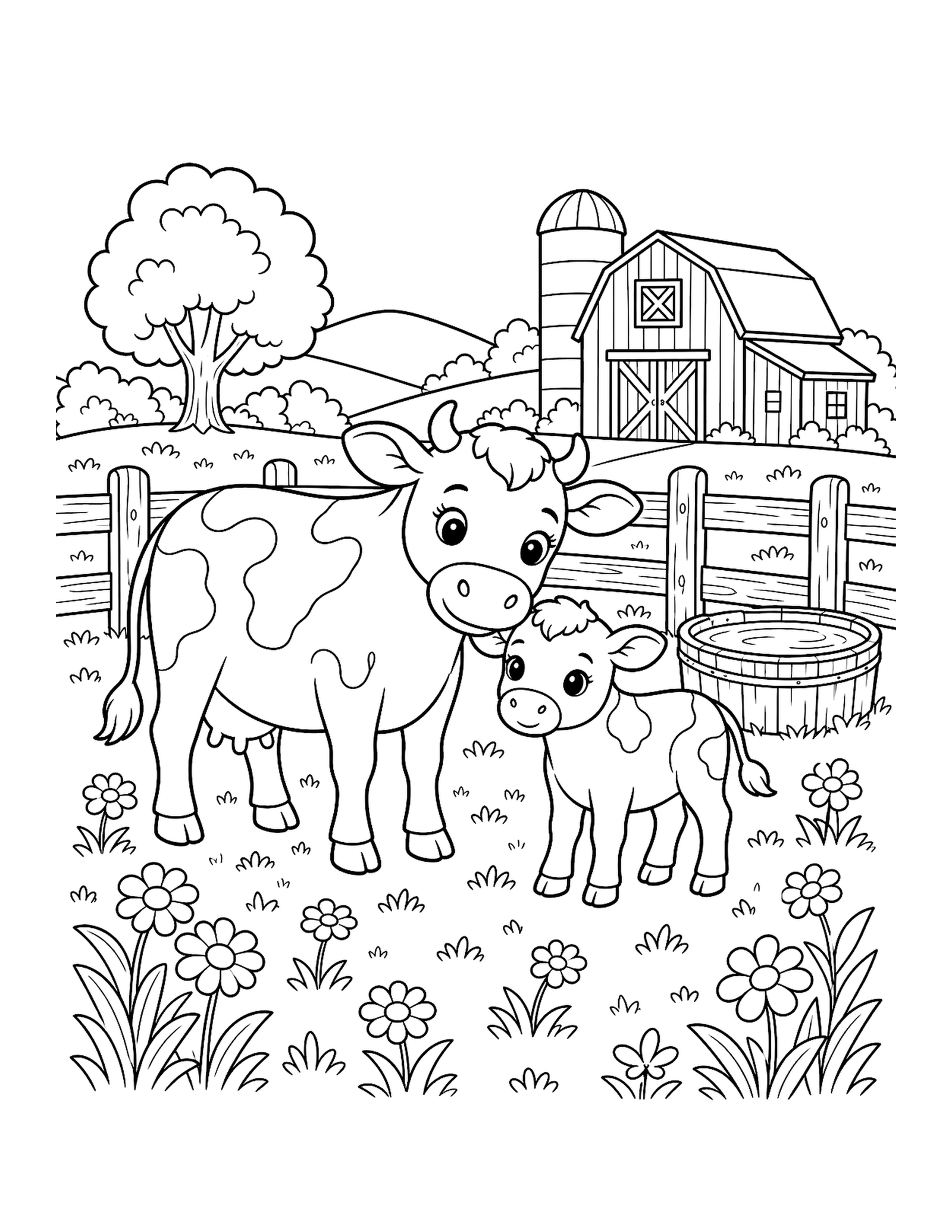
Mother Cow and Calf
A cow and calf stand together beside a fence, water trough, barn, flowers, and rolling hills.
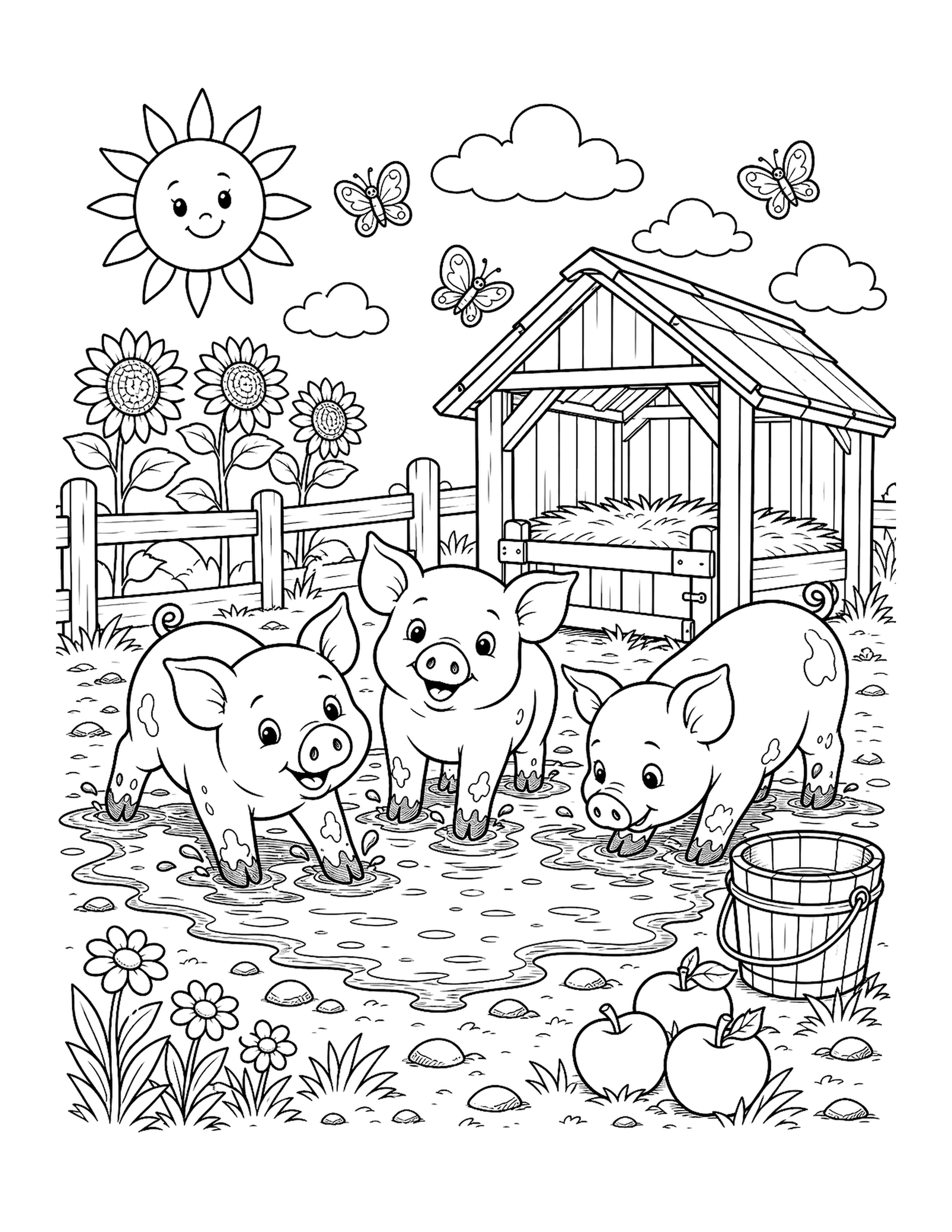
Playful Farm Piglets
Three cheerful piglets play near a small puddle, apples, butterflies, sunflowers, and a tidy pig shelter.
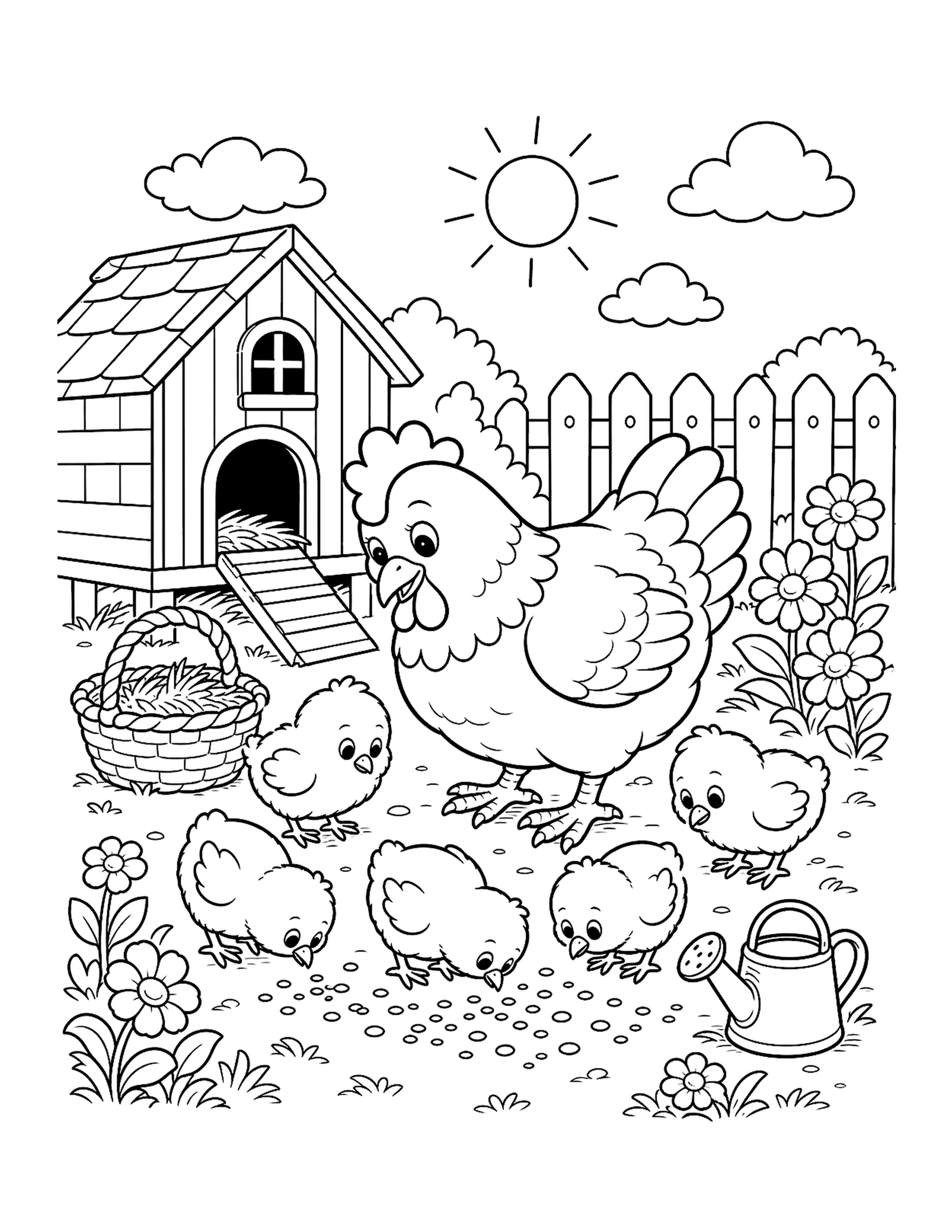
Mother Hen and Chicks
A hen watches her chicks peck grain beside a coop, basket, fence, flowers, and watering can.
Sheep and Lambs on a Hillside
A friendly flock grazes beside a stone wall while one lamb hops near wildflowers and a shepherd hut.
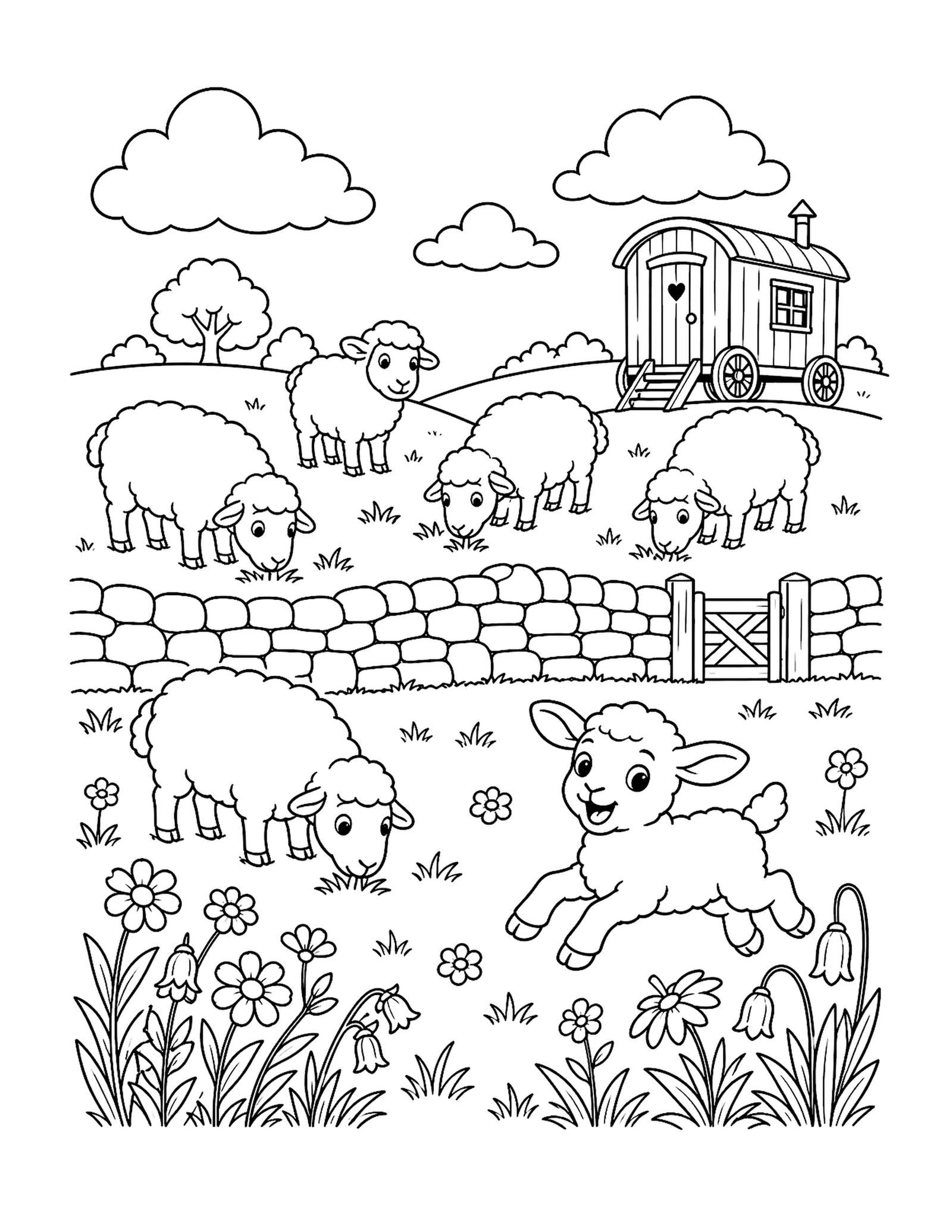
Friendly Goats at Play
Two cheerful goats explore a safe play area with low platforms, hay bales, barn, fence, and trees.
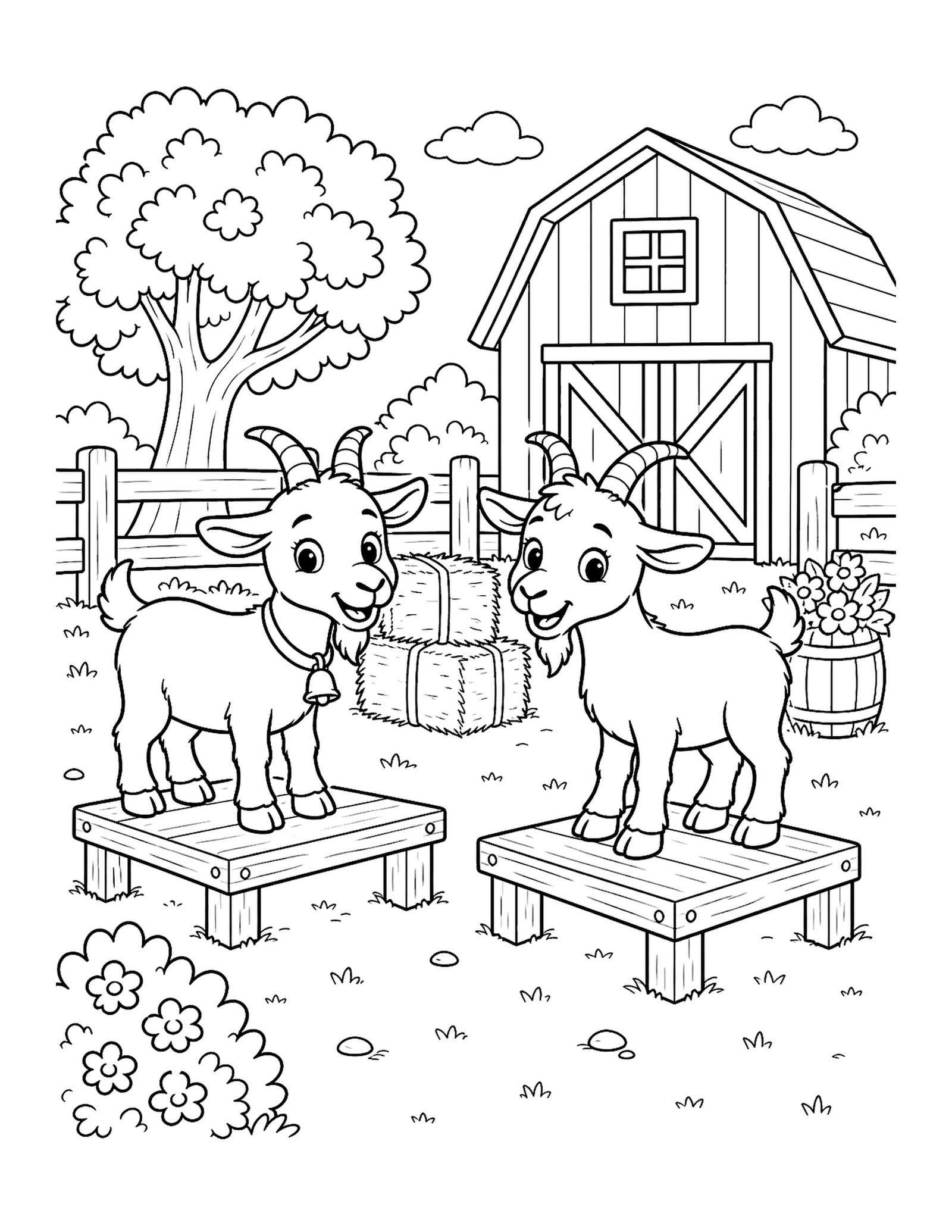
Mare and Foal in the Meadow
A mare and foal walk side by side near a stable, windmill, hay cart, fence, and birds.
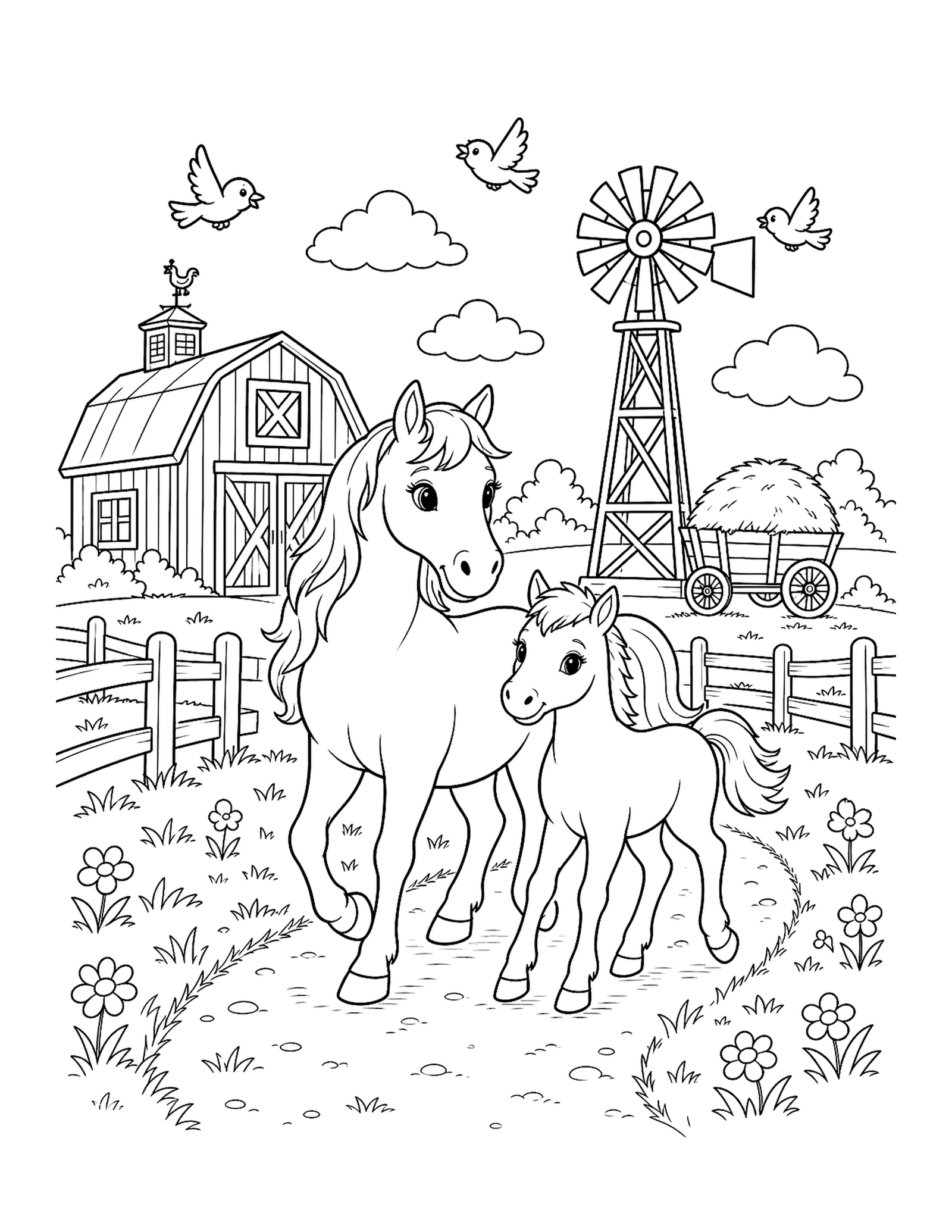
Duck Family at the Farm Pond
A duck family crosses a pond surrounded by reeds, lily pads, a bridge, barn, and willow tree.
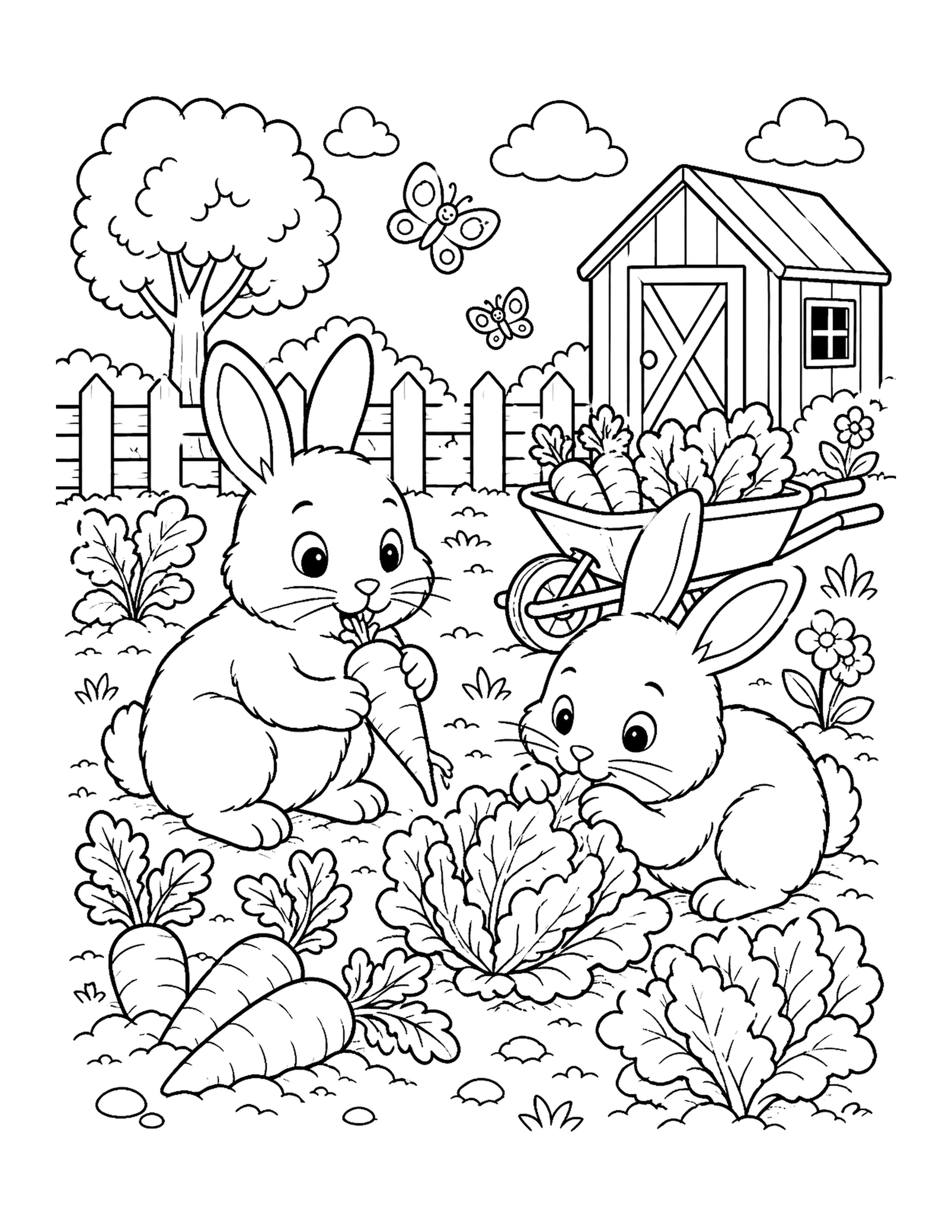
Farm Rabbits in the Vegetable Garden
Two fluffy rabbits explore carrots and lettuce near a wheelbarrow, shed, fence, and butterflies.
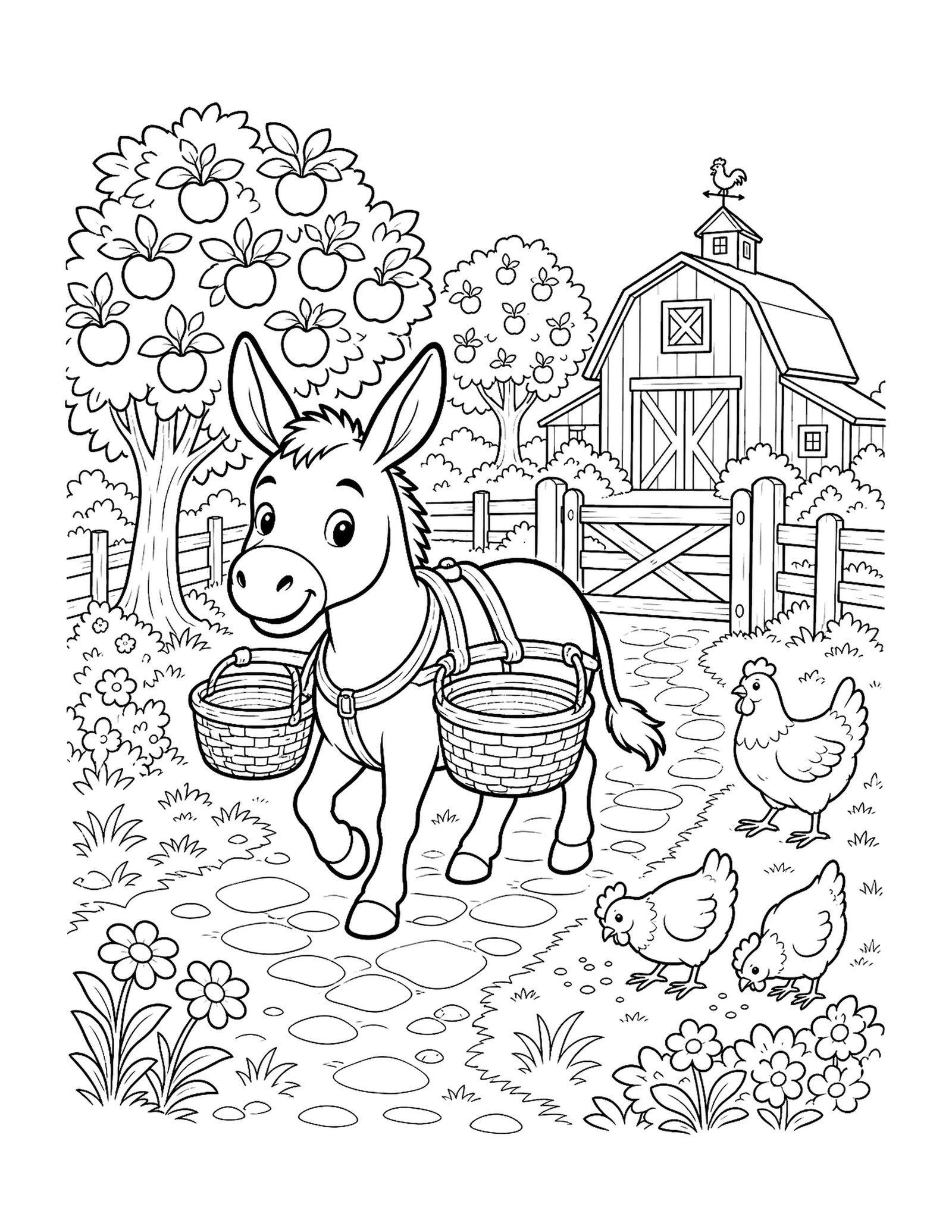
Friendly Donkey on the Farm Lane
A gentle donkey walks beside orchard trees, a farm gate, barn, and chickens with two empty side baskets.
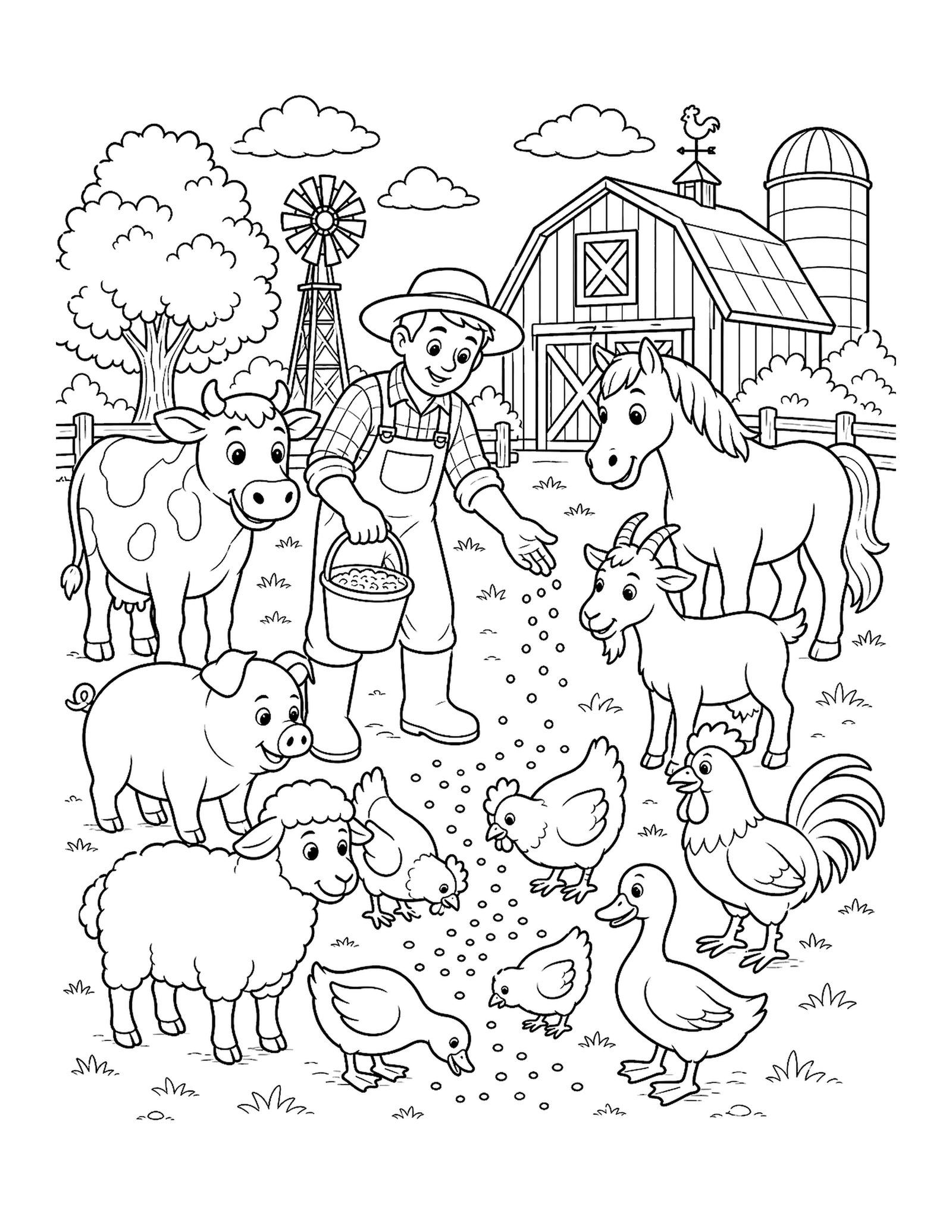
Mixed Barnyard Animals
A lively mixed group of farm animals gathers around a farmer scattering feed in the barnyard.
Turn the Pages into a Farm Learning Unit
Sort Animals by Features and Homes
Ask children to group the animals by feathers, fur, wool, hooves, or wings. They can also sort them by home: coop, stable, barn, pen, meadow, or pond. The goal is observation rather than memorizing a rigid list, so let children explain their reasoning and notice when one animal could fit more than one group.
Build Farm Vocabulary Through Conversation
Choose five useful words from a page, such as paddock, trough, grain, pasture, or hay bale. Say each word, locate the matching object, and use it in a short sentence. A child who is not writing yet can dictate a sentence while an adult records it beneath the finished page.
Sequence a Day of Animal Care
Arrange several completed sheets into a morning-to-evening order. Children might place feeding first, pond care next, and the group barn scene last. There is no single correct sequence; the value comes from explaining the chosen order and connecting separate pictures into one understandable routine.
How to Print and Color the Farm Pages
Open the full-size page before saving or printing so the outlines stay clear. Standard printer paper is suitable for crayons and colored pencils, while slightly heavier paper is a better choice for markers or light paint. Print at actual size or fit to a US Letter page, and check the preview to confirm that the clean margins remain visible.
Choose a simpler single-animal scene for a young child or a fuller barnyard scene for a longer activity.
Use normal print quality for crayons and high quality when small fence, feather, or straw details matter.
Place a spare sheet beneath the page if children use markers that may bleed through paper.
Write the child’s name and date on the back so the artwork can be stored without marking the picture.
Creative Projects Beyond the Coloring Table
Make a Fold-Out Barn Display
Color several animals, cut them out with adult help, and attach them to a folded strip of cardstock. Add a barn, pond, and field as background panels. The finished display can stand on a shelf and gives children a reason to think about where each animal belongs.
Create Animal Fact Cards
Use one completed page as the front of a simple fact card. On the back, record the animal’s name, young animal name, home, food, and one question the child still has. Keep the facts familiar and age appropriate, and encourage children to separate what they know from what they imagine.
Plan a Pig-Themed Barnyard Session
Combine the piglet page with PintyMinty’s pigs colouring pages for a focused activity about snouts, ears, curly tails, and farm pens. Children can compare the poses, choose different coat colors, and arrange the finished pictures as one small gallery.
Guide Young Colorers Without Taking Over
Offer a Small, Useful Choice
A large box of supplies can make a simple page feel complicated. Begin with six to ten crayons or pencils that include a few natural colors and a few playful ones. Ask the child to choose the animal’s main color first, then decide whether the barnyard will look realistic, seasonal, or imaginary. More colors can be added when the child asks for them.
Break a Detailed Scene into Zones
On the tractor or barnyard group page, identify three zones: the main subjects, the ground, and the distant background. Complete one zone at a time and pause between them. This keeps progress visible and prevents a child from feeling that every small object must be colored in one sitting. An unfinished background does not make the main artwork incomplete.
Use Descriptive Feedback
Instead of praising only neatness, mention a choice you can see: the alternating fence colors, the careful space left around an eye, or the unexpected blue feathers. Descriptive feedback helps children understand their own process. If color crosses a line, treat it as part of handmade work rather than correcting the page or recoloring it for them.
More Printable Coloring Pages
Frequently Asked Questions
Which farm animal page is easiest for preschoolers?
The cow, piglet, and sheep-and-lamb pages have broad shapes and limited background detail. Start with thick crayons, offer a small selection of colors, and let the child stop when the main animal is complete.
Can these pages support a farm classroom theme?
Yes. Use them beside read-alouds, animal-sound activities, vocabulary cards, or a discussion of animal homes. Coloring works best as one part of the lesson rather than as a replacement for conversation, movement, or hands-on exploration.
Do farm animals have to be colored realistically?
No. Realistic colors can support recognition, but imaginary colors encourage experimentation and storytelling. A purple cow or striped pig can lead to a useful discussion about which details identify an animal even when its color changes.
What coloring tools suit the detailed barn scenes?
Colored pencils give good control around straw, feathers, and fence lines. Crayons are easier for large fields and animal bodies. Water-based markers can create bold areas, but place scrap paper underneath to protect the table.
How can finished pages be stored or displayed?
Keep flat pages in a labeled folder, clip them to a classroom line, or bind them into a homemade farm book. If the pages will be cut for a craft, scan or photograph the completed artwork first.
Bring the Barnyard Together
These farm animal coloring pages can be a simple afternoon activity, a starting point for farm vocabulary, or the artwork for a larger classroom display. Let children choose the scene that matches their patience and interests, then use questions about homes, care, sounds, and stories to extend the experience naturally.

Pingback: 20 Horse Coloring Pages Free Printable Sheets for Kids
Pingback: 20 Free Printable Duck Coloring Pages for Kids and Adults
Pingback: 10 Printable Animal Coloring Pages Collection