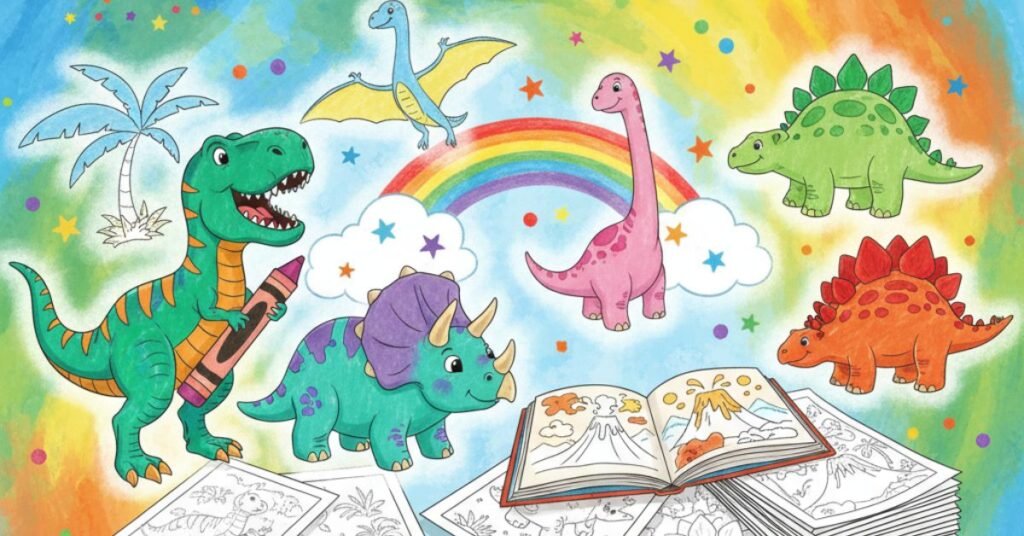
Dinosaur coloring pages turn an interest in prehistoric life into a hands-on art activity. This ten-page collection includes powerful predators, peaceful plant eaters, armored dinosaurs, a hatchling, a flying reptile, fossils, and a wide landscape scene. Children can choose a bold cartoon-like palette or use earth tones inspired by rocks, soil, leaves, and water.
The pages are designed for different attention levels: a large single dinosaur is manageable for beginners, while volcanoes, plants, eggs, and rocky backgrounds reward patient colorers. Because dinosaurs are part of a much larger story of life, PintyMinty’s animal coloring pages can help children compare ancient body features with those of animals they recognize today.
Choose a Dinosaur by Shape, Mood, or Detail
A useful collection should offer more than ten similar side views. These scenes vary the body shape, pose, setting, and creative task. Long necks create sweeping lines, plates and horns invite repeating colors, predators introduce expressive faces, and the fossil page replaces skin and scenery with a completely different pattern of bones and rock.
Children do not need to know every scientific name before coloring. Start with visible clues: two legs or four, horns or plates, short arms or a long neck. When a child wants to learn the name, treat it as a question to investigate rather than guessing from an outline. That distinction keeps imaginative art and factual learning comfortable together.
Ten Dinosaur Coloring Pages with Distinct Prehistoric Scenes
10 Printable Dinosaur Coloring Pages
Choose a design below, open the full-size image, and print it for your coloring activity.
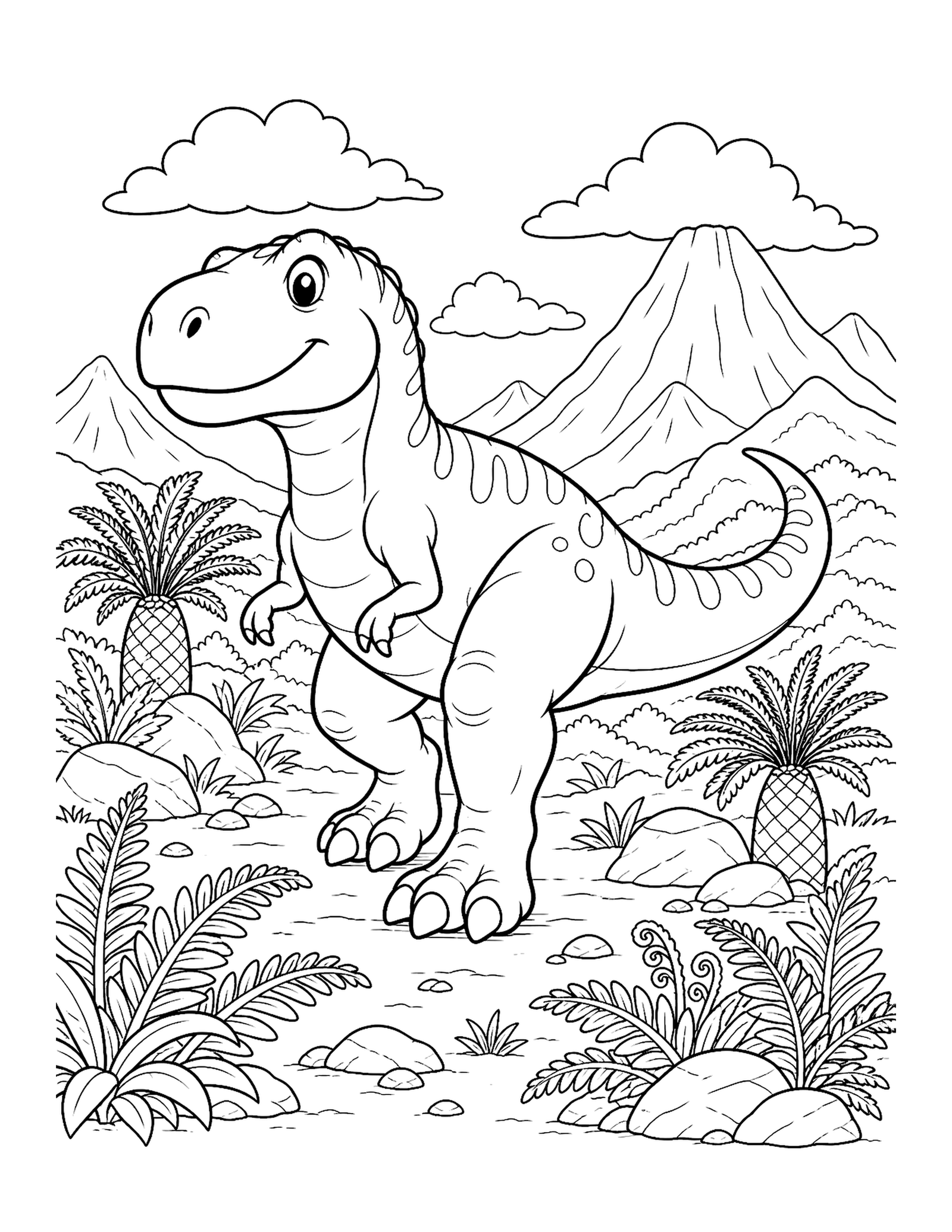
Friendly T. Rex in the Valley
A gentle Tyrannosaurus rex explores a fern-filled valley with cycads, rocks, mountains, and clouds.
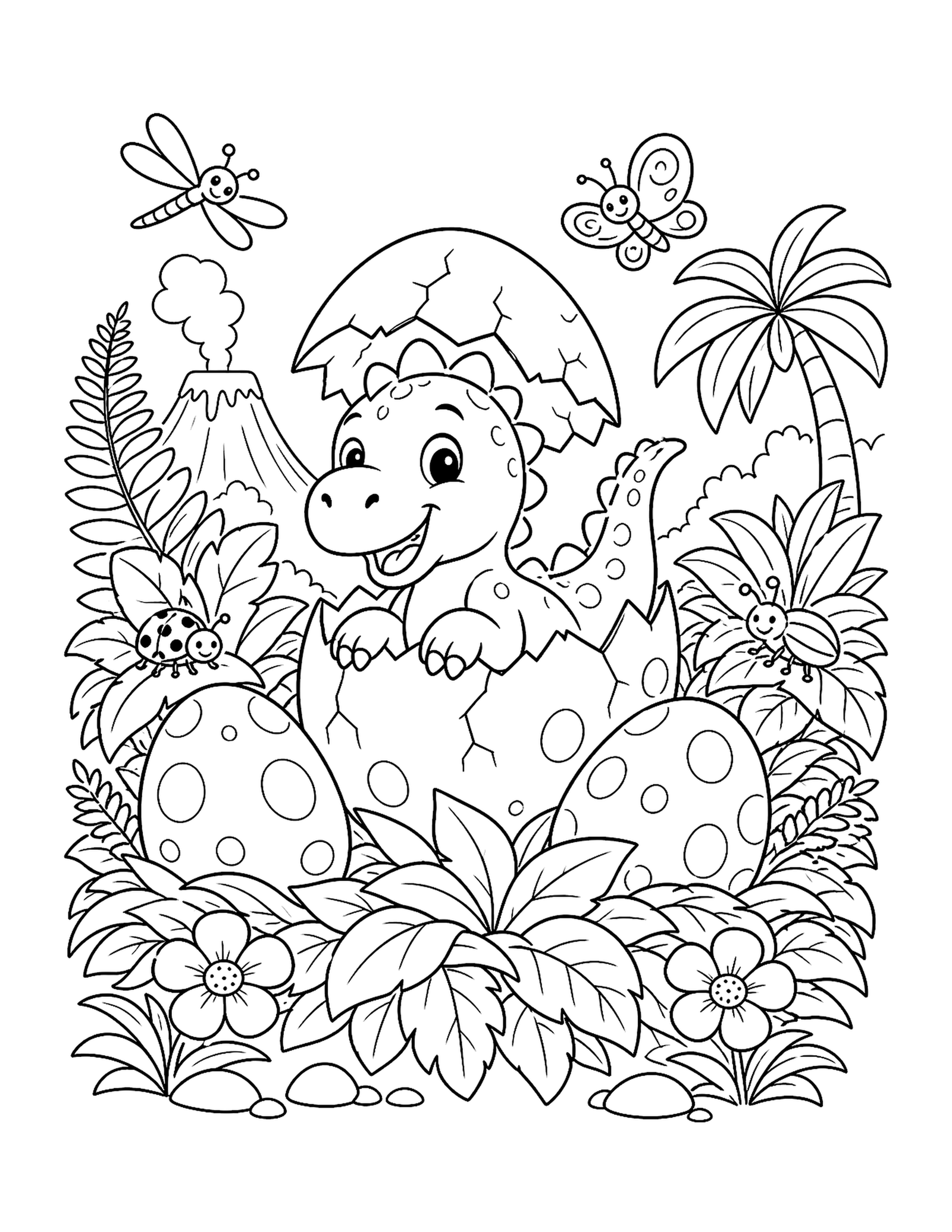
Baby Dinosaur Hatching
A cheerful baby dinosaur hatches beside two eggs, ferns, flowers, and curious insects.
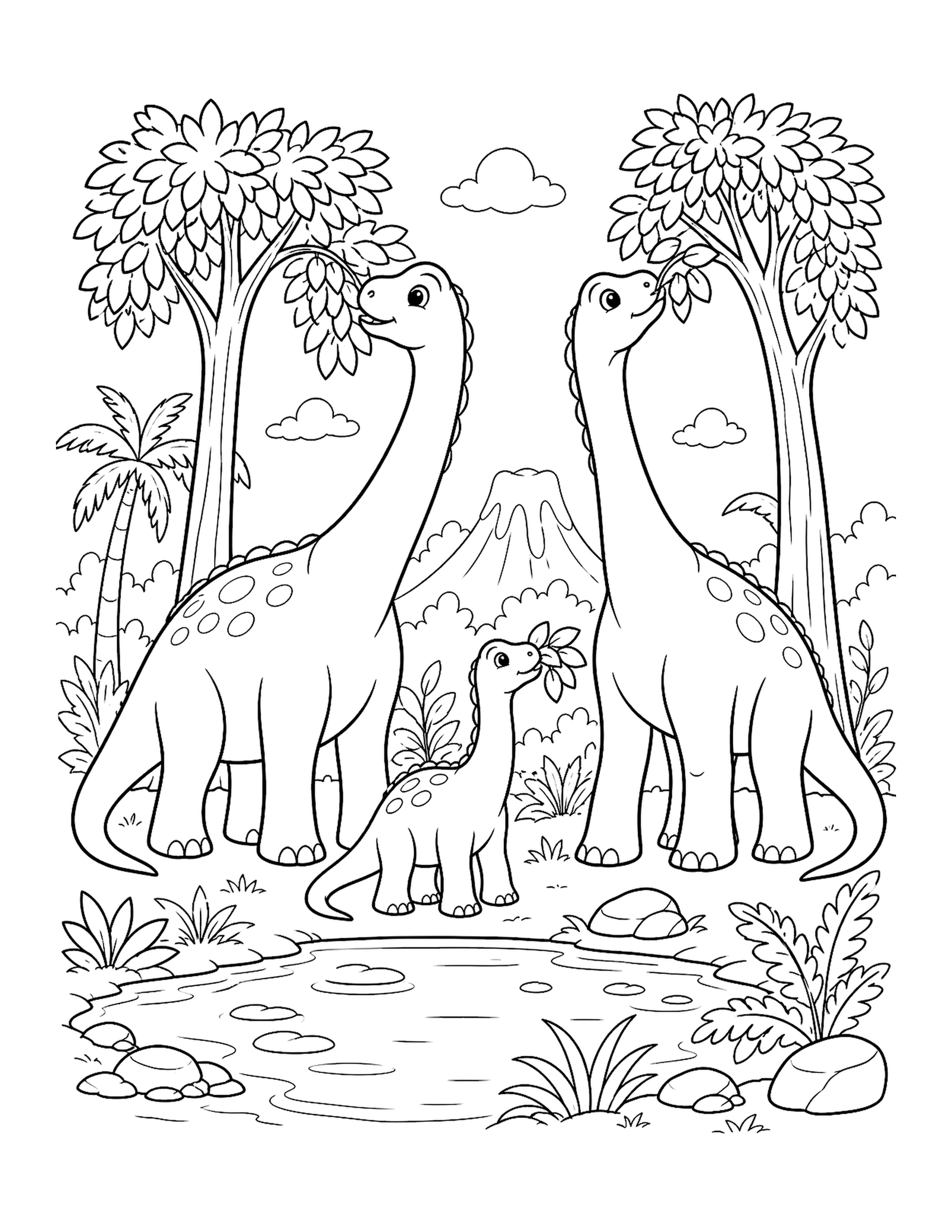
Brachiosaurus Family by the Pond
Two adult Brachiosaurus and their youngster browse tall trees beside a peaceful prehistoric pond.
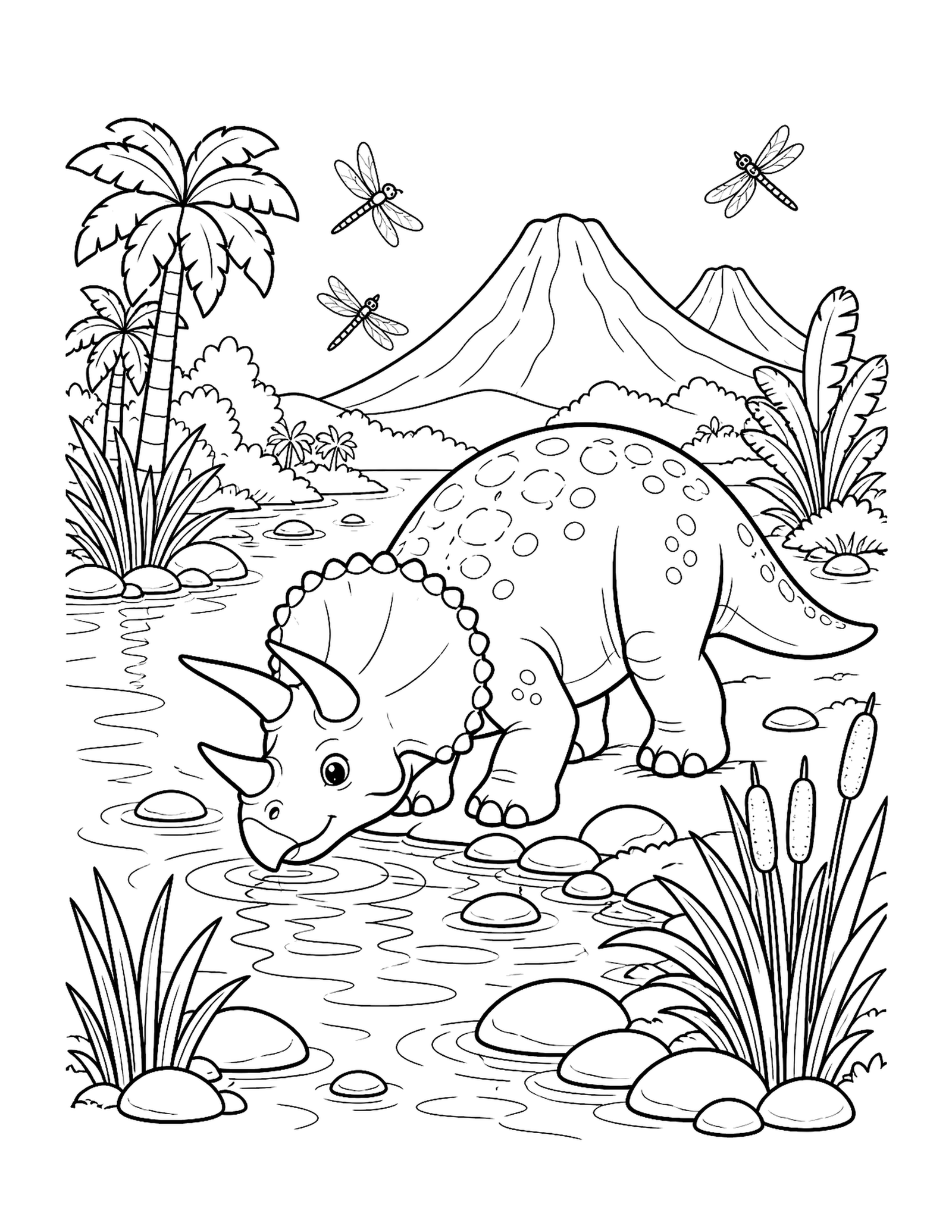
Triceratops at the Riverbank
A fully visible Triceratops pauses at a quiet riverbank beneath distant mountains and clouds.
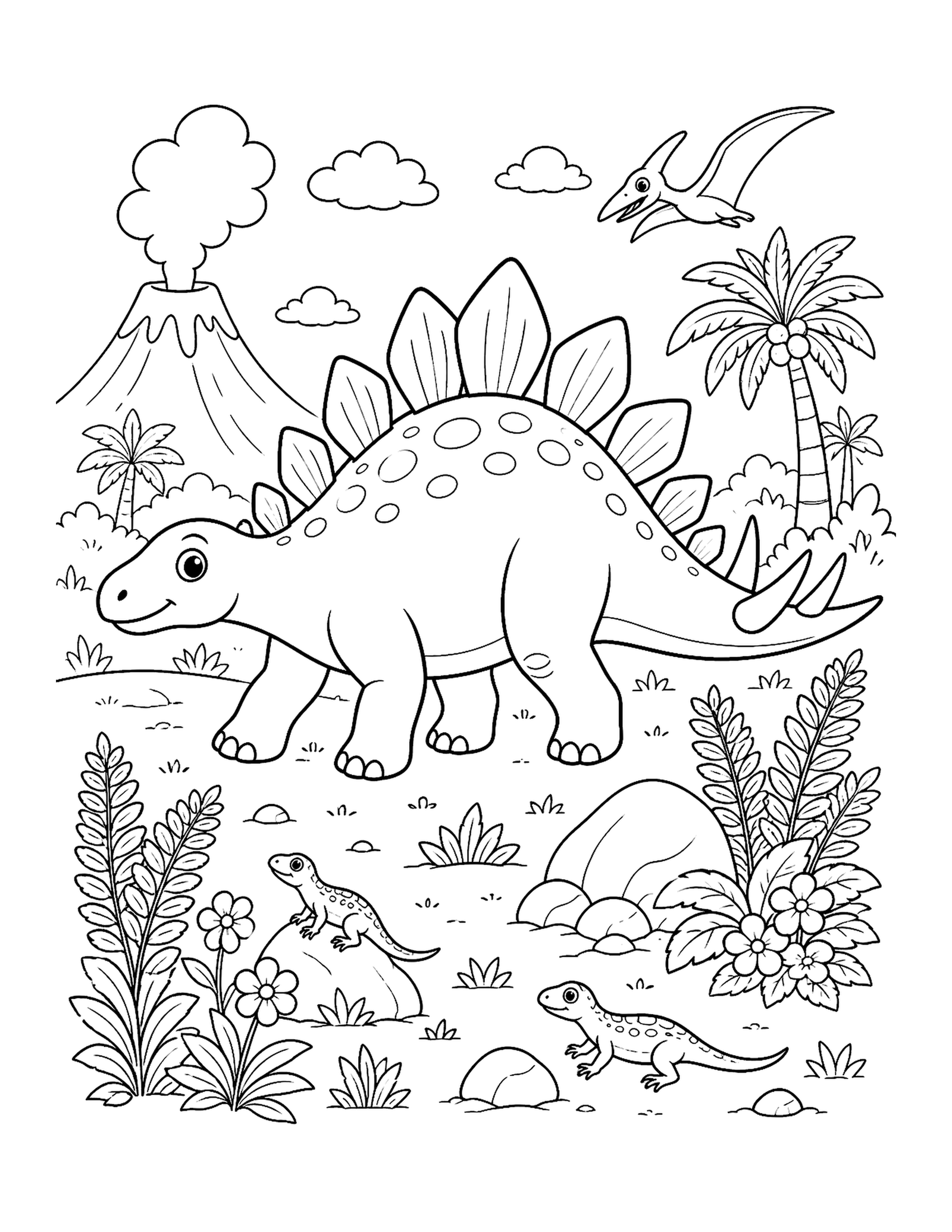
Stegosaurus in a Prehistoric Meadow
A gentle Stegosaurus strolls through a meadow filled with low ferns, flowers, rocks, and small lizards.
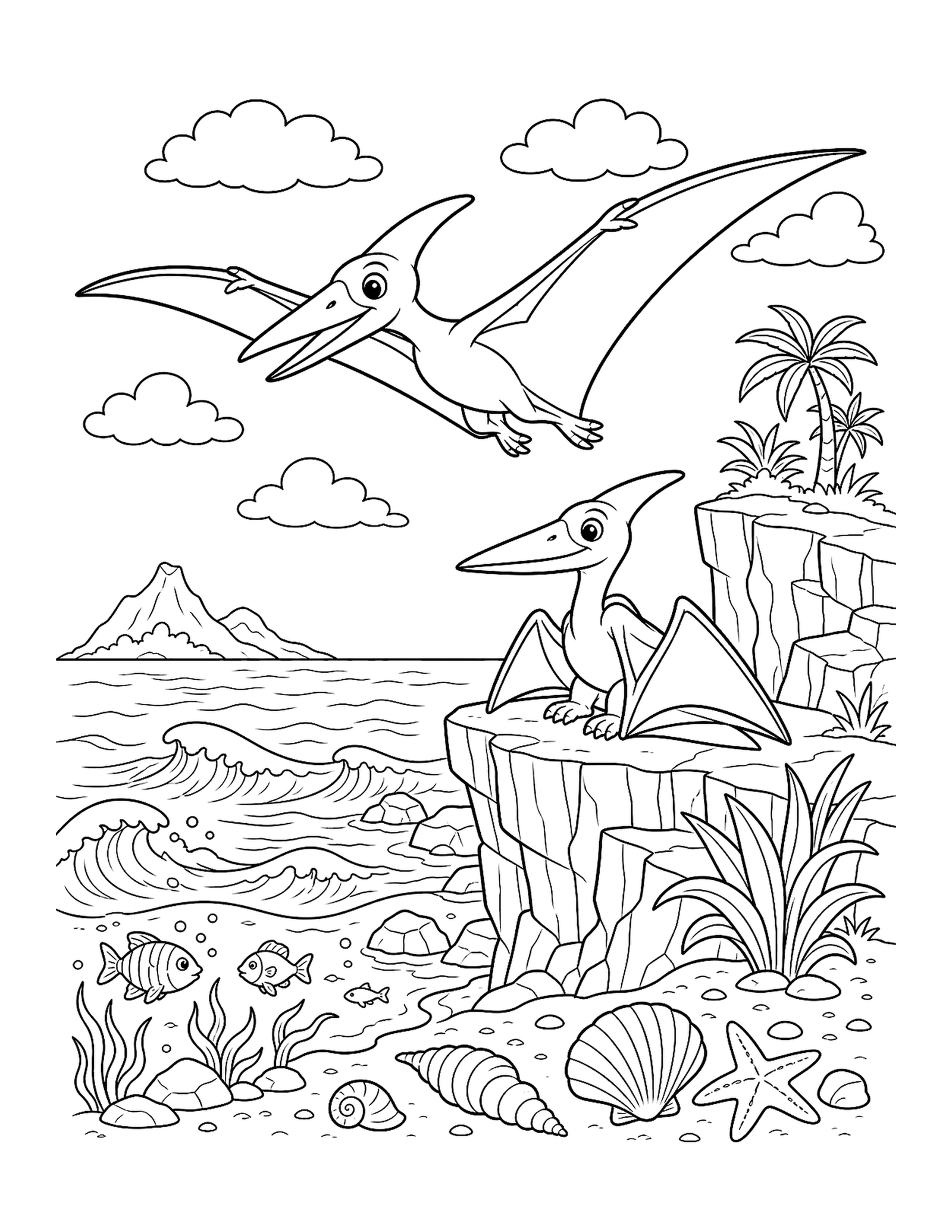
Pteranodon Coastal Flight
One Pteranodon glides over coastal cliffs while another rests safely on a rock ledge.
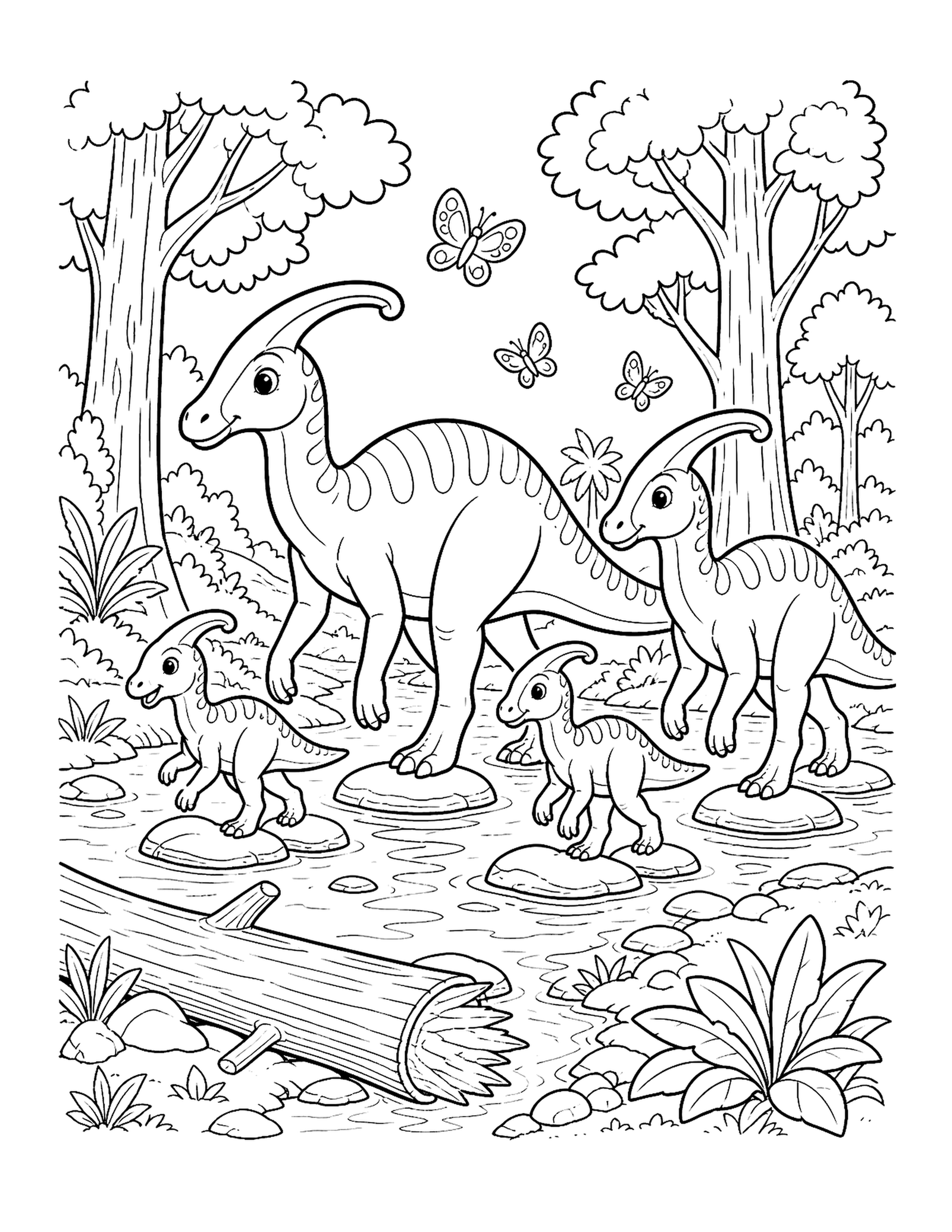
Parasaurolophus Family Crossing a Stream
A Parasaurolophus family walks through shallow water near stepping stones, trees, and butterflies.
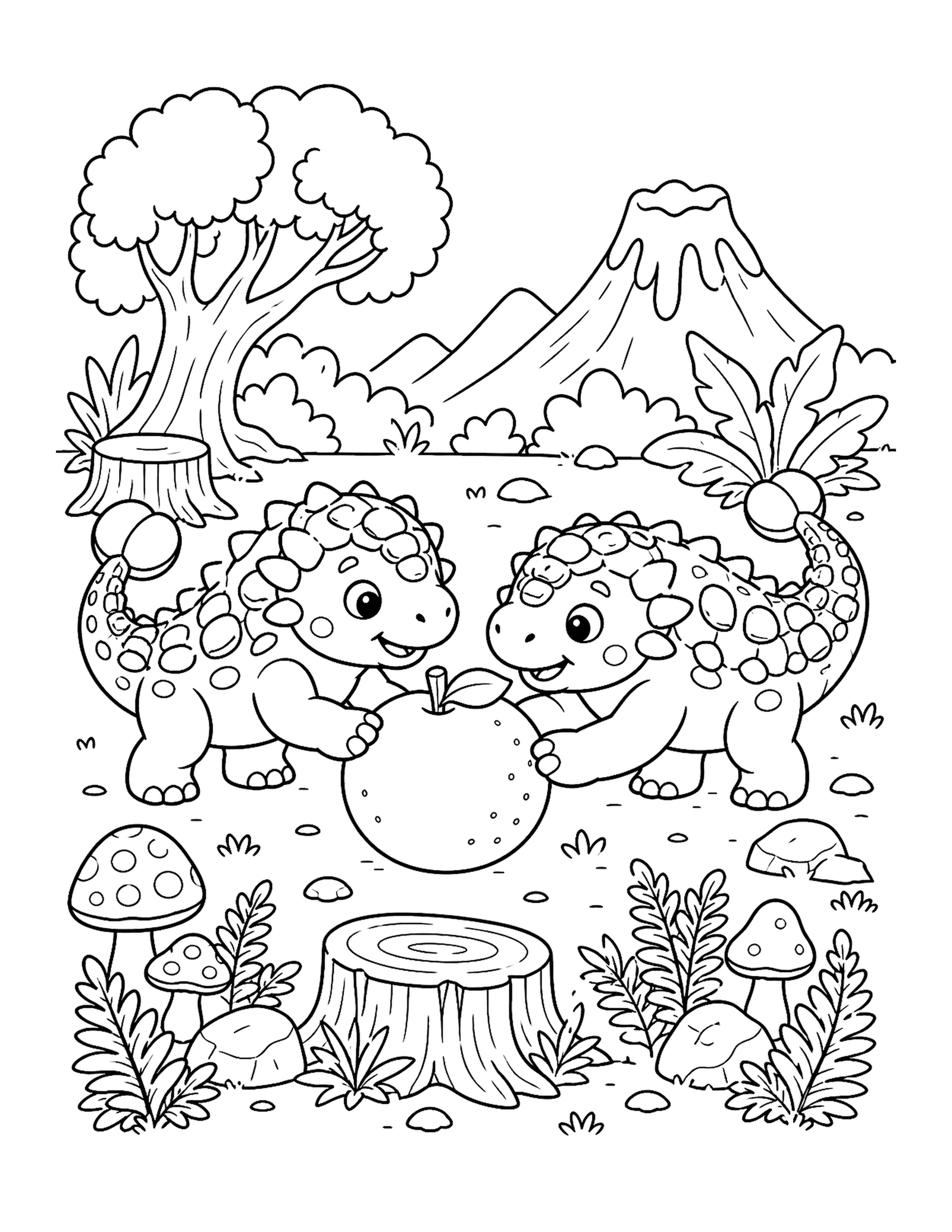
Young Ankylosaurus Dinosaurs Playing
Two young armored dinosaurs play together among mushrooms, ferns, and tree stumps.
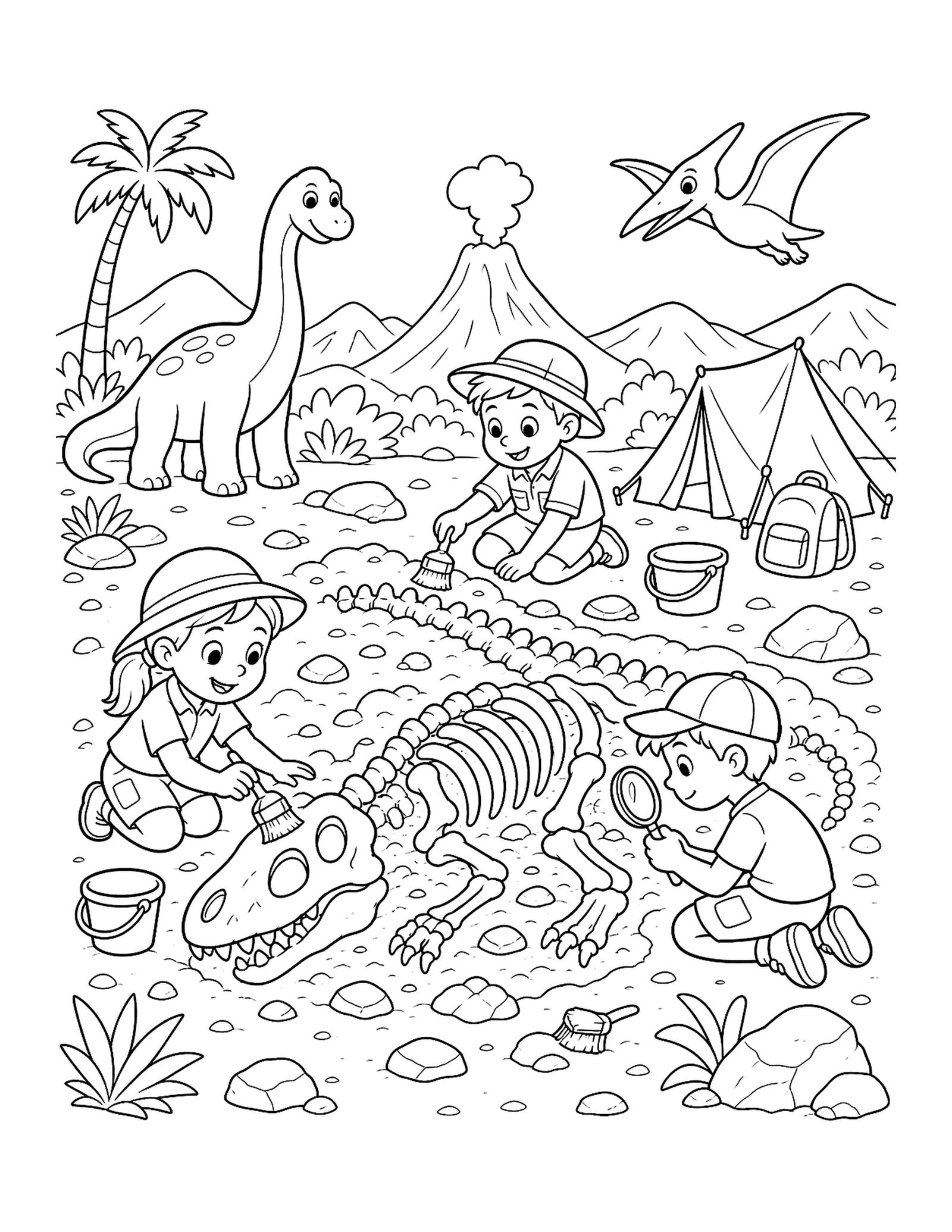
Dinosaur Fossil Discovery
Children use brushes and buckets to uncover a generic dinosaur skeleton at a supervised-style discovery site.
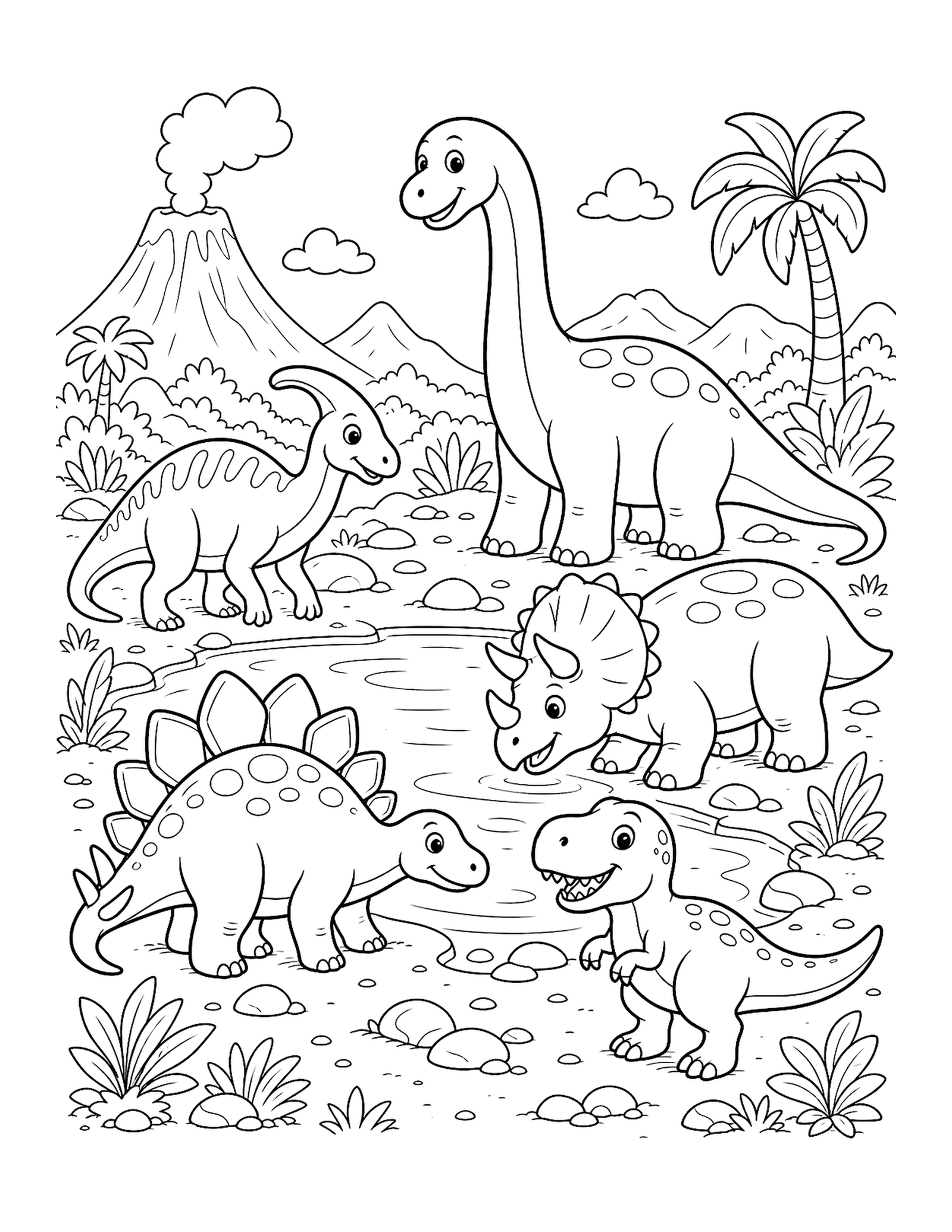
Friendly Dinosaurs at the Watering Hole
A small T. rex, Triceratops, Stegosaurus, Brachiosaurus, and duck-billed dinosaur share a calm watering place.
Use the Collection for Evidence-Based Imagination
Separate What the Picture Shows from What You Invent
Ask a child to name three visible facts, such as horns, four legs, or a long tail. Then invite three inventions: the dinosaur’s name, destination, and favorite place. This simple routine shows that observation and imagination can support each other without being confused.
Compare Body Adaptations
Place two finished pages side by side and compare teeth, legs, tails, armor, plates, or neck length. Children can circle one feature that may help with eating, moving, or protection. Keep the discussion tentative when the drawing is stylized, and avoid treating every artistic detail as scientific evidence.
Build a Prehistoric Timeline Wall
Display the sheets as a classroom gallery and add broad labels such as plant eater, meat eater, armored, flying, hatchling, and fossil. A full geological timeline is not necessary for a young group. The aim is to organize observations and inspire questions that can be checked later in a reliable dinosaur book.
Printing and Coloring Strategies
Open each full-size design and use the print preview before sending it to the printer. US Letter paper works for this vertical collection. Ordinary paper is suitable for crayons and pencils; heavier paper is more comfortable for markers, watercolor pencils, or a light paint wash. Keep the printer set to portrait orientation and preserve the white margin.
Use crayons for large bodies, skies, and ground areas when speed and broad coverage matter.
Choose colored pencils for teeth, claws, plates, fossil bones, and overlapping plants.
Test markers on scrap paper and protect the table with a second sheet beneath the printable.
Invite children to outline one feature with a darker shade after the main colors are complete.
Three Ways to Extend the Prehistoric Adventure
Design a Field Notebook
Bind selected pages with blank sheets. On each blank page, children can draw a footprint, write a scene title, list observed features, or record a question. The notebook turns separate coloring sheets into a personal collection without requiring a complicated craft.
Create a Habitat Challenge
Give children a finished dinosaur cutout and ask them to design a background with water, shelter, plants, and space to move. They should explain each choice. The explanation matters more than producing one supposedly perfect habitat.
Compare Dinosaurs with Giant Screen Creatures
Older children who like dramatic size and action can visit PintyMinty’s Godzilla coloring pages. Use the two collections to distinguish prehistoric animals from fictional movie monsters while comparing pose, scale, texture, and mood.
Create a Prehistoric Color System
Start with the Environment
Choose colors for sky, water, rock, and plants before deciding on the dinosaur. A green forest can make a red or orange body stand out, while a warm rocky landscape may suit cool blue or gray scales. This approach teaches contrast through a practical art decision and helps the subject remain visible in a detailed scene.
Use Patterns to Explain Body Features
Plates, horns, armor, feathers, and tails can carry patterns that direct attention. A child might alternate the Stegosaurus plates, darken the Ankylosaurus armor toward the tail, or place small spots along a long neck. Ask what the pattern emphasizes. There is no need to claim the design is scientifically accurate; it is a visual explanation created by the colorer.
Compare Two Versions of One Page
Print a favorite sheet twice at different times. Color one with earth tones and the other with a limited fantasy palette. Place them side by side and identify how color changes the mood, time of day, and apparent personality. This comparison gives repeat printing a purpose beyond simply completing the same outline again.
More Printable Coloring Pages
- Shark Coloring Pages for Kids: Free Printable Sheets & Fun Activities
- 20 Fun Printable Dog Coloring Pages Collection
- 20 Printable Bear Coloring Pages for Relaxing Fun
Frequently Asked Questions
Are all the creatures in this collection dinosaurs?
Most are dinosaurs, but the flying Pteranodon is a prehistoric flying reptile rather than a dinosaur. Keeping that distinction in a short caption or discussion is an easy way to improve accuracy without interrupting the coloring activity.
Which page works well for a beginner?
The hatching baby, Triceratops, and Tyrannosaurus pages have large central subjects and clear sections. A child can complete the dinosaur first and decide later whether to color the background.
Can children use imaginary dinosaur colors?
Yes. Scientists cannot recover a complete color guide for every dinosaur, and these are creative activity pages. Children can use natural earth tones, bird-inspired colors, or entirely invented palettes while keeping factual claims separate from artistic choices.
How can I reduce the amount of detail?
Choose a single-dinosaur page, print it slightly larger if the printer allows, and invite the child to color only the main subject. Backgrounds can remain white or be completed during a second session.
What should a dinosaur-themed classroom display include?
Group pages by visible features instead of ranking favorites. Add child-written labels, one question per dinosaur, and a separate fossil area. This produces a display that shows observation, art, and curiosity together.
Continue the Prehistoric Exploration
These dinosaur coloring pages offer ten distinct ways to explore body shapes, habitats, movement, fossils, and creative storytelling. Start with the dinosaur a child already recognizes, then use the less familiar pages to introduce new questions and a wider range of artistic choices. Save a few pages for later so the collection can support several short sessions instead of one long project. When a question cannot be answered from the drawing, record it for a future library or classroom investigation.