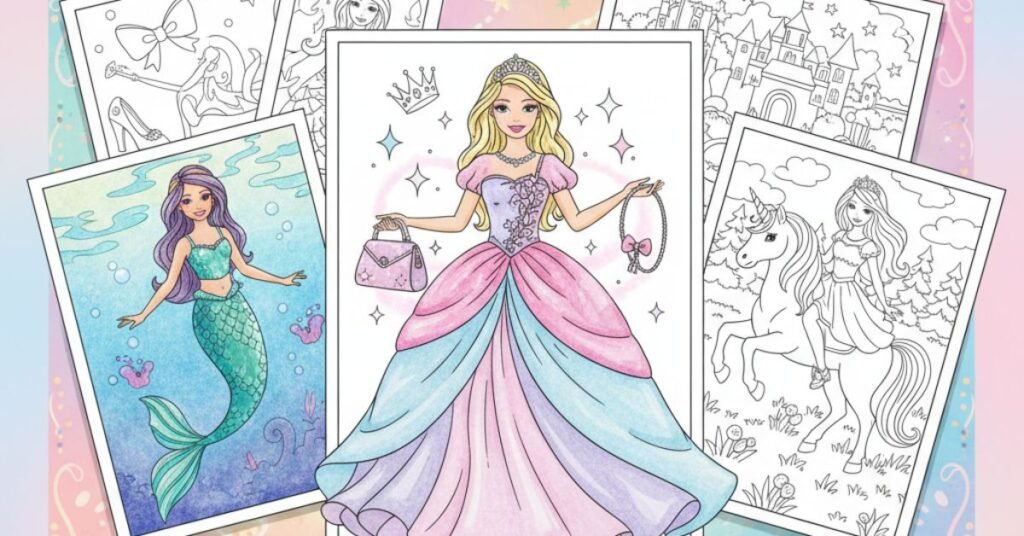
These Barbie coloring pages printable activities invite children to explore outfits, celebrations, friendship, and imaginative careers one page at a time. The collection offers a mix of open areas for younger colorists and smaller fashion details for children who enjoy careful pencil work. Families can print a single design for quiet time or prepare several pages for a birthday table, playdate, or creative afternoon.
There is no required palette. Familiar pinks can be fun, but teal jackets, silver shoes, patterned skirts, or rainbow accessories make every finished page personal. Children who enjoy designing faces and clothing may also like our anime girl coloring pages, which offer another way to practice expressive color choices and outfit planning.
Choose a Page That Matches the Moment
A simple portrait is useful when time is short because the face, hair, and clothing can be completed without planning an entire background. A ballroom or party scene works better for a longer session, while career and travel pictures can spark a conversation about places, tools, and goals. Let the child choose by scene rather than by difficulty label; interest often helps a young colorist stay with the project.
Before coloring, look for the largest shape and choose its main color. Then select two supporting colors and one small accent. This compact palette keeps a busy fashion page from feeling confusing, while still leaving room for patterns, jewelry, flowers, and background decorations. Older children can sketch fabric swatches on scrap paper before committing to a dress design.
A Fashion-and-Friendship Coloring Collection
The pages below move through portraits, dress design, friendly activities, celebrations, and imaginative roles. Some scenes focus on a single character, while others leave space for a setting or a small story. The variety makes it easy to offer siblings different pages without turning the activity into a race or requiring everyone to use the same supplies.
Barbie Coloring Pages Printable Collection
Style Studio and Special Occasions
Page 1: Elegant Ball Gown
A sweeping gown creates broad spaces for smooth coloring, while the necklace, shoes, and decorative trim offer smaller details for careful work. Try a two-color dress with one metallic-looking accent.
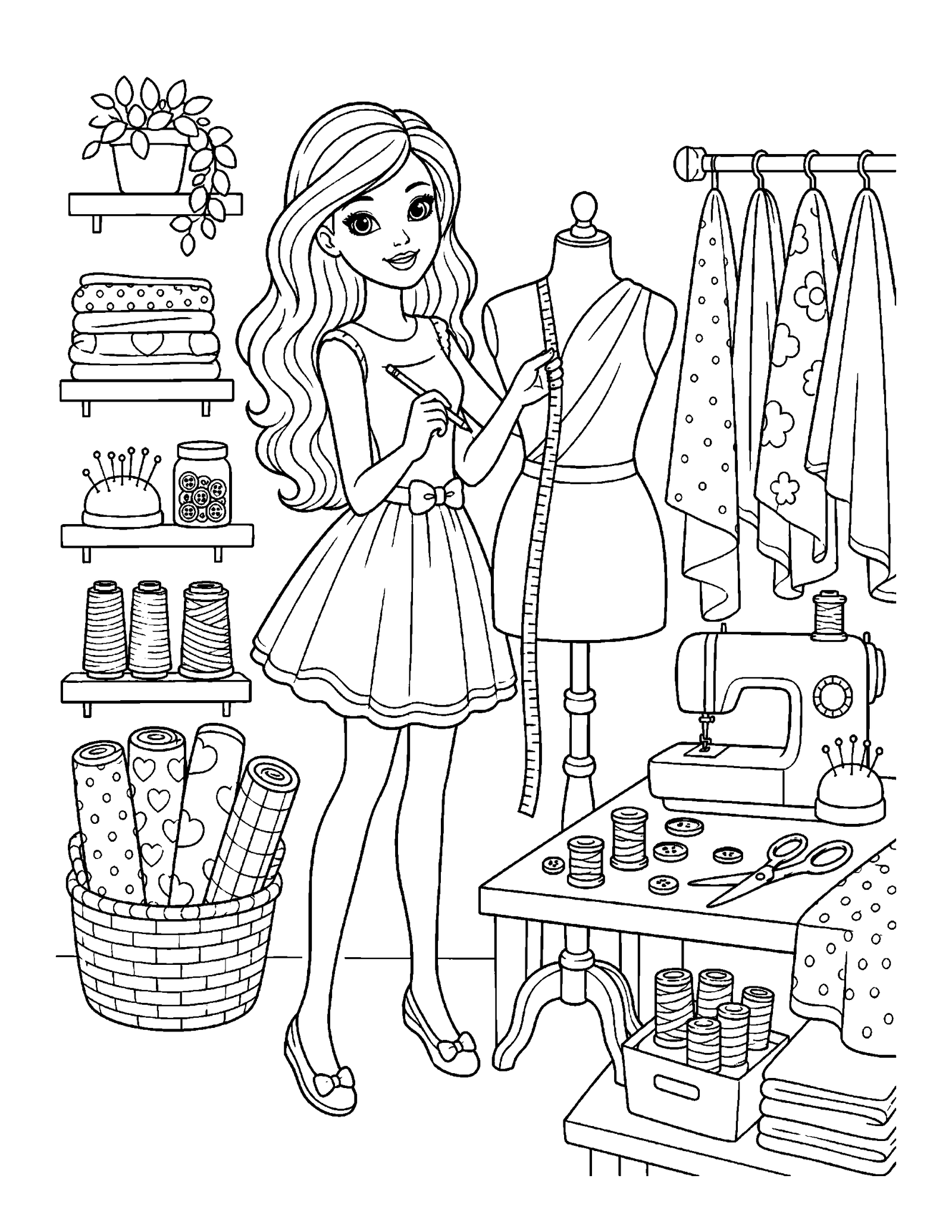
Page 2: Fashion Sketchbook
This studio scene encourages children to invent patterns for sample fabrics and coordinate them with a finished outfit. Add tiny checks, flowers, dots, or diagonal stripes without filling every area.
Page 3: Birthday Celebration
A cake, balloons, ribbons, and gift wrap make this page useful for practicing repeated color themes. Choose one party palette, then vary the shades so each decoration still feels distinct.
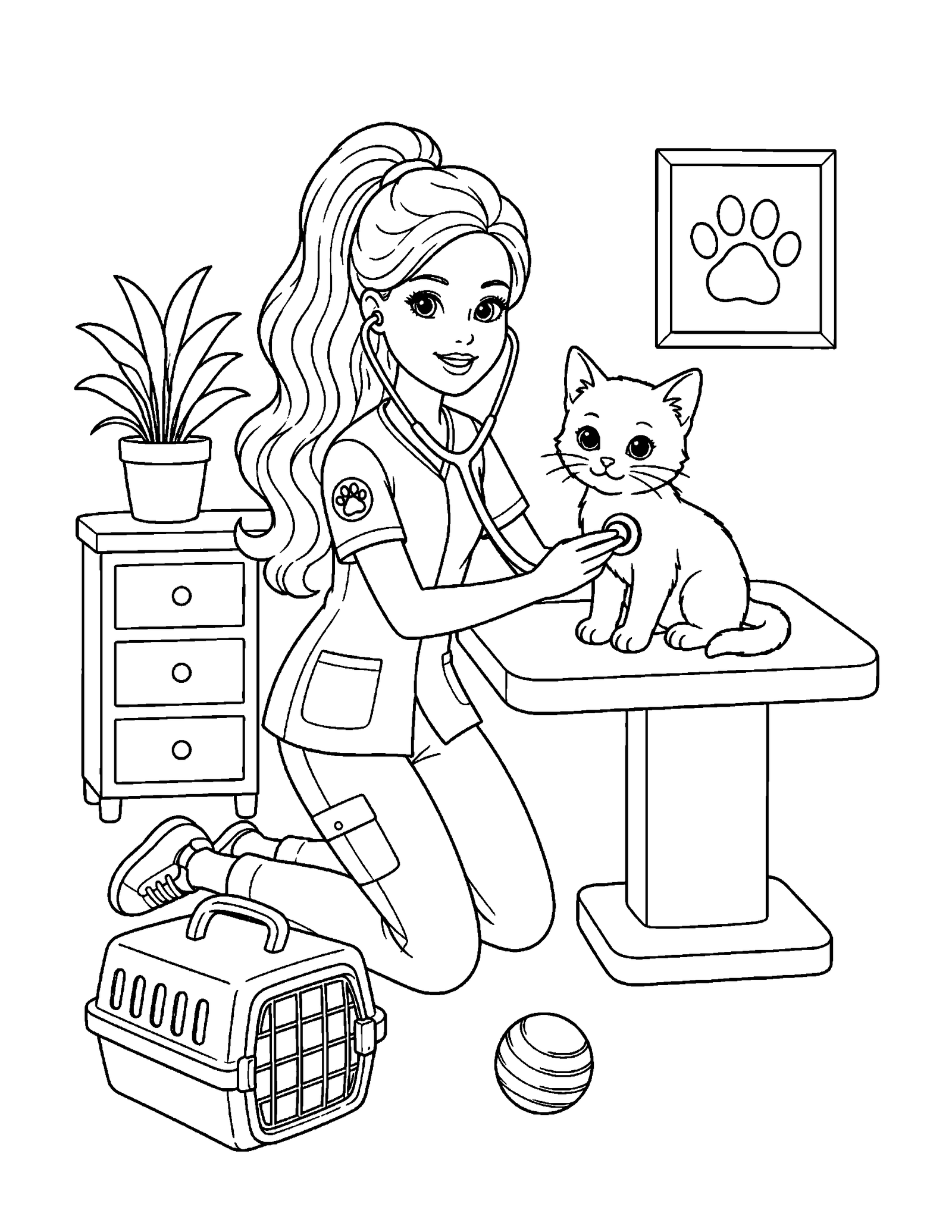
Page 4: Princess Garden Walk
The combination of a detailed dress and open flower shapes suits colorists who enjoy both fashion and nature. Add gentle shading under the skirt folds and use brighter tones for foreground blooms.
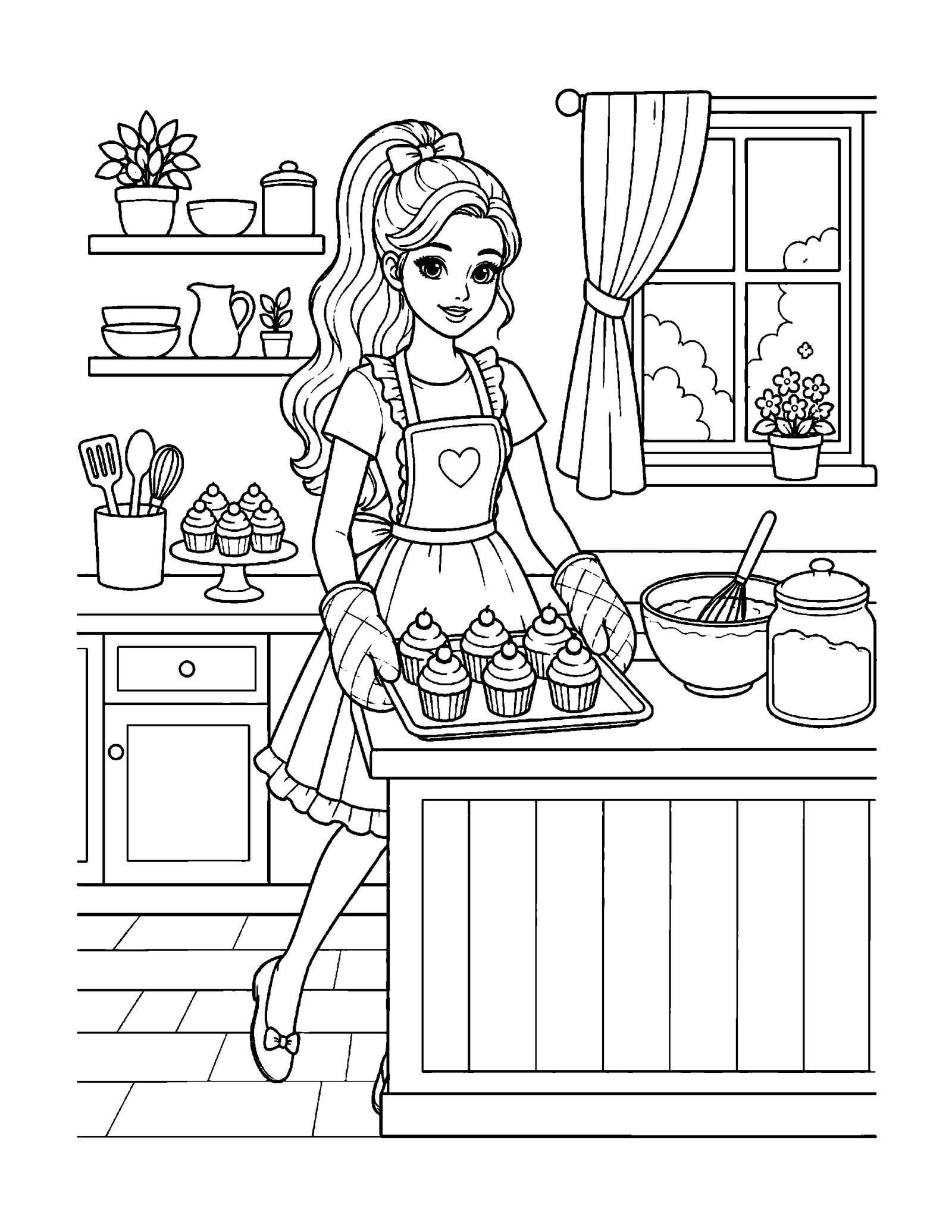
Page 5: Red Carpet Style
This pose gives children room to coordinate hair, jacket, skirt, and shoes before decorating the event background. A dark outline around selected accessories can make the finished look feel crisp.
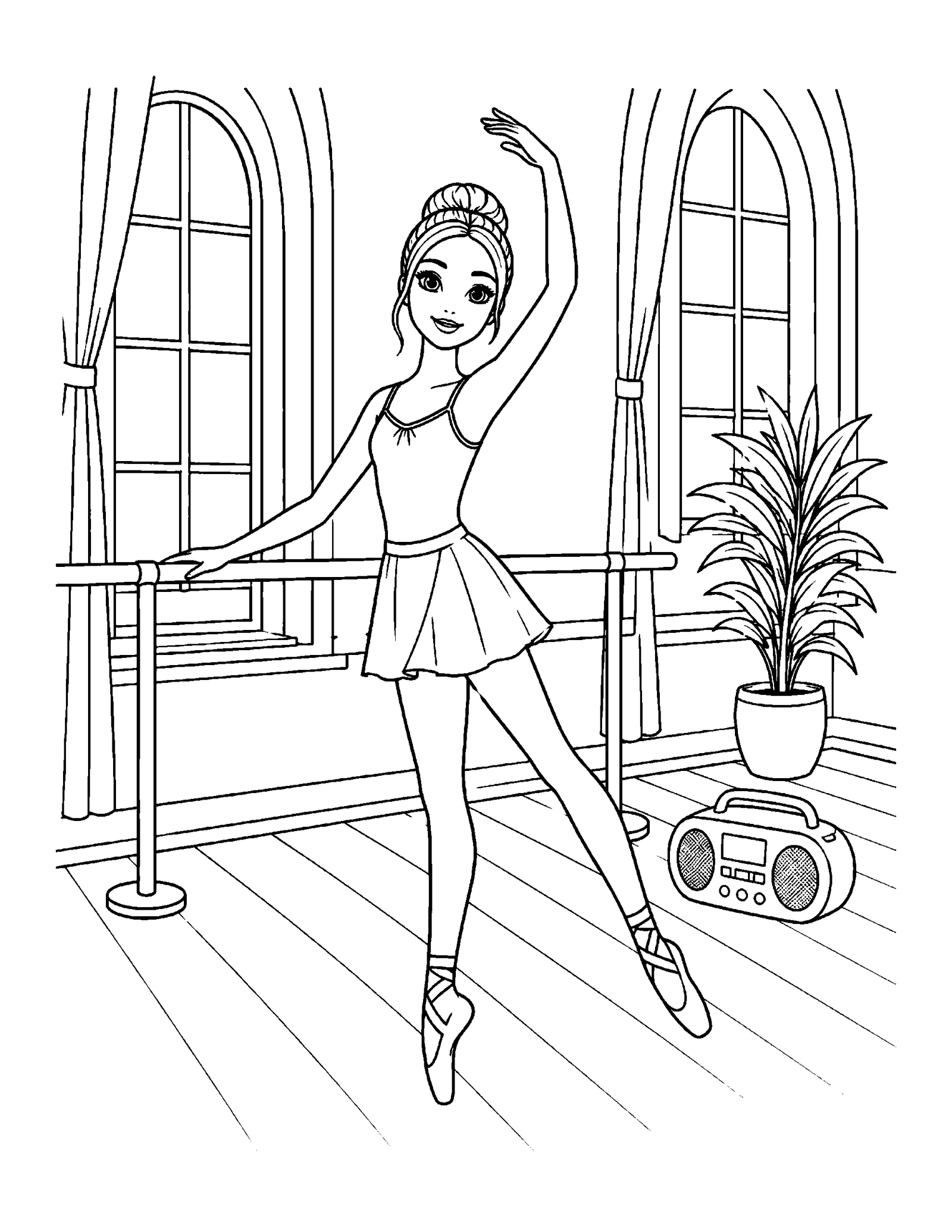
Everyday Adventures and Big Dreams
Page 6: Beach Day
Shells, gentle waves, a hat, and beachwear create an easygoing page with many possible palettes. Children can add a sunset gradient or small footprints to make the background their own.
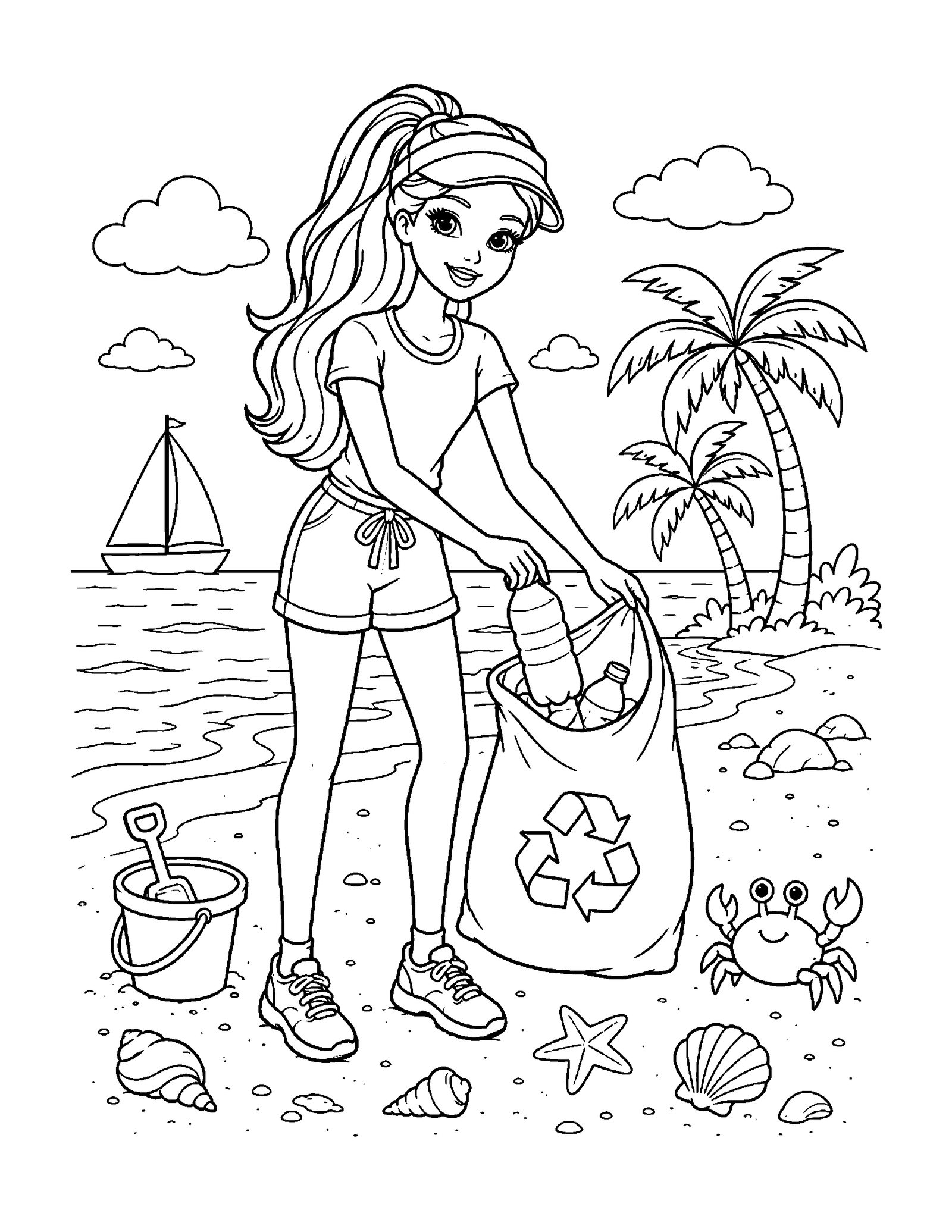
Page 7: Pet Care Day
This friendly pet-care picture can lead to a short story about naming the puppy and preparing its supplies. Keep the fur light, spotted, or boldly imaginative, then coordinate the collar and bowl.
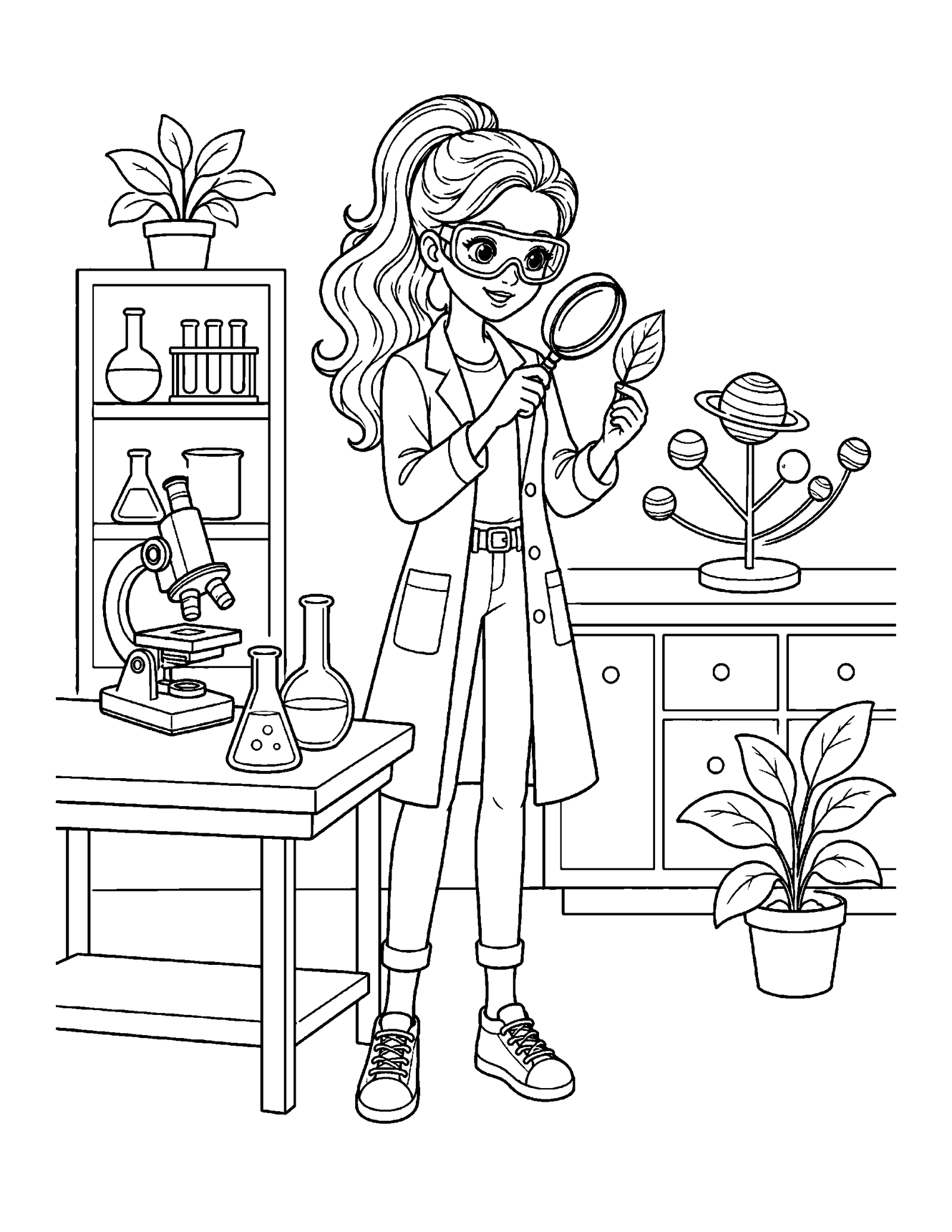
Page 8: Science Lab
Lab tools and safety goggles introduce a different kind of outfit design. Children can color-code the beakers, add labels to the work area, and imagine what the character is carefully observing.
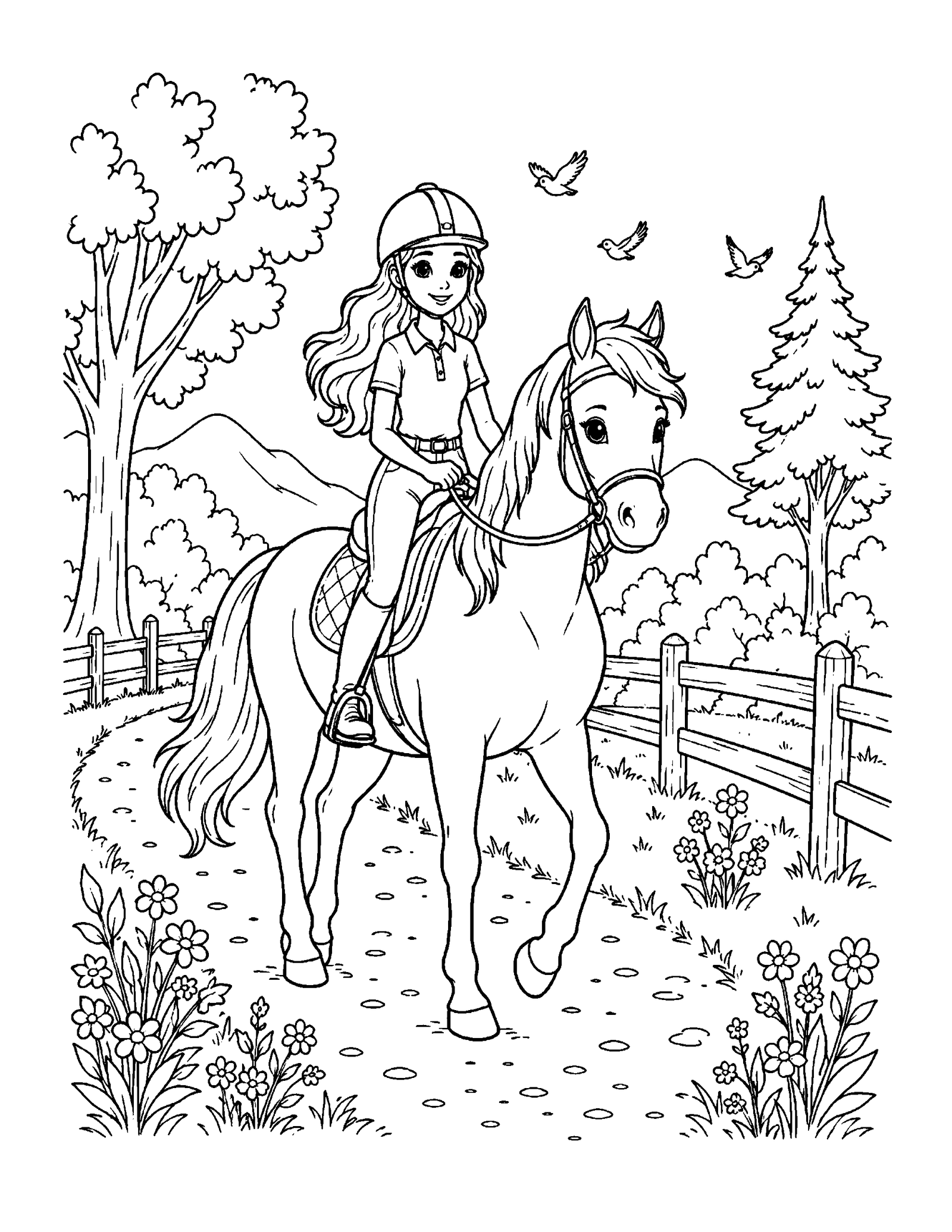
Page 9: Horseback Adventure
The horse, saddle, clothing, trees, and hills provide several surfaces and textures to explore. Layer browns for the tack, blend greens in the landscape, or invent a fantasy-colored horse.
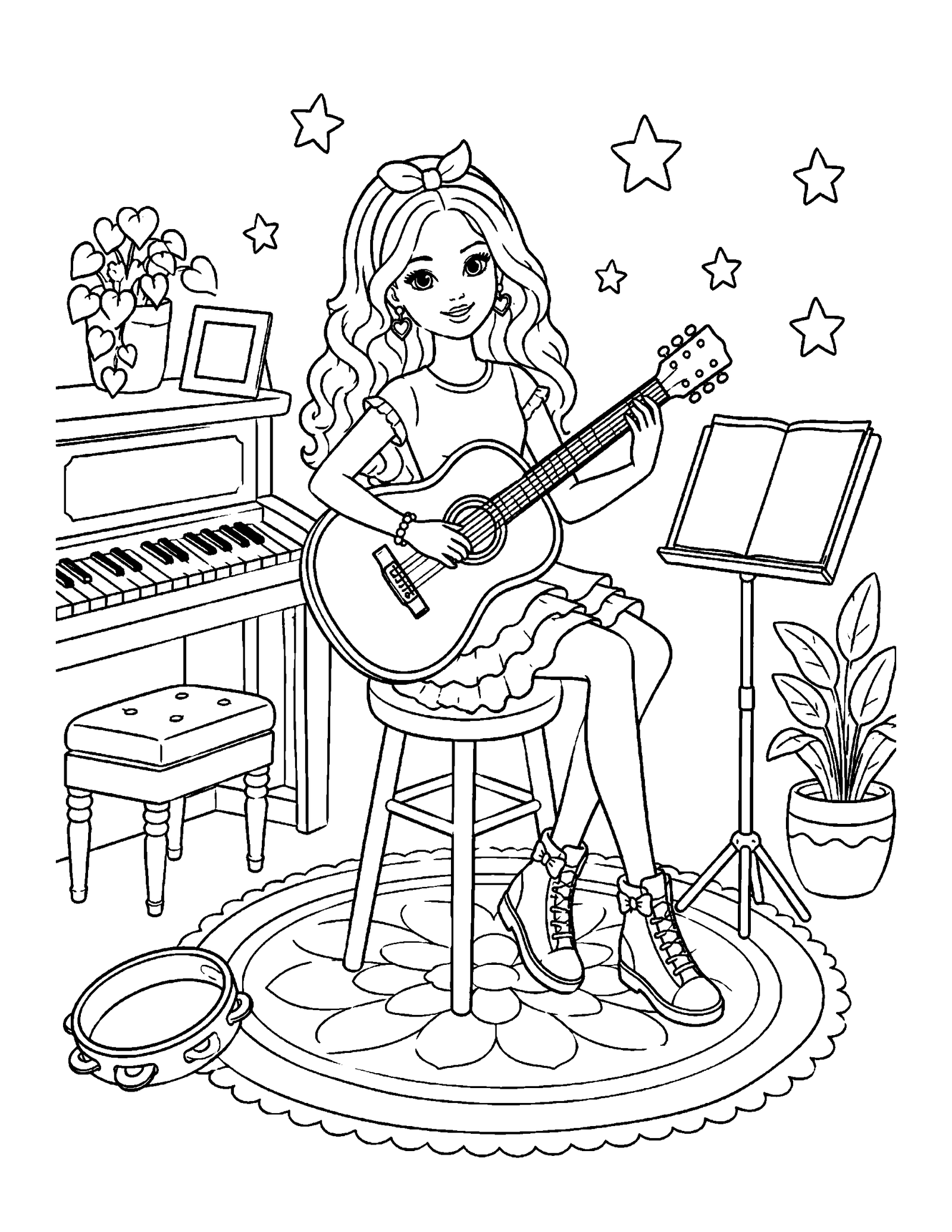
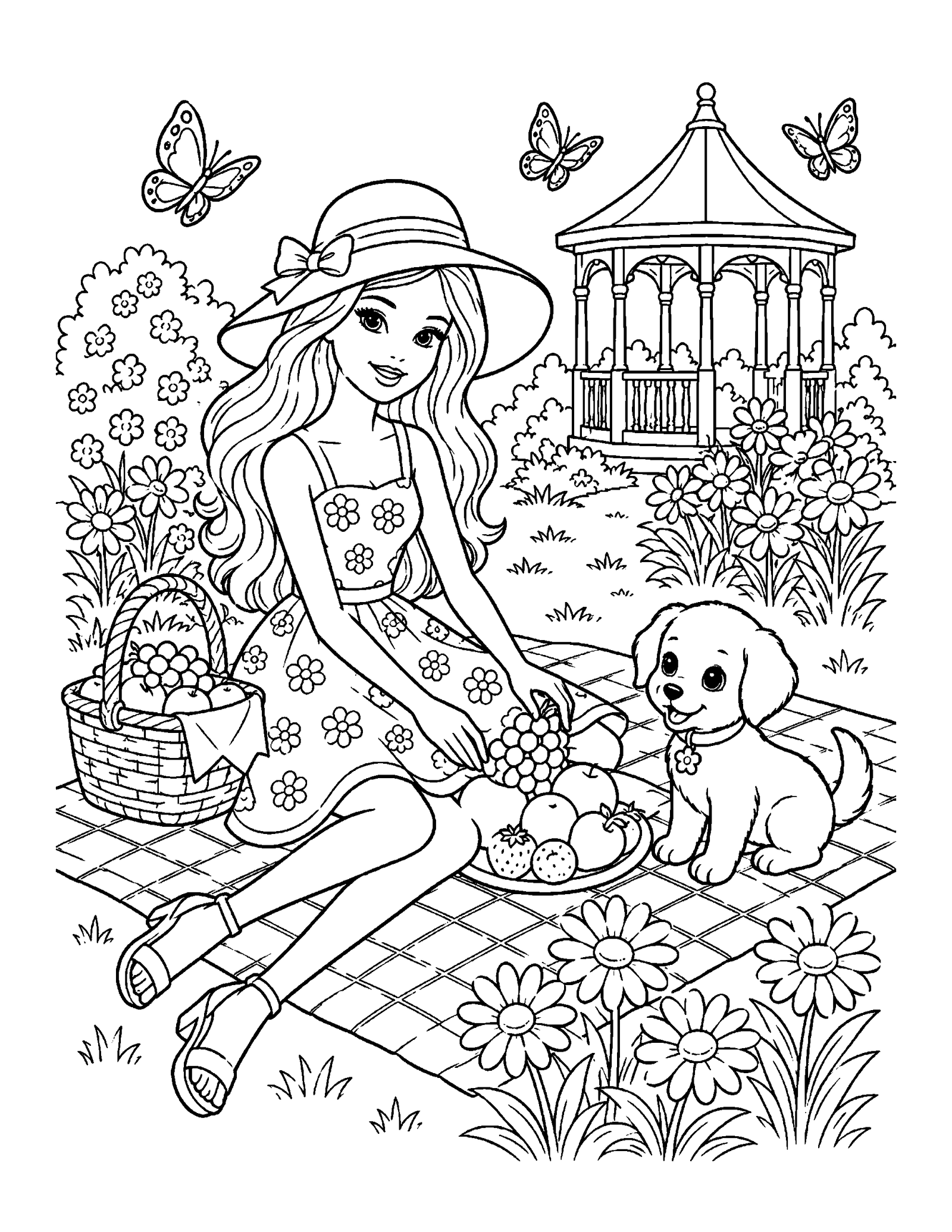
Page 10: Friendship Picnic
Two coordinated outfits and a patterned blanket make this scene ideal for collaborative coloring. One child can handle the characters while another colors the food, flowers, and outdoor setting.
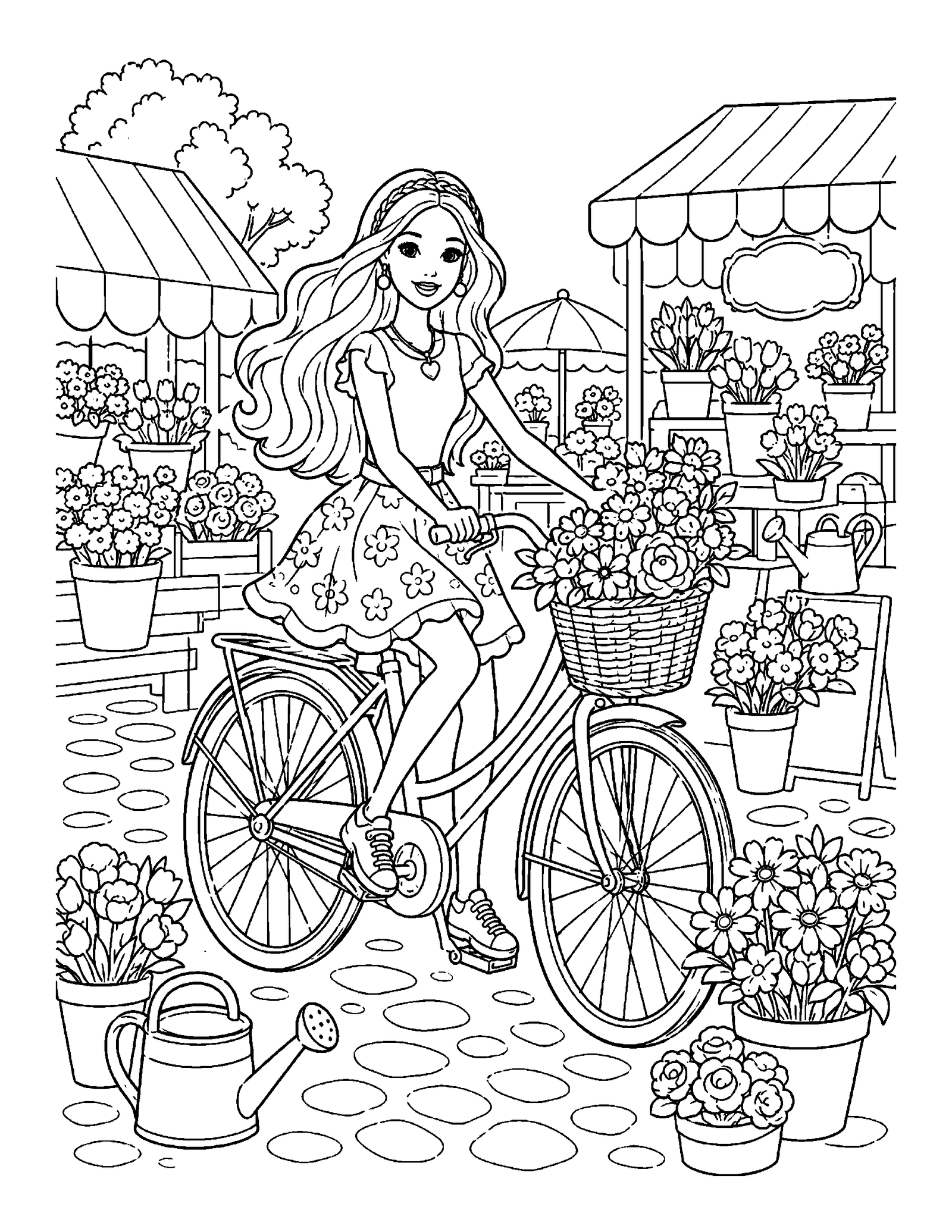
Coloring Clothes Without Losing the Details
Start with the lightest color when working on layered clothing. A pale base makes it easier to deepen folds along seams, under sleeves, and near the hem without covering the printed lines. Colored pencils are especially useful for lace, jewelry, and facial features; broad crayons or washable markers work well on large skirts and backgrounds. Place scrap paper beneath marker pages to protect the table and catch bleed-through.
Patterns look strongest when they follow the shape of the garment. Curve stripes slightly around a sleeve, make dots smaller near a distant edge, or repeat one flower motif across a skirt. Children do not need advanced drawing skills: a simple sequence of dots and dashes can suggest decorative stitching and make a plain area feel designed.
Turn Finished Pages Into Story Props
A colored portrait can become the cover of a homemade fashion notebook. A full scene can be mounted on construction paper and labeled with a one-sentence story about where the character is going, whom she is meeting, and what she hopes to do. For another gentle character activity, Bluey coloring pages can add family and everyday-story themes to the same craft session.
Children can also cut out a completed figure with adult help and attach it to a craft-stick handle for pretend play. Keep the original page intact by photocopying before cutting, or use a second print. This turns color decisions into storytelling choices about personality, mood, weather, and occasion.
Simple Printing Setup
Open the selected full-size page and use the browser or device print command. Choose portrait orientation and fit the artwork within the printable area of US Letter or A4 paper. Standard printer paper is suitable for crayons and pencils; heavier paper is a better choice for markers or light paint. Print one test page before producing several copies for a group.
Keep the printed lines visible by avoiding very dark pressure at the beginning. Build color in layers and sharpen pencils for facial details only after the main clothing areas are complete. If glitter glue or paint is added, let the page dry flat before trimming or displaying it.
More Magical Character Ideas
Fashion and fantasy overlap naturally when children design tiaras, wings, gardens, or sparkling evening scenes. Pairing this collection with fairy coloring pages can extend the session into enchanted costumes and make-believe settings while keeping the creative focus on color, pattern, and storytelling.
Frequently Asked Questions
Can children use colors different from the familiar character look?
Yes. A printable page is a creative starting point, so children can invent hair colors, fabrics, accessories, and settings. An original palette often leads to more conversation and story ideas.
Which tools work well for small fashion details?
Sharpened colored pencils are easy to control around jewelry, facial features, and narrow trim. Fine-tip washable markers can add bold accents, but place spare paper underneath the print.
How can these pages support a birthday activity?
Print several different scenes, sort supplies into shared cups, and let guests choose one design. Finished pages can become party keepsakes, card fronts, or a collaborative display.
Are the pages suitable for mixed ages?
The collection includes both open shapes and more detailed outfits. Younger children can focus on large areas, while older colorists add shading, patterns, backgrounds, and decorative textures.
Is this an official branded collection?
This is an independent editorial coloring-page collection and does not claim official affiliation with a toy company, studio, or rights holder.
Fashion Designer Follow-Up Challenges
Design brief 1: design a three-color wardrobe around a season. Test the idea on scrap paper, choose one main fabric color and two supporting accents, then apply the plan to clothing or accessories. Afterward, name the occasion and explain how the pattern, texture, and color choices suit it. This turns fashion details into a deliberate visual story while leaving plenty of room for personal style. Display the swatch beside the page so the original design plan remains visible.
Design brief 2: compare matte pencil texture with smooth marker areas. Test the idea on scrap paper, choose one main fabric color and two supporting accents, then apply the plan to clothing or accessories. Afterward, name the occasion and explain how the pattern, texture, and color choices suit it. This turns fashion details into a deliberate visual story while leaving plenty of room for personal style. Display the swatch beside the page so the original design plan remains visible.
Design brief 3: write a short invitation for the finished party scene. Test the idea on scrap paper, choose one main fabric color and two supporting accents, then apply the plan to clothing or accessories. Afterward, name the occasion and explain how the pattern, texture, and color choices suit it. This turns fashion details into a deliberate visual story while leaving plenty of room for personal style. Display the swatch beside the page so the original design plan remains visible.
Design brief 4: create a fabric-pattern key on scrap paper. Test the idea on scrap paper, choose one main fabric color and two supporting accents, then apply the plan to clothing or accessories. Afterward, name the occasion and explain how the pattern, texture, and color choices suit it. This turns fashion details into a deliberate visual story while leaving plenty of room for personal style. Display the swatch beside the page so the original design plan remains visible.
Enjoy These Barbie Coloring Pages Printable
Barbie coloring pages printable activities can be as simple as a ten-minute portrait or as involved as a complete fashion story. Choose a scene that matches the available time, print it at a comfortable scale, and let clothing, friendships, pets, careers, and celebrations inspire the palette. The most meaningful result is not a perfect match to a familiar design, but a page that reflects the colorist’s own decisions.