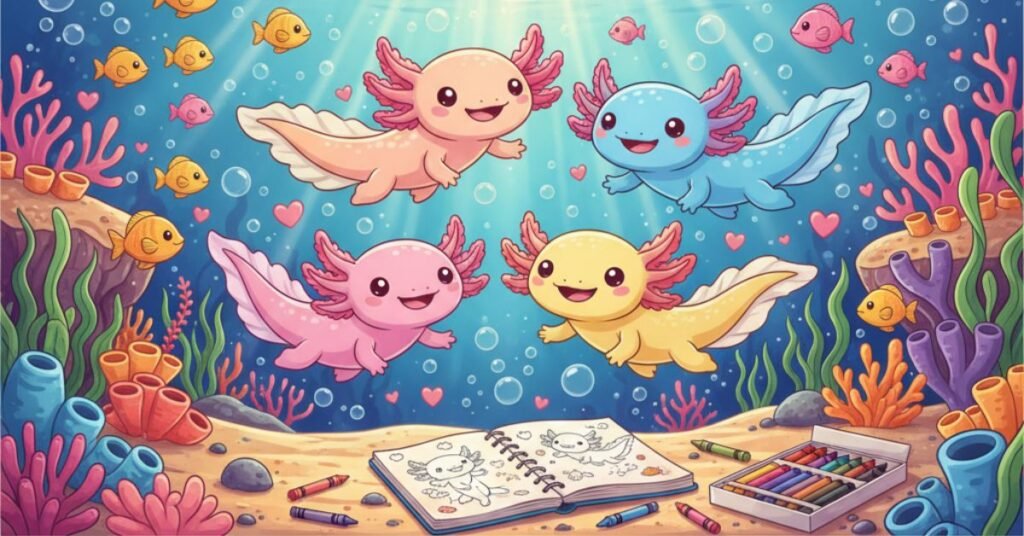
An axolotl coloring page is a wonderfully unusual way to explore an aquatic animal through art. This ten-page collection includes close portraits, swimming scenes, water plants, stones, bubbles, a cave, and a gentle fantasy setting. The feathery external gills create a recognizable silhouette, while the rounded body and tail offer comfortable areas for younger children to color.
Real axolotls can appear in shades such as dark gray-brown, pale pink, golden, or mottled tones, but a coloring activity can also use imaginative blues, violets, or greens. Children can compare a natural palette with a fantasy palette and explain which setting fits each one. For a broader animal activity folder, visit our animal coloring pages after completing this aquatic set.
Notice the Features That Make an Axolotl Distinctive
The most recognizable details are the branching gills on both sides of the head, a broad head, small limbs, and a long tail suited to moving through water. A coloring page gives children time to notice these parts without requiring a formal worksheet. Ask them to point to each feature before selecting colors.
Because axolotls spend their lives in water, background choices matter. Plants can bend in one direction to suggest a current. Bubbles can become smaller as they rise. Stones, sand, and a shaded cave help establish depth even in a simple line drawing.
10 Printable Axolotl Coloring Page
Choose a design below, open the full-size image, and print it for your coloring activity.
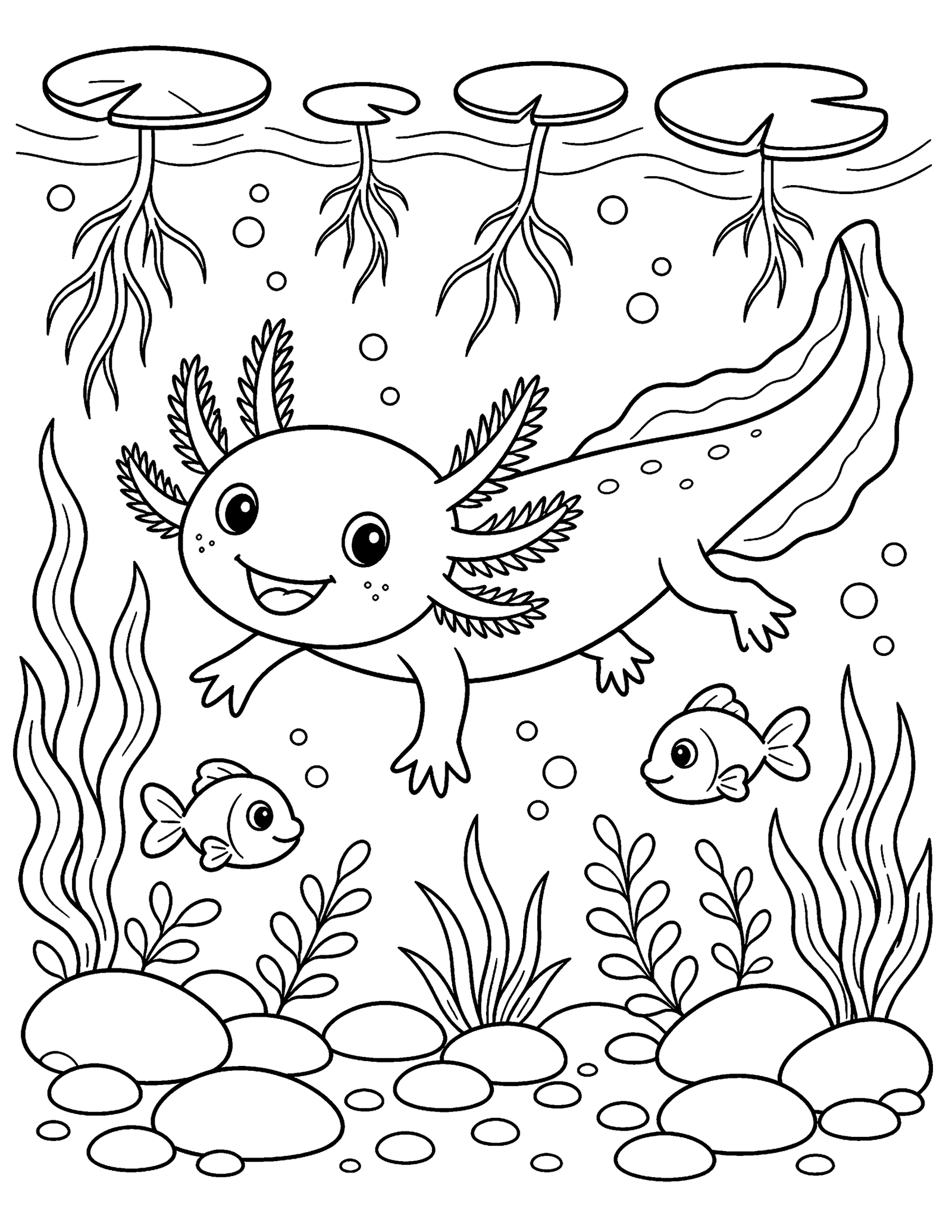
Axolotl in a Freshwater Pond
A cheerful axolotl explores a natural freshwater habitat filled with pond plants and tiny fish.
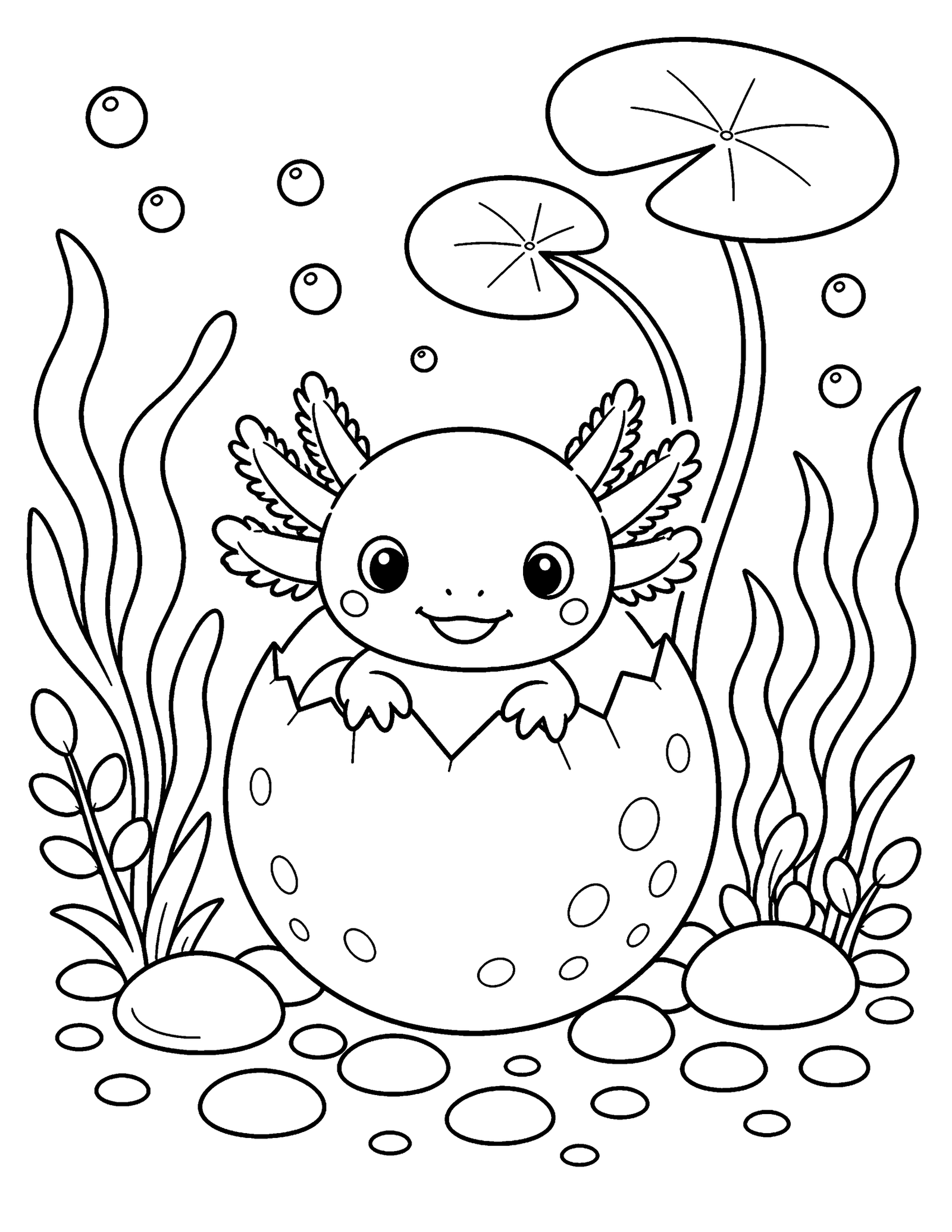
Baby Axolotl Hatching
A curious baby axolotl emerges in a gentle underwater hatching scene.
Axolotl Friends Playing
Two axolotl friends enjoy an underwater game surrounded by pond life.
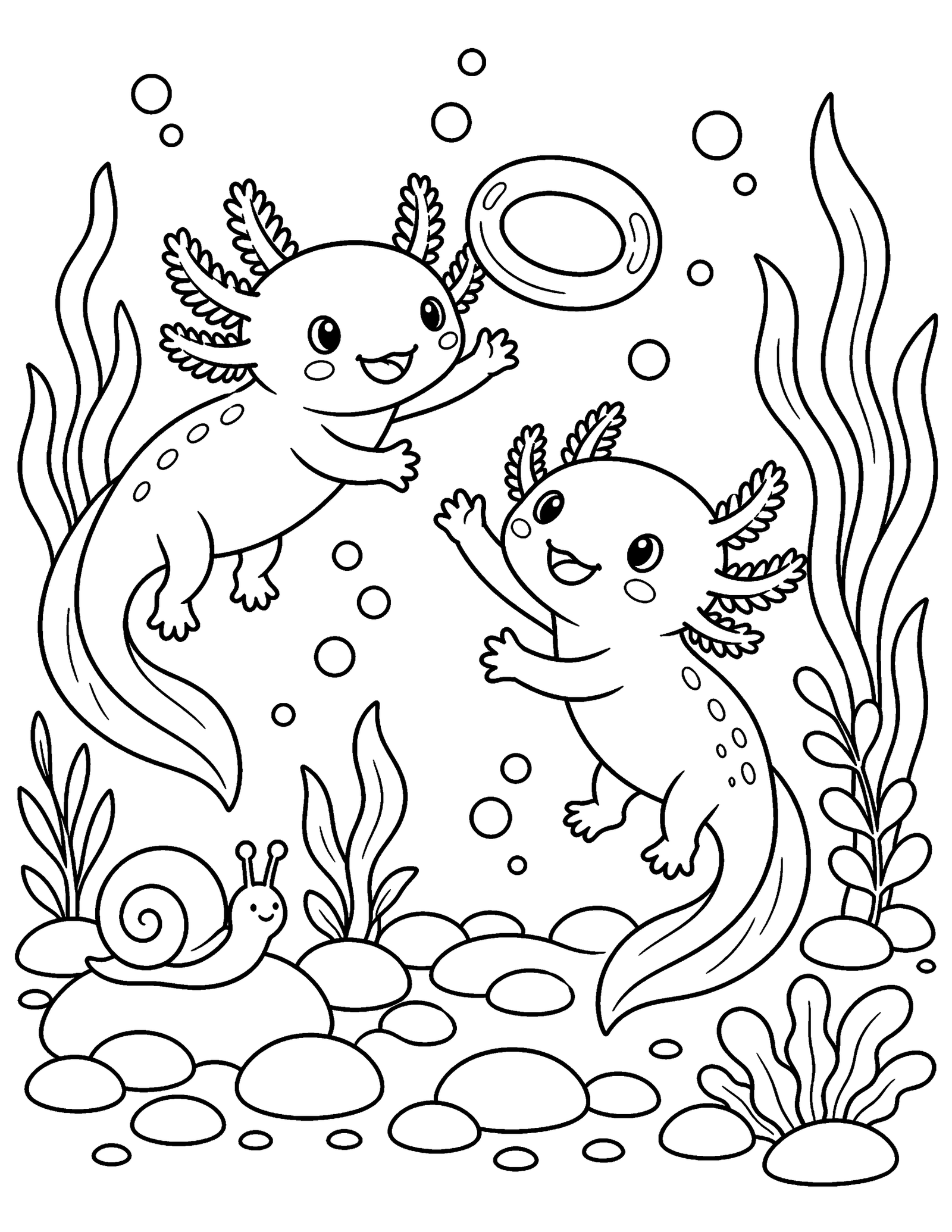
Axolotl Underwater Treasure
An adventurous axolotl discovers a whimsical collection of underwater treasures.
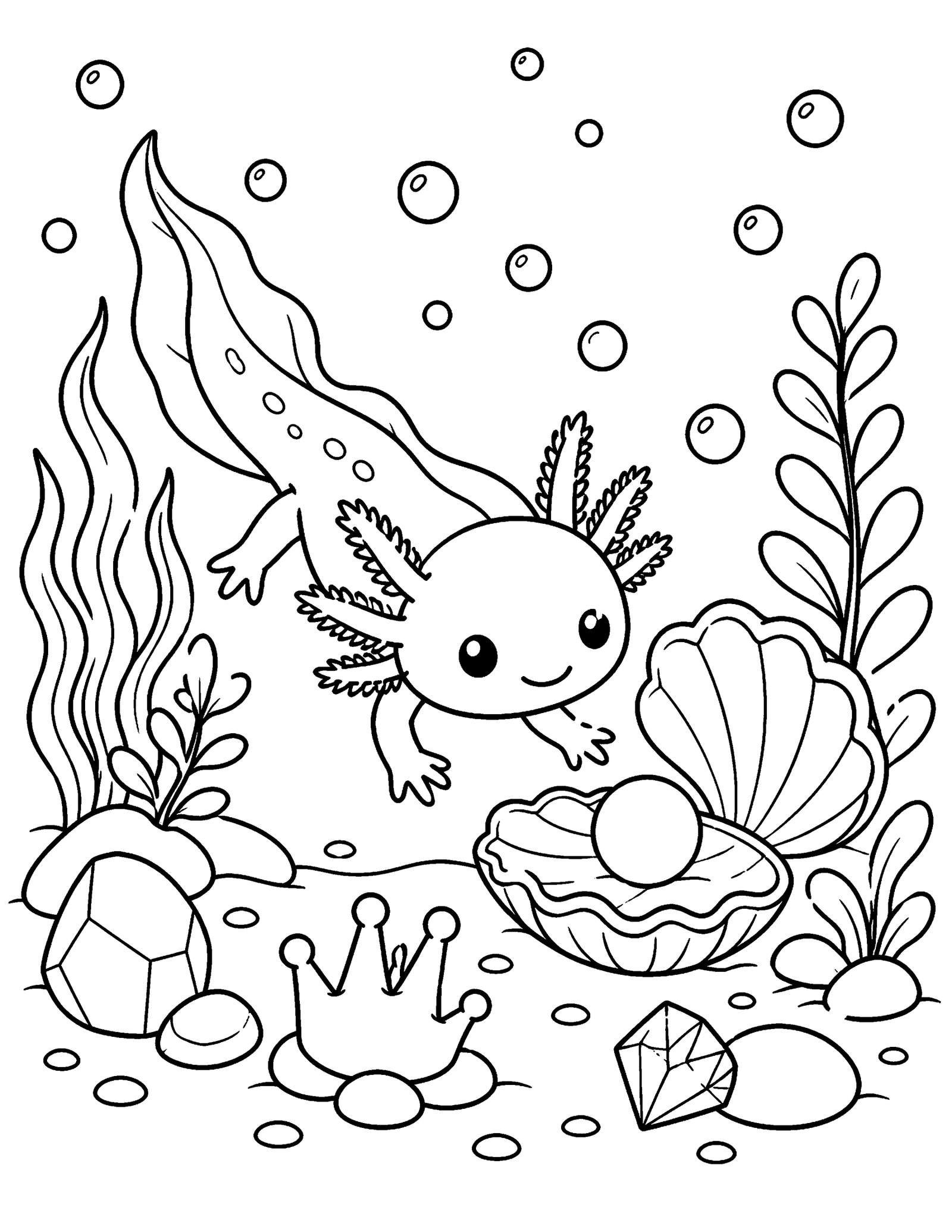
Axolotl Aquatic Garden
A playful axolotl cares for a tidy underwater garden of leafy pond plants.
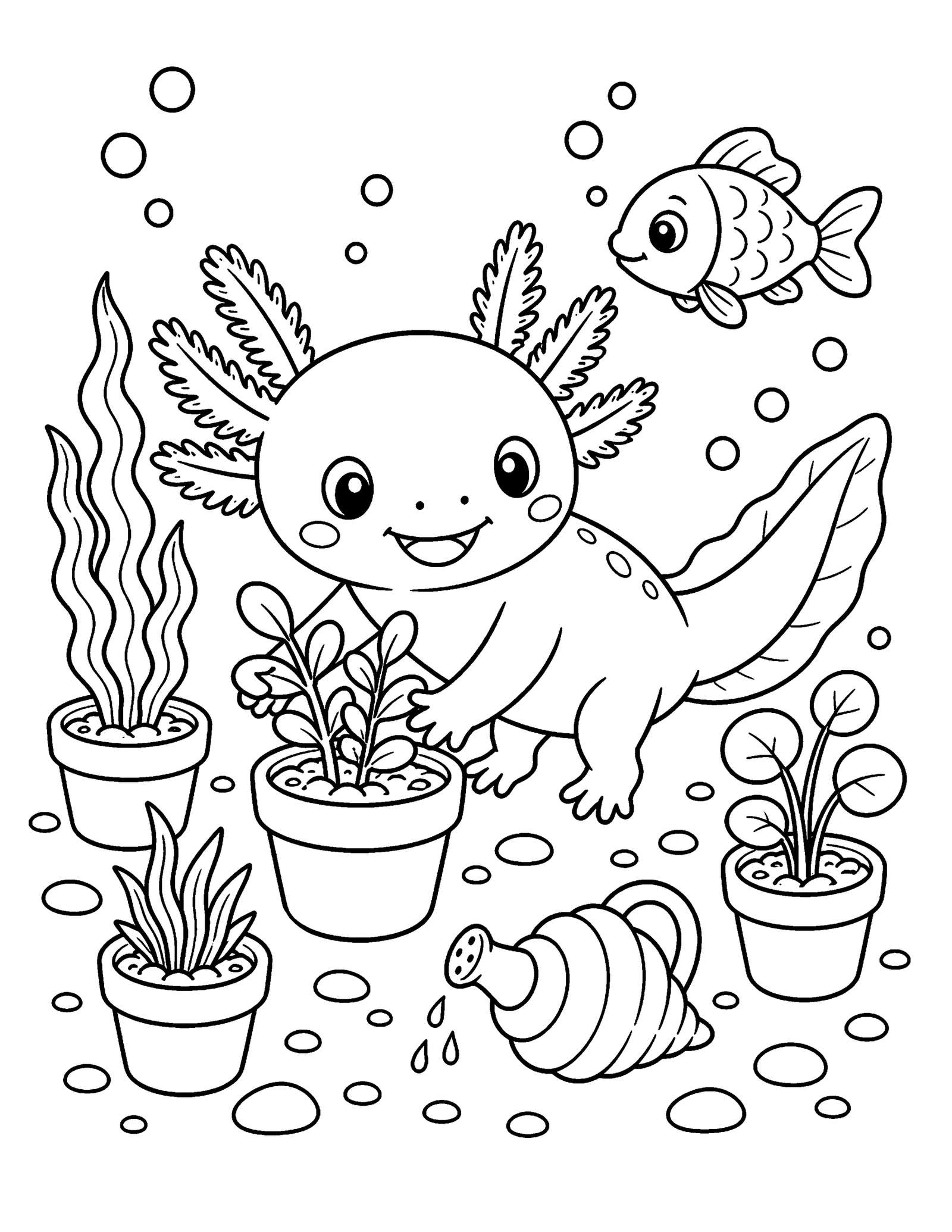
Axolotl Family Under Pond Leaves
An axolotl family rests together in a cozy freshwater habitat.
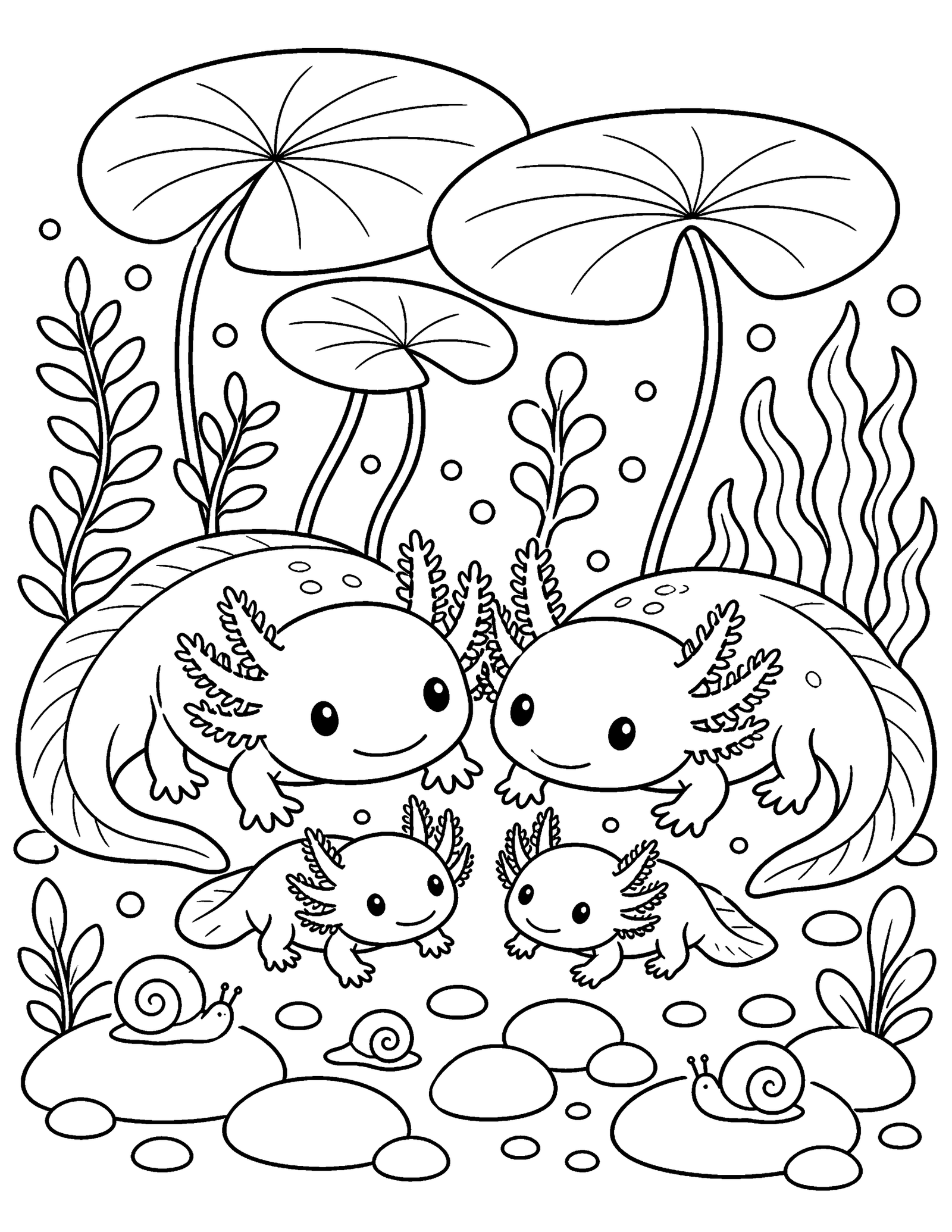
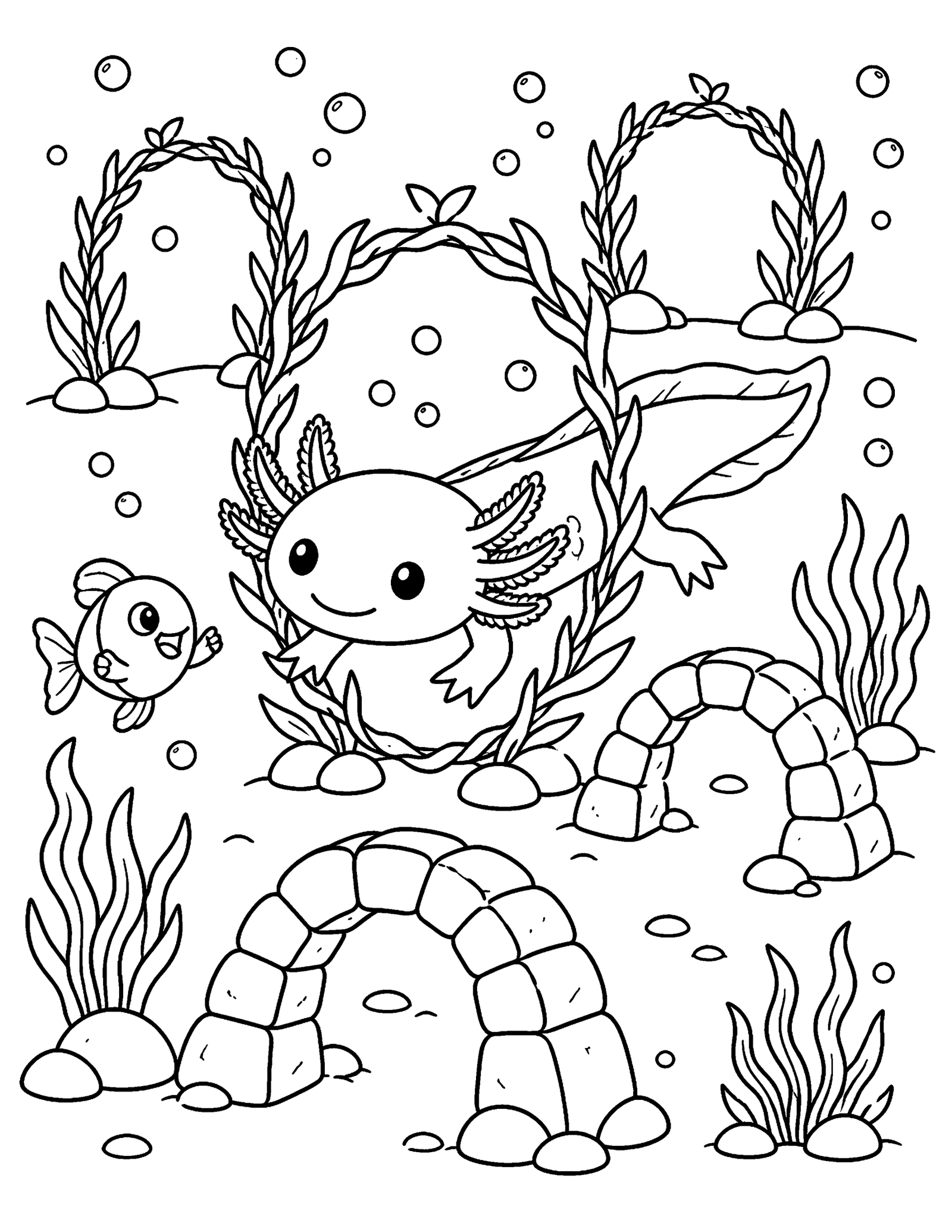
Axolotl Obstacle Course
A curious axolotl navigates a fun underwater course built from natural pond features.
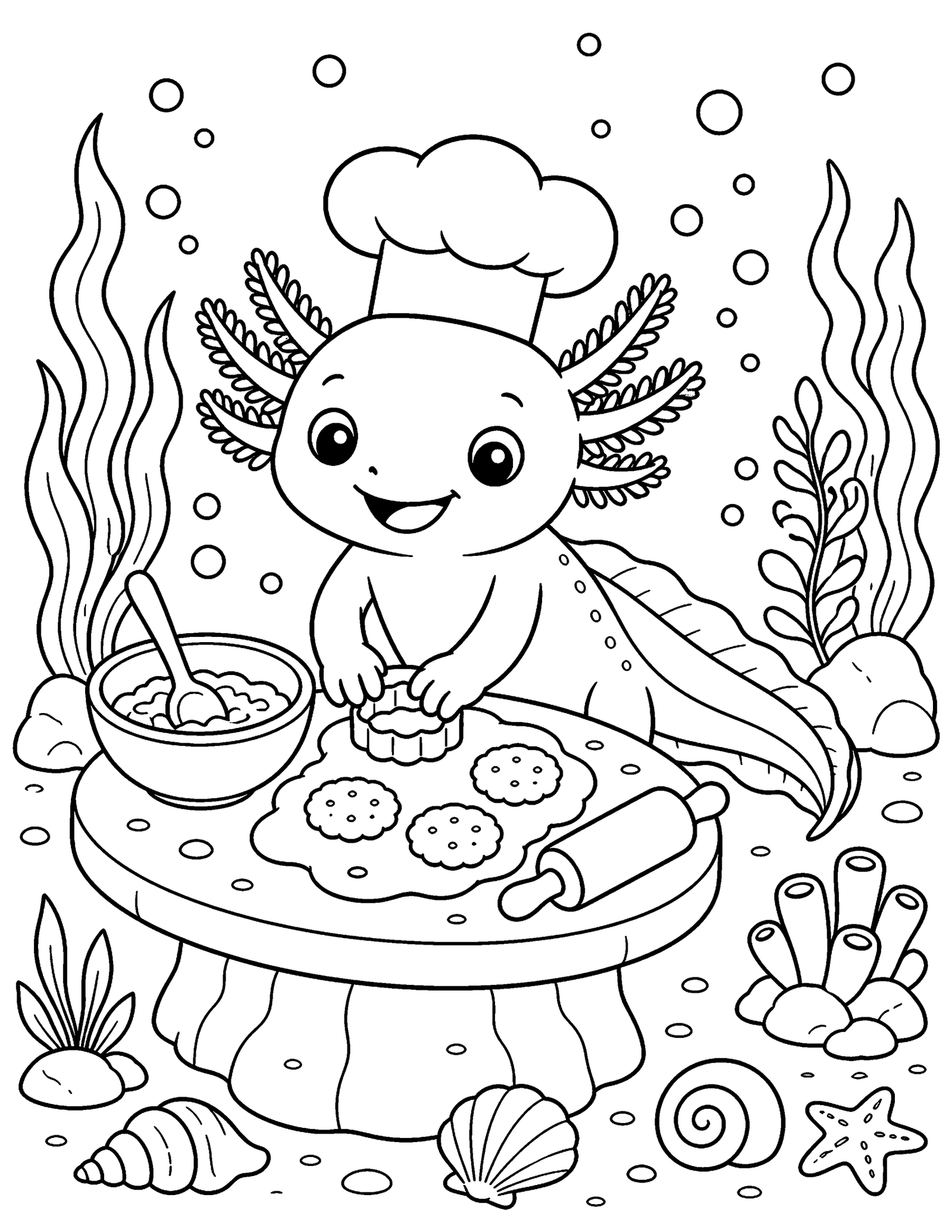
Axolotl Chef Baking
A whimsical axolotl chef prepares simple round treats at an underwater table.
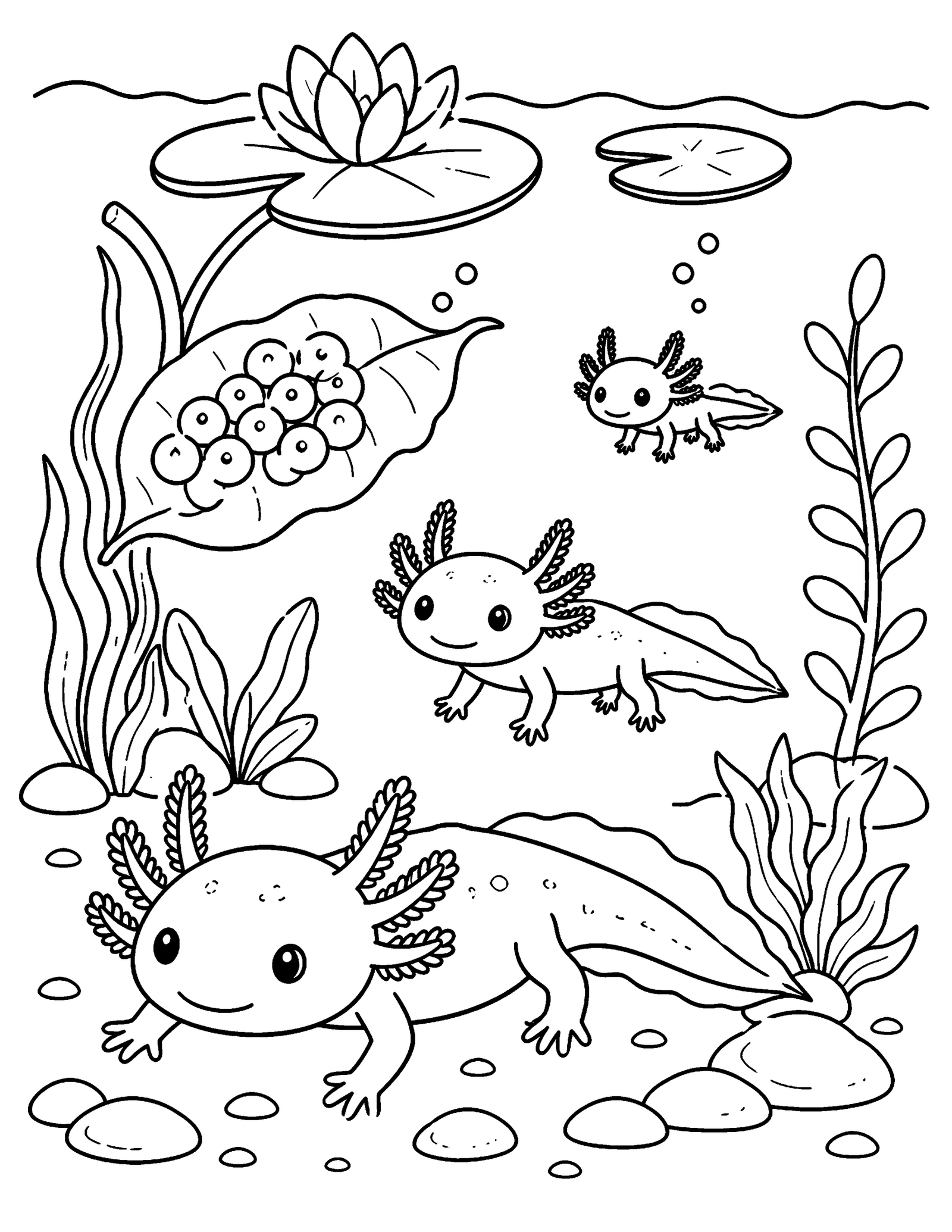
Axolotl Life Cycle
Four stages of axolotl growth are shown without labels in one educational freshwater habitat.
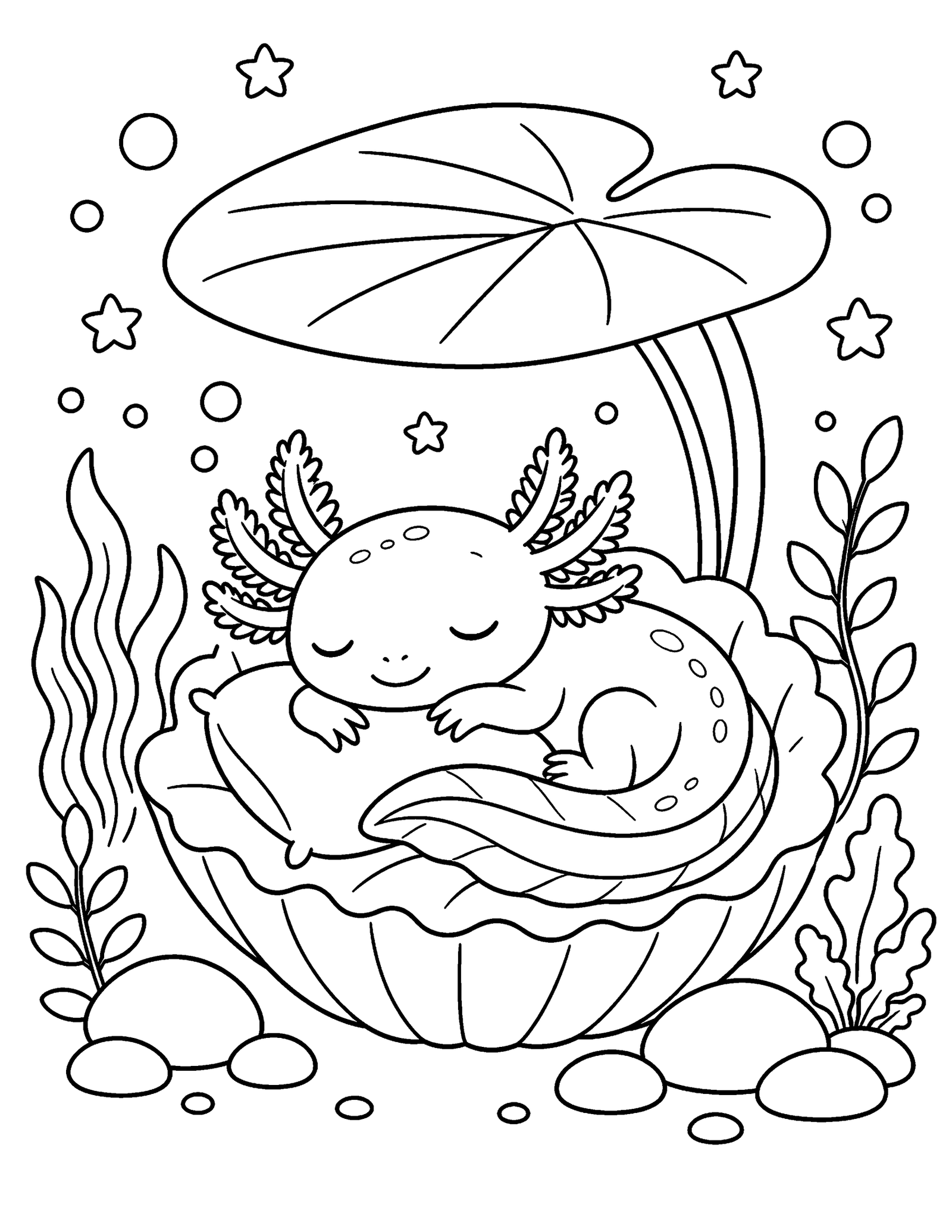
Sleeping Axolotl in a Shell Bed
A peaceful axolotl rests in a cozy underwater bed surrounded by plants and stones.
Create a Natural or Imaginary Habitat
For a nature-inspired scene, use earthy stones, muted green plants, a sandy or silty floor, and calm blue-green water. Keep the animal distinct by choosing a lighter or darker value than the background. The gill branches can use a slightly warmer accent so they remain visible.
A fantasy habitat can include glowing plants, jewel-colored pebbles, or a night-sky blue pond. Children might invent a safe underwater home and draw hiding places, food, or companions in the blank areas. The goal is observation and storytelling, not a scientifically exact reconstruction.
Water-Themed Learning Prompts
Use the swimming pages to introduce direction words: above, below, beside, behind, near, and far. Ask where the axolotl is positioned relative to a rock or plant. Younger children can count bubbles or gill branches, while older children can write a short habitat description.
Compare the gentle axolotl silhouette with the streamlined shapes in shark coloring pages. Both are aquatic animals, but their fins, tails, body shapes, and usual scenes produce very different pictures. Children can discuss which lines make one look calm and the other fast.
A group can create a connected underwater mural. Give each participant one sheet, agree on a shared water color, and line the pages up after coloring. Add paper plants between them to visually connect the separate habitats.
Printing and Coloring Feathery Gills
Open the page at full size and print on standard paper for crayons or colored pencils. Use heavier paper if adding washable markers or a light watercolor wash. Select “fit to printable area” when necessary so the tips of the gills remain within the printer margins.
Color the body with broad, even strokes before tackling the narrow gill branches. A sharp pencil gives the most control in those delicate areas. For transparent-looking water, use very light pressure and leave irregular white spaces as reflections rather than filling the whole background heavily.
Nature Crafts With Completed Pages
Mount a finished portrait on blue cardstock and surround it with cut-paper plants. A swimming scene can become the cover of a small “pond observations” booklet. Children can write one factual observation and one imaginary sentence on the facing page, clearly separating what they noticed from what they invented.
Plant details can be extended with ideas from flower printable colouring pages. Although the habitats differ, both activities encourage children to compare leaf shapes, repeat color families, and use small natural forms as decorative borders.
Use Color to Show Water, Distance, and Gentle Movement
Underwater pictures can look flat when the animal, plants, stones, and water all receive the same strength of color. Keep the farthest background elements light and low in contrast, then use clearer edges and richer color on the axolotl. A few darker foreground stones can frame the bottom of the page and create three simple layers: near, middle, and far.
Plants suggest water movement when their stems lean together. Choose one current direction and make the leaves appear to bend that way through color emphasis: darker on the leading edge and lighter on the trailing edge. Bubbles can support the same flow if they rise in a slightly curved path instead of appearing as unrelated circles.
The animal’s gills deserve careful treatment because they distinguish the silhouette. Use a pale base, then place a slightly deeper accent near the center branch or at selected tips. Avoid pressing hard at the narrow ends. If a child colors outside a branch, the surrounding water can be deepened gently to restore a clean edge.
For an observation game, cover the captions and ask children to sort the pages into resting, swimming, exploring, and imaginary scenes. They can justify each choice using body position and nearby objects. A page with treasure belongs in the imaginary group, while a side view among plants can support a more nature-focused description.
Create an Axolotl Observation Card
After finishing a page, fold a separate index card in half. On the front, draw a small version of the gills, tail, or foot; inside, record three visual observations from the coloring sheet and one question about the animal. Keep imaginative story ideas on the back under a different label. Separating observations, questions, and inventions helps children use art as a starting point for curiosity while avoiding unsupported claims about real animal behavior.
One More Way to Personalize the Activity
To compare habitats across the collection, place three pages side by side and mark the visible elements on a separate list: open water, plants, stones, shelter, bubbles, and light. Children can then decide which scene appears shallow, deep, sheltered, or imaginary and explain the visual clues. This simple sorting task develops careful attention to setting while keeping the printable coloring pages central to the activity.
More Printable Coloring Pages
- 20 Cute Cat Coloring Page Collection for Fun and Creativity
- Printable Owl Coloring Pages for All Age Groups
- 20 Free Printable Wolf Coloring Pages for All Ages
Frequently Asked Questions
What are the feather-like shapes beside an axolotl’s head?
They represent external gills. On these pages, a sharp colored pencil helps color the narrow branches while keeping their outlines clear.
Must an axolotl be colored pink?
No. Pale pink is one recognizable option, but natural-looking dark, golden, or mottled palettes and completely imaginative colors can all support a creative activity.
Which axolotl page is easiest?
The front-facing portrait has the fewest background details and the largest body areas. The side view is also clear, though its gills require careful coloring.
How can water look light instead of solid blue?
Use gentle pencil pressure, vary the direction of strokes, and leave irregular white spaces as reflections. Coloring the background lightly also keeps the animal prominent.
Can these pages support a classroom animal unit?
Yes. Use them for body-part observation, position words, bubble counting, habitat descriptions, and comparisons with other aquatic animals.
A Creative Finish
An axolotl coloring page combines a memorable animal shape with calm underwater scenery. Begin with the simple portrait, notice the gills and tail, then create natural ponds, imaginative caves, or a connected group mural across the full collection.