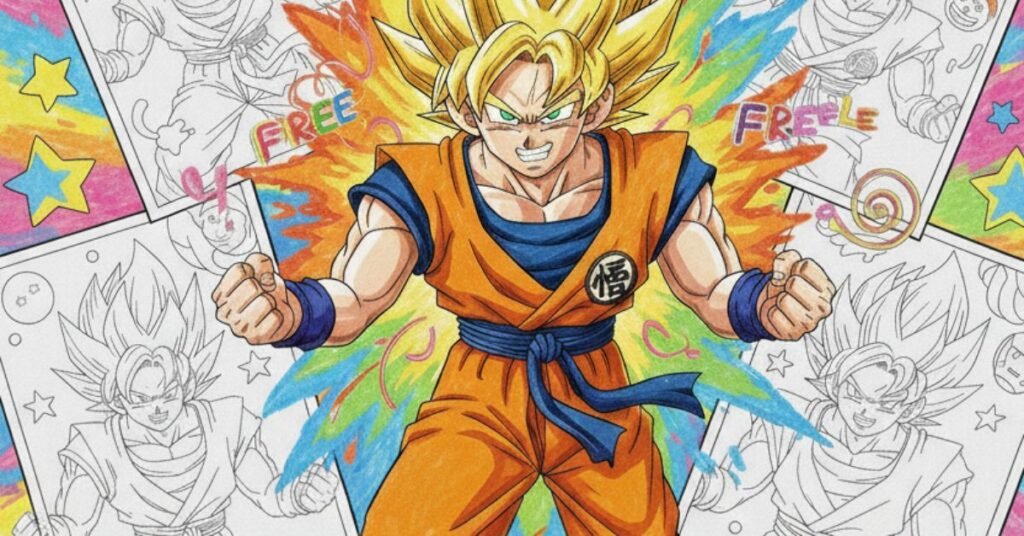
These Goku coloring pages are organized around movement: training stances, fast action, energy effects, transformations, and a few quieter moments between challenges. Ten different sheets let fans practice strong contrasts, directional lines, fabric folds, expressive faces, and glowing backgrounds without requiring the same coloring approach on every page.
Younger children may prefer the friendly wave or simplified portrait, while older fans can spend more time on the training scene, energy wave, or dramatic transformation. The pages can be colored in familiar tones or redesigned with an original uniform and aura palette. This is an unofficial fan-oriented activity and is not affiliated with or endorsed by the character’s rights holders. More varied character styles are available in our anime coloring pages collection.
From Calm Poses to Powerful Motion
A good action collection needs changes in pace. The calmer portrait and meal scene give colorists time to focus on faces, hair sections, and small objects. Training and battle-ready poses use diagonals, bent limbs, fabric movement, and energy shapes to make the page feel faster.
Color can strengthen that motion. Warm yellows, oranges, and reds tend to move forward visually, while blues and violets can create depth behind the figure. Leaving a narrow white rim around an energy effect helps it appear bright even when the surrounding background is dark.
10 Printable Goku Coloring Pages
Choose a design below, open the full-size image, and print it for your coloring activity.
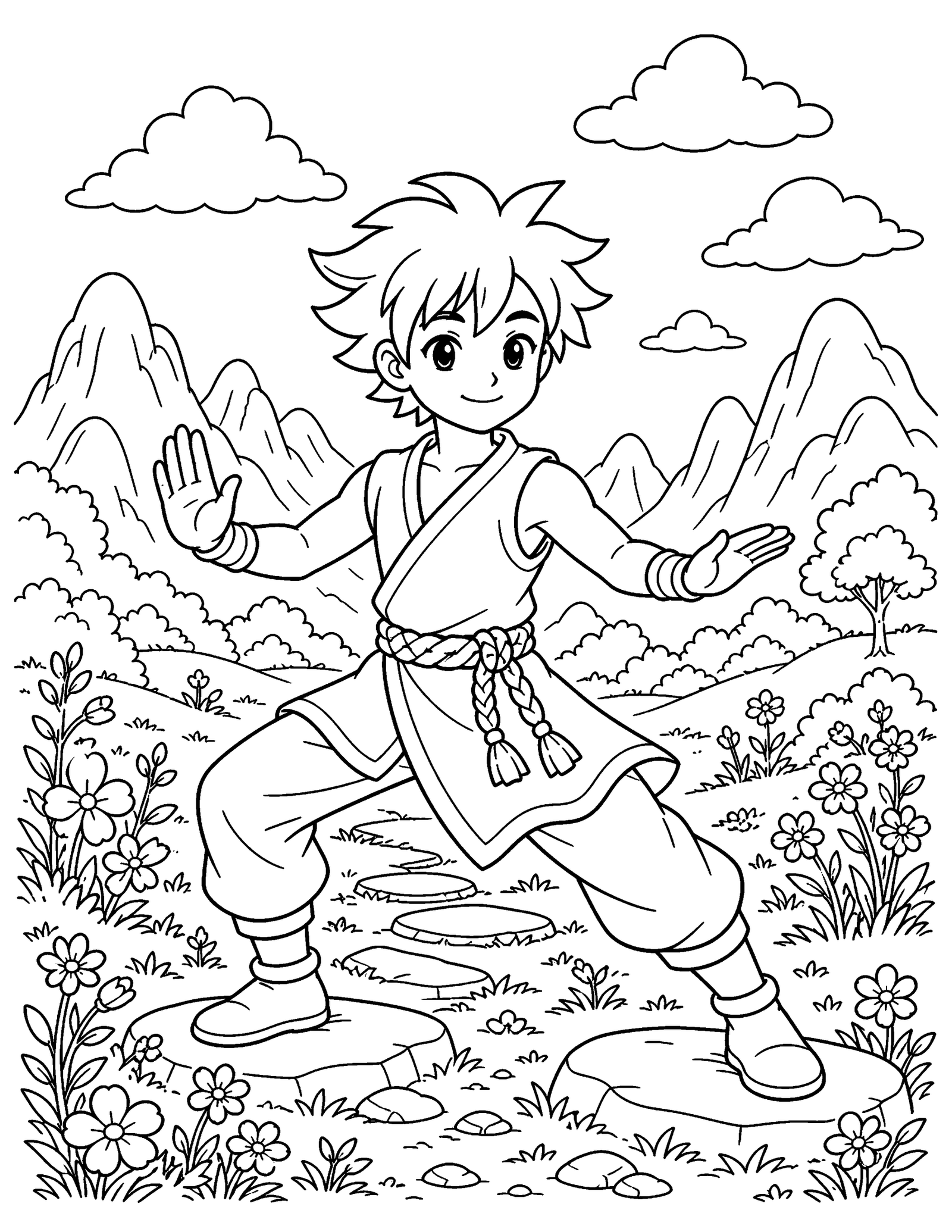
Original Hero Mountain Stance
A generic original fantasy hero practices calm balance among mountains, flowers, and clouds.
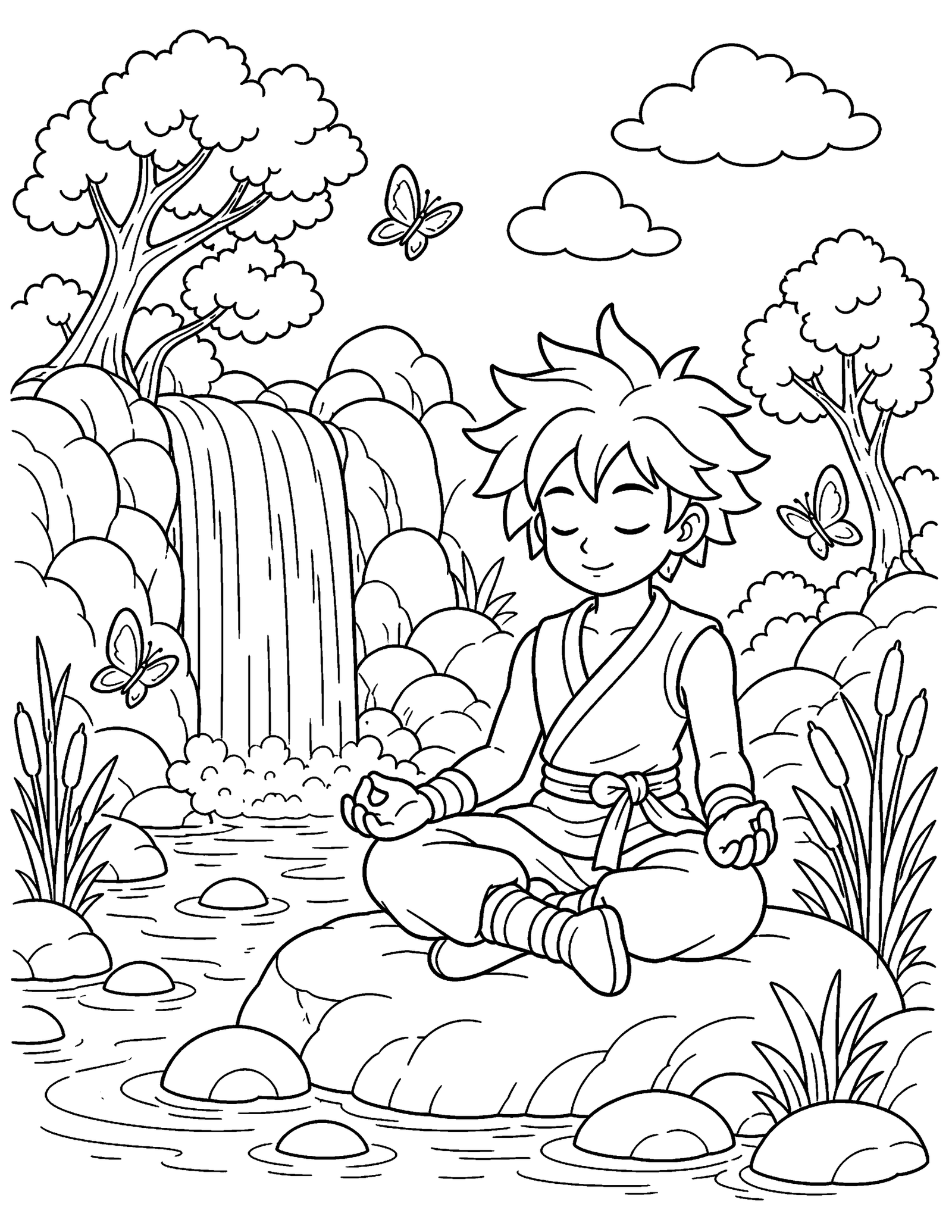
Original Hero Waterfall Meditation
A peaceful generic hero relaxes on a streamside stone after training.
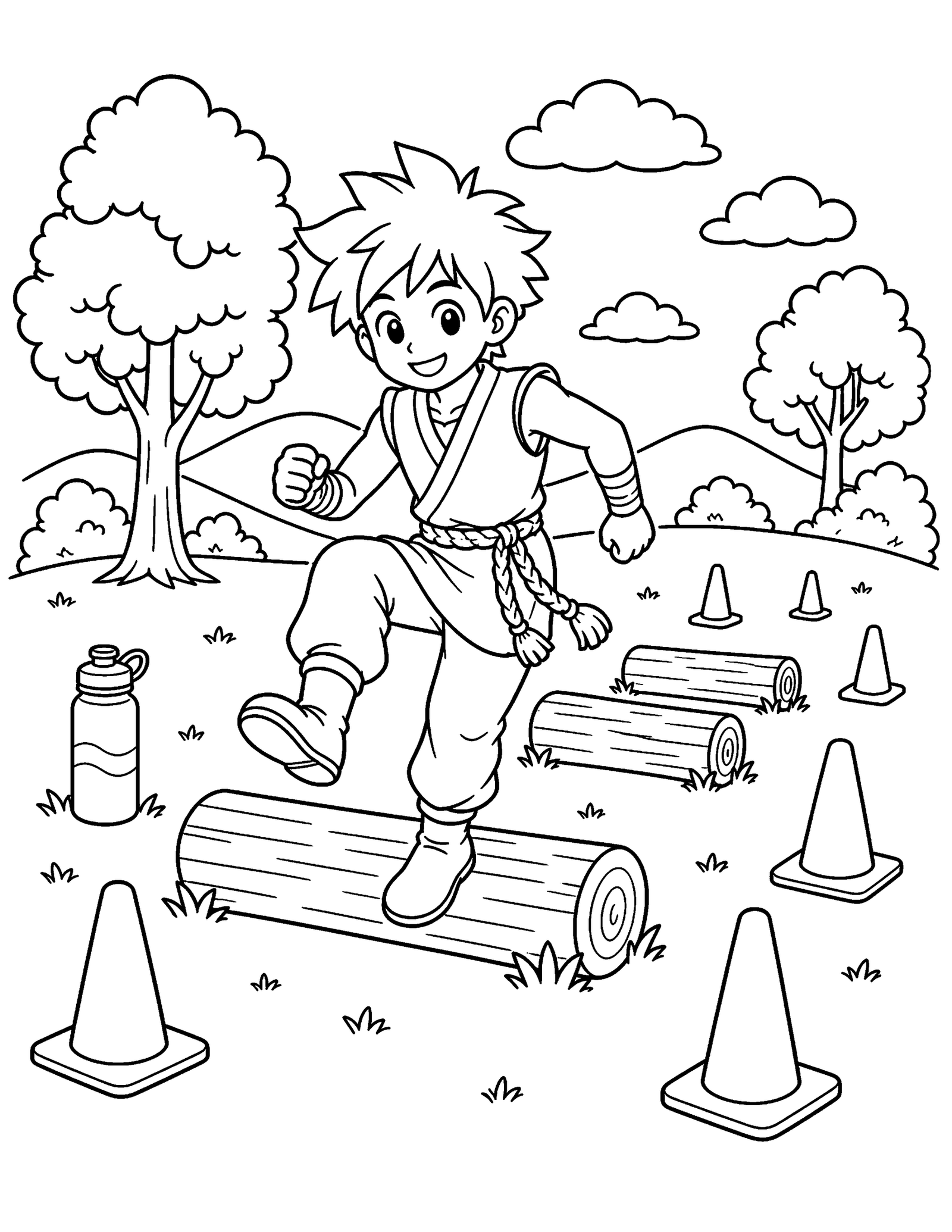
Original Hero Obstacle Course
A cheerful generic adventurer develops coordination on a child-friendly outdoor training course.
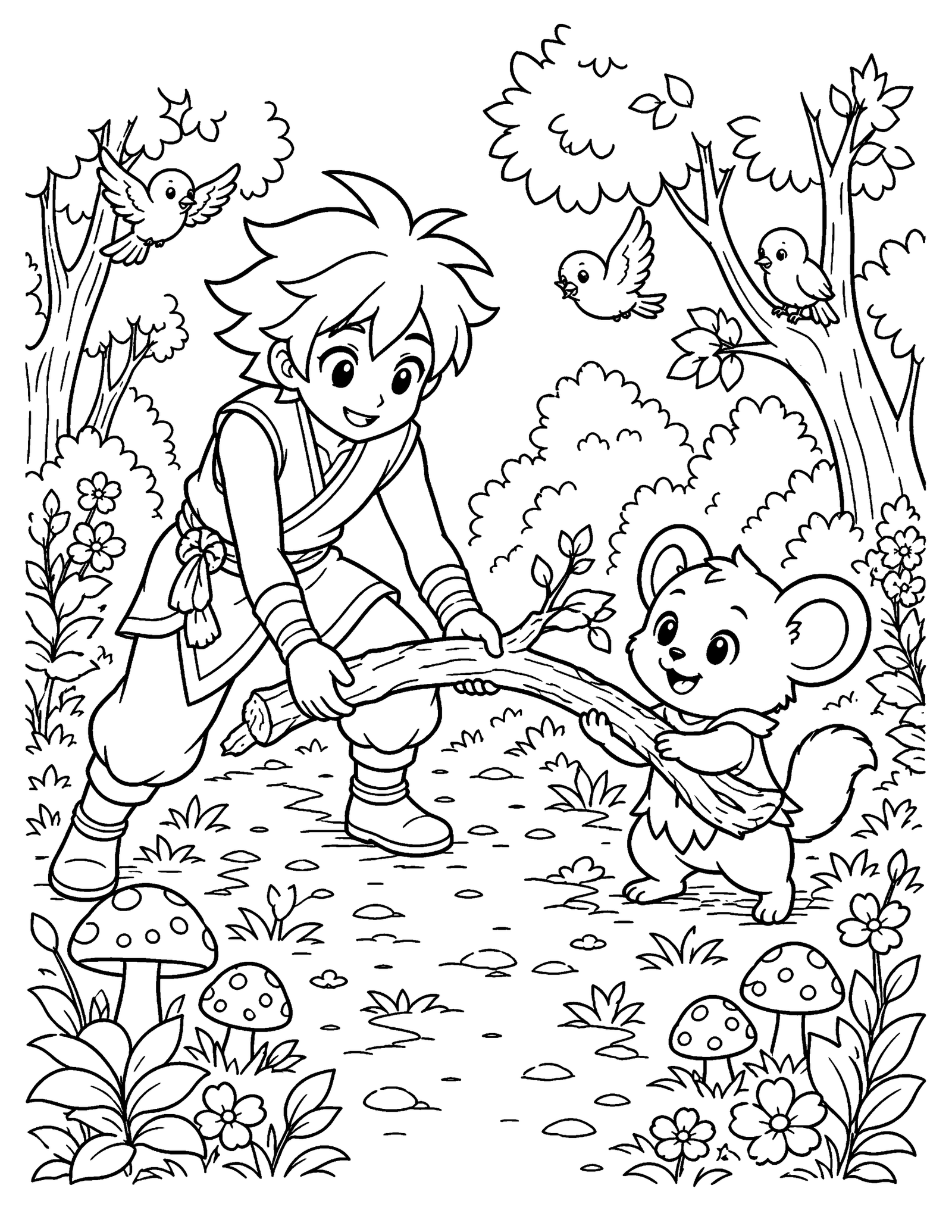
Original Hero Helps a Forest Friend
A kind generic hero works with an original woodland friend to clear a forest path.
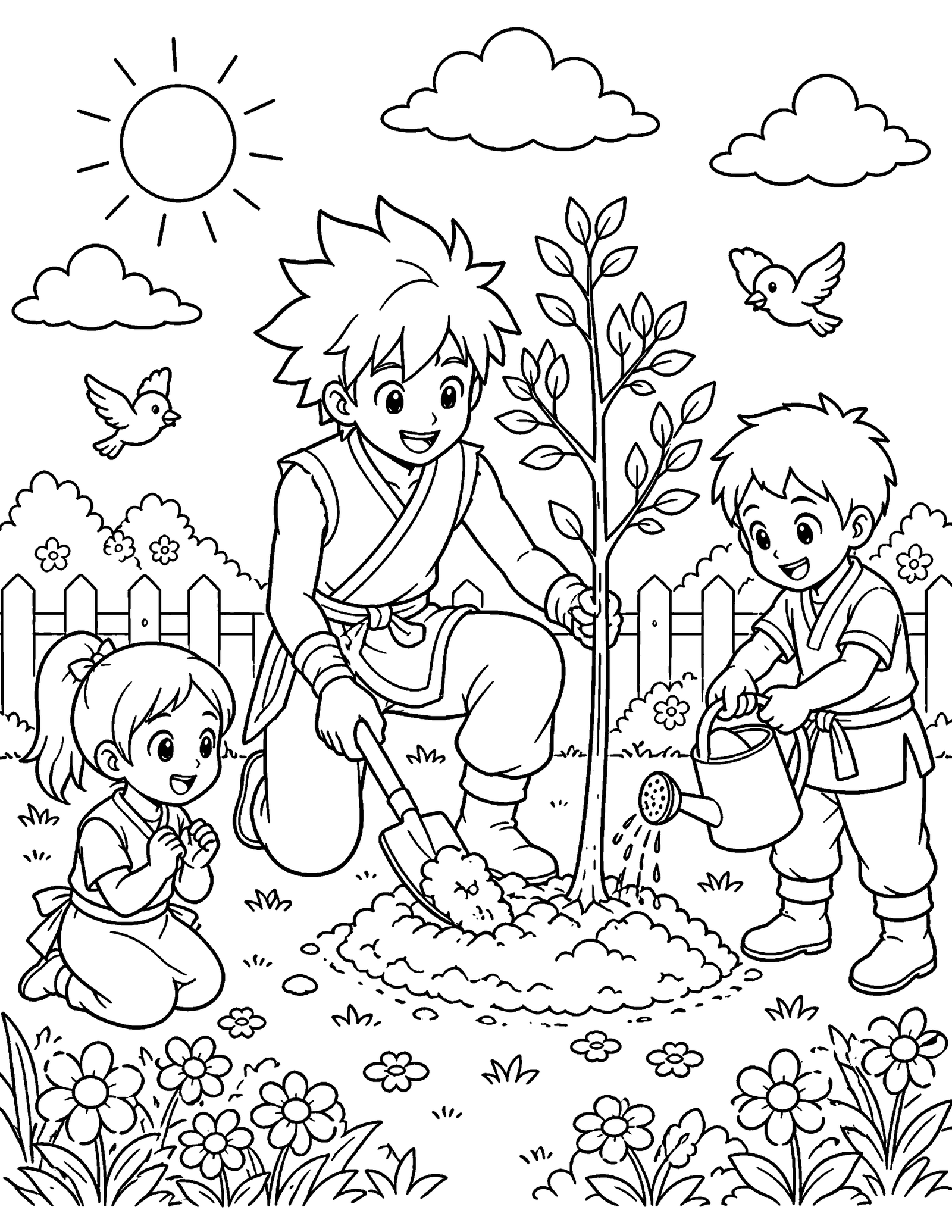
Original Hero Planting a Tree
A generic adventure hero teaches teamwork and care for nature while planting a tree.
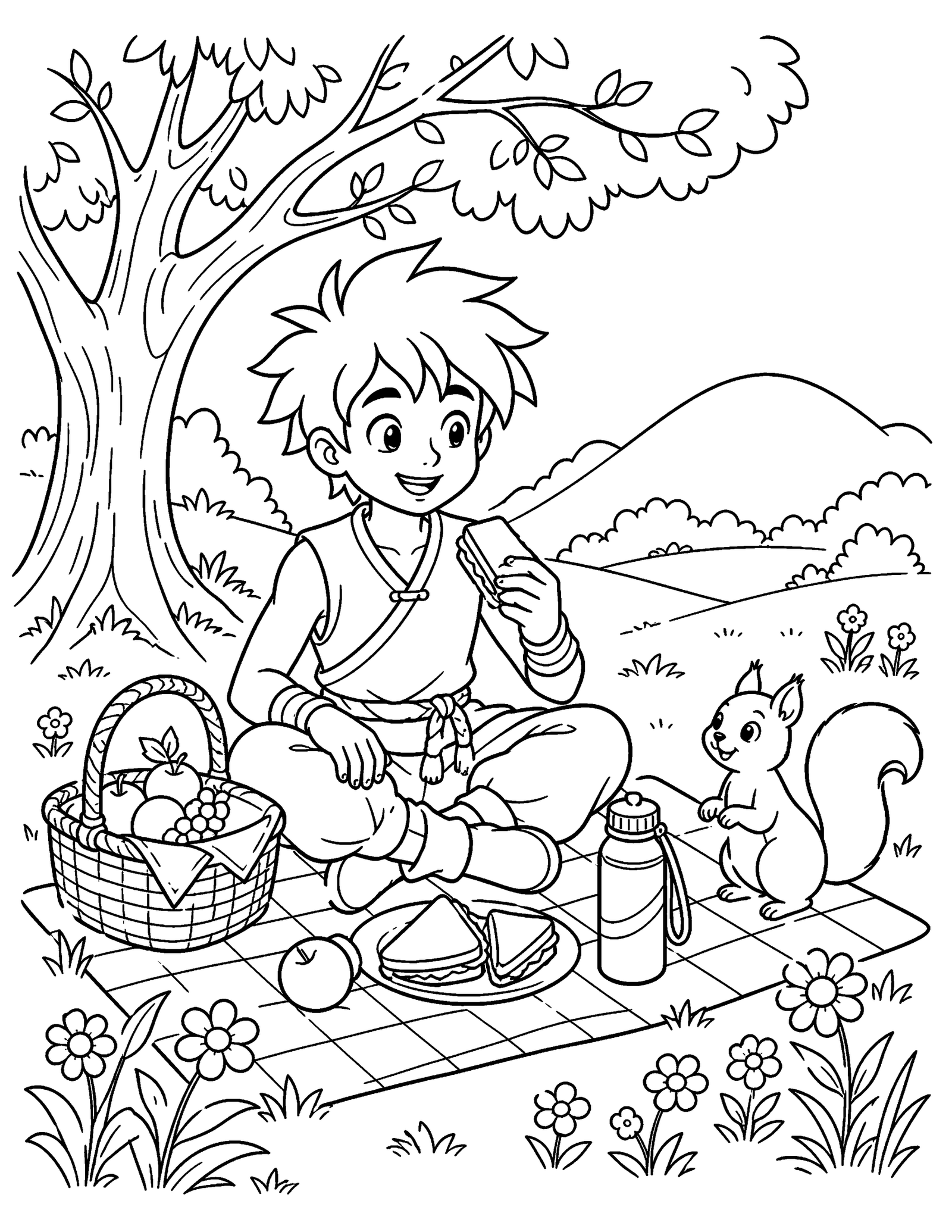
Original Hero’s Healthy Picnic
A generic hero rests after training with a healthy picnic in a peaceful meadow.
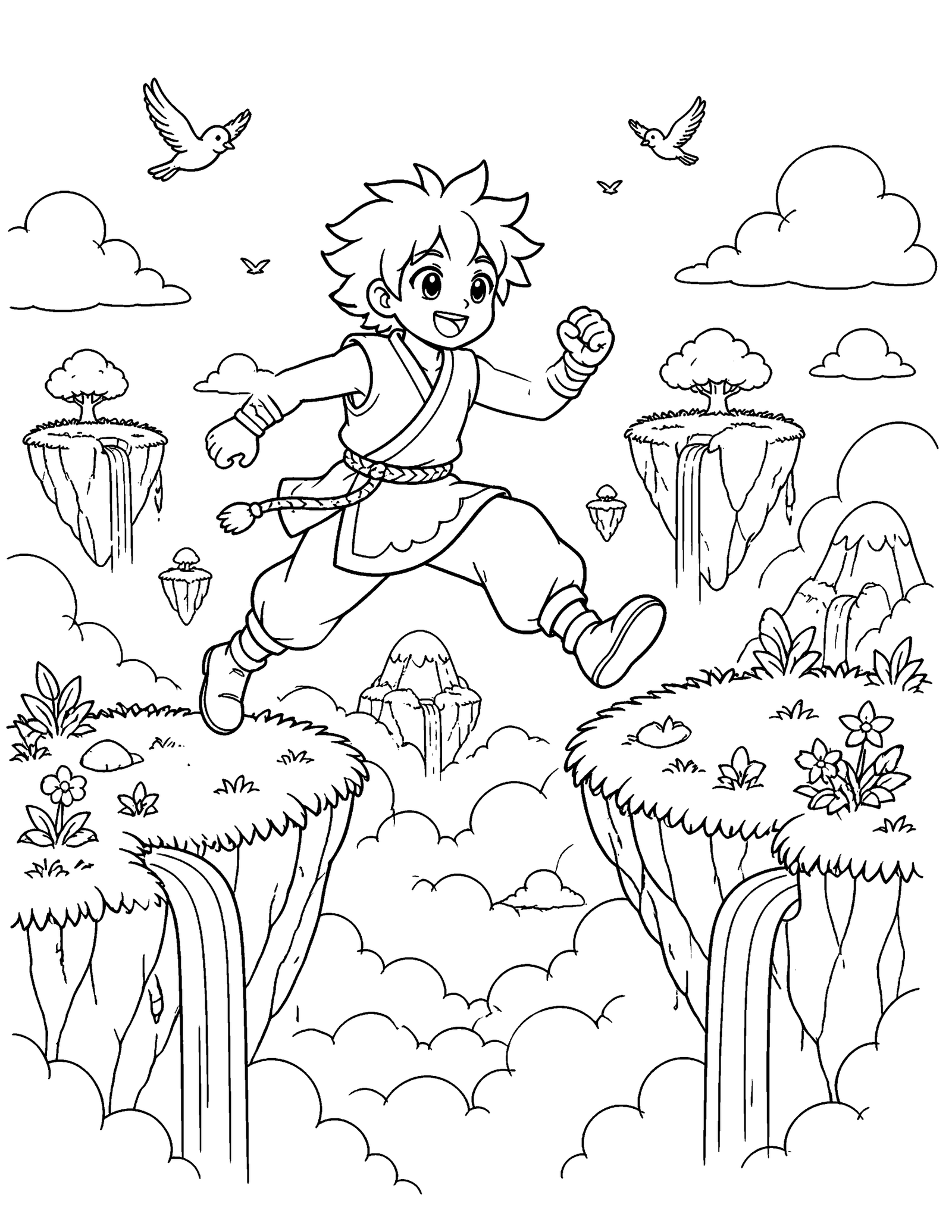
Original Hero Floating-Island Adventure
A generic fantasy hero explores a whimsical sky landscape filled with clouds and floating islands.
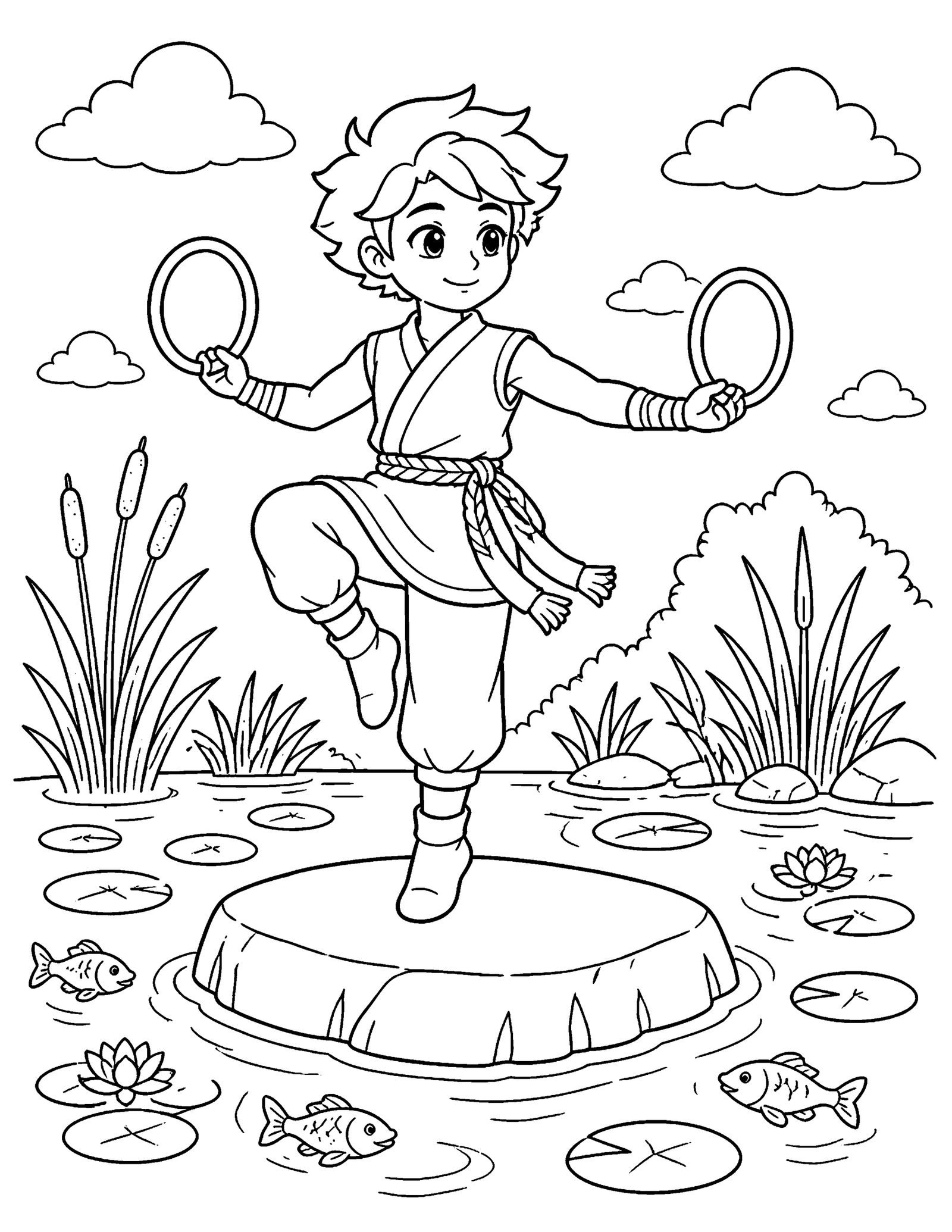
Original Hero Pond Balance Training
A generic young adventurer practices careful balance in a calm pond setting.
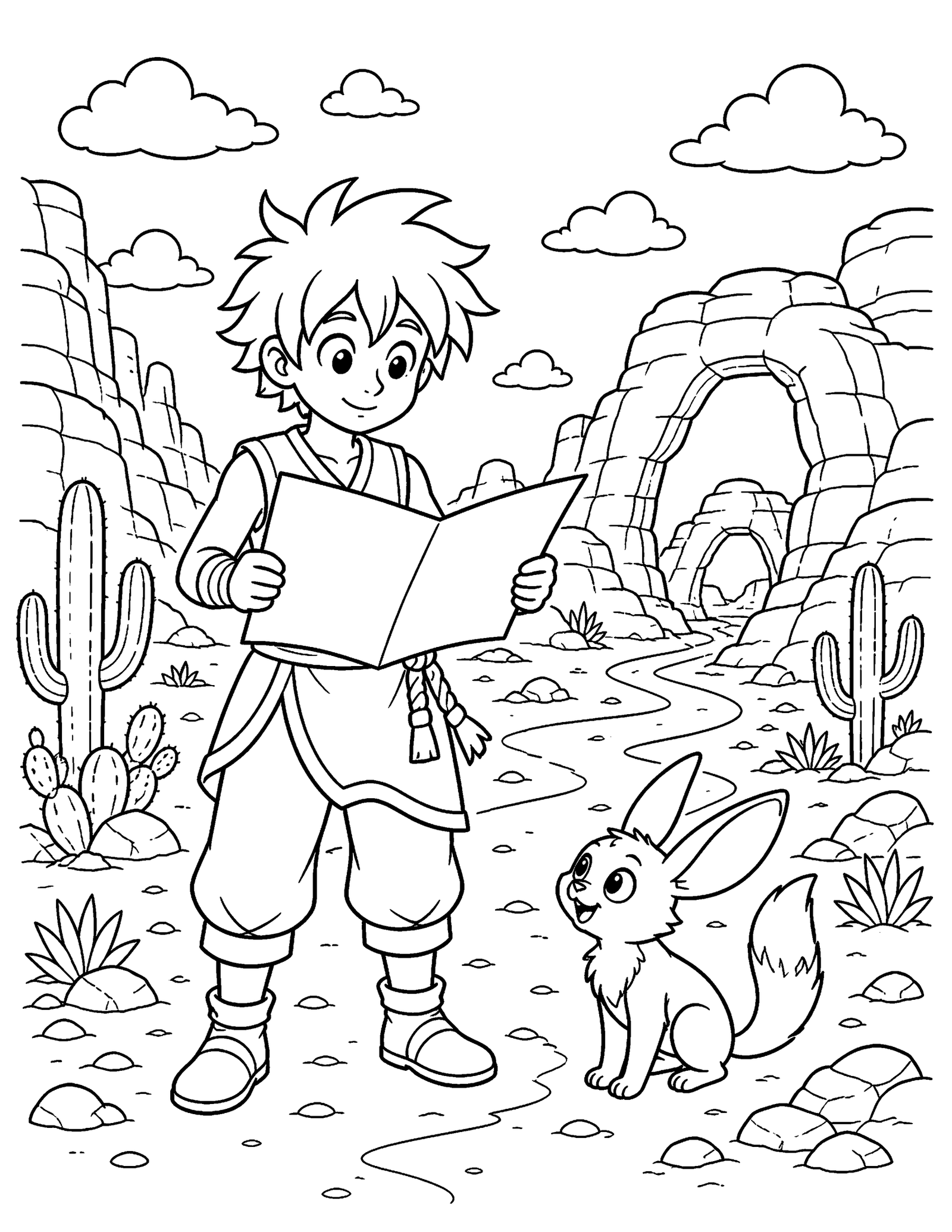
Original Hero Canyon Adventure
A generic hero and an original animal companion explore a gentle rock-arch landscape.
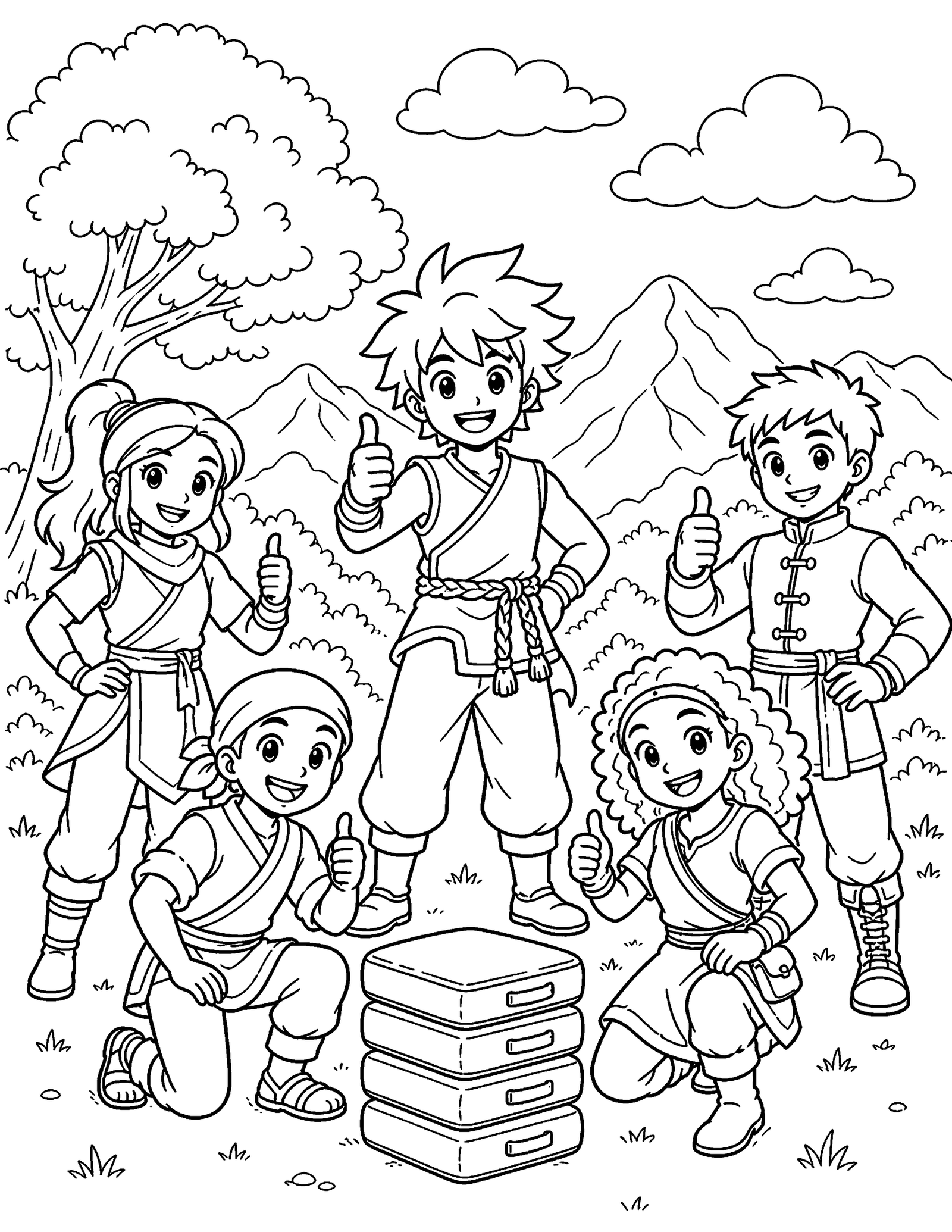
Original Heroes Celebrate Training
A group of generic fantasy friends celebrates teamwork after completing a safe training session.
Design an Aura Before Coloring the Uniform
Begin with the aura or background effect rather than automatically choosing clothing colors. A gold aura might pair with deep blue shadows; a cool silver aura can work with violet or navy; an invented green aura may look strongest beside orange-red fabric. Planning these relationships prevents every area from competing for attention.
Create a small value scale on scrap paper: pale, medium, dark. Even without realistic shading, using three versions of one color can separate hair sections, folds, and motion marks. Colored pencils make this easiest because pressure can change the value gradually.
Action-Line Observation and Drawing Practice
Ask the colorist to trace the main direction of a pose in the air. A punch may follow a diagonal from the shoulder to the fist; an energy wave may travel in a wide curve; a landing pose often forms a stable triangle. Recognizing these shapes helps children understand why a still picture can look active.
After coloring, turn the page over and draw a stick-figure version of the pose. Add clothing and hair only after the balance looks convincing. This simple sequence makes the coloring sheet a reference for original drawing rather than just a finished image.
Fans who enjoy comparing different kinds of heroes can place one of these designs beside superhero printables to color. Notice how capes, armor, uniforms, hair, and energy effects create distinct silhouettes.
Printing for Bold Lines and Layered Color
Open the full-size page and use normal or high-quality print settings. Plain paper is suitable for crayons and pencils; heavier paper is preferable for alcohol-free markers or repeated color layering. Use “fit to printable area” when your printer normally trims the outer edge.
Complete skin and pale fabric areas first. Move to medium uniform colors, then add hair, deep shadows, and backgrounds. If a marker has made an outline less clear, a dark colored pencil can carefully reinforce selected edges after the ink is dry.
Create a Training Story Across Several Pages
Arrange the sheets as a sequence: arrival, warm-up, focused stance, technique practice, energy control, difficult challenge, recovery, and celebration. A child can write one sentence for each stage or narrate the story aloud. The order does not need to match any existing episode; an original training adventure keeps the activity creative.
For a mixed fantasy folder, pair the energy scenes with dragon coloring pages printable. Ask the child to imagine what kind of dragon might live near the training ground and add matching sky colors to connect the pictures.
Control Contrast in Hair, Fabric, and Energy
Action characters contain several competing focal points: angular hair, expressive eyes, folded clothing, and a bright energy effect. Decide which feature should attract attention first. If the energy is central, keep the uniform slightly quieter. If the face is central, use stronger value differences around the eyes and hair while allowing the aura to remain pale.
Fabric looks more dynamic when strokes follow the direction of the folds. On a bent arm, pencil strokes can curve around the sleeve; on loose pants, they can travel downward from the waist and change direction near a knee. Children do not need to fill every section perfectly. Directional strokes alone can support the movement already drawn in the outlines.
For hair, divide the spikes into groups instead of coloring each one independently. Apply a light base to all sections, choose several areas that face away from the imagined light, and deepen only those. A few shared highlights make the hair feel connected. The same three-value approach can be repeated on wristbands or boots.
Energy effects are an opportunity to reverse the usual coloring order. Leave the center very pale, strengthen color toward the outer edge, and darken the background immediately beside the glow. This contrast creates impact without glitter or special supplies. Afterward, the child can add short motion marks that point in the same direction as the pose.
Make a Before-and-After Art Study
Print the same action pose twice. Color the first with flat, even areas and the second with three values—light, medium, and dark—on hair and clothing. Place them side by side and identify where the extra contrast improves movement or focus. This comparison shows a concrete technique without suggesting that one version is wrong; young colorists may prefer the graphic clarity of flat color, while older artists may enjoy the layered result.
One More Way to Personalize the Activity
If several family members color together, give everyone a different artistic goal rather than judging one shared standard. One person might emphasize motion, another may focus on an unusual aura, and another can design a calm landscape. At the end, each participant explains one choice that supports the goal. This makes the activity collaborative while respecting different ages, skills, and interpretations of the same action subject.
More Printable Coloring Pages
- Food Coloring Pages You Need to Try for Endless Fun
- 20 Printable Cool Coloring Pages Collection
- 20 Printable Animal Coloring Pages Collection
Frequently Asked Questions
Which Goku sheet is best for a beginner?
The friendly wave has broad, clearly separated areas and very little background detail. The meal scene is also calm, though it includes more small objects.
How can an energy effect look bright on white paper?
Color the area around the energy more deeply and preserve a thin white rim along its edge. A pale center with stronger outer color also creates contrast.
Can children use an original color scheme?
Yes. Choosing the aura first and building the uniform around it is a practical way to create a new interpretation while keeping the page visually balanced.
What can older children learn from the action poses?
They can identify diagonal movement, balance, silhouette, fabric direction, and the visual path of an energy effect. Re-drawing the pose as a stick figure extends the activity.
Are these official Goku pages?
No. They are presented as an unofficial creative activity for fans and are not described as an official or endorsed collection.
A Creative Finish
Goku coloring pages become more engaging when the color plan supports the movement. Start with a calm pose, experiment with aura contrast, and arrange several finished sheets into an original training story filled with action and imagination.