
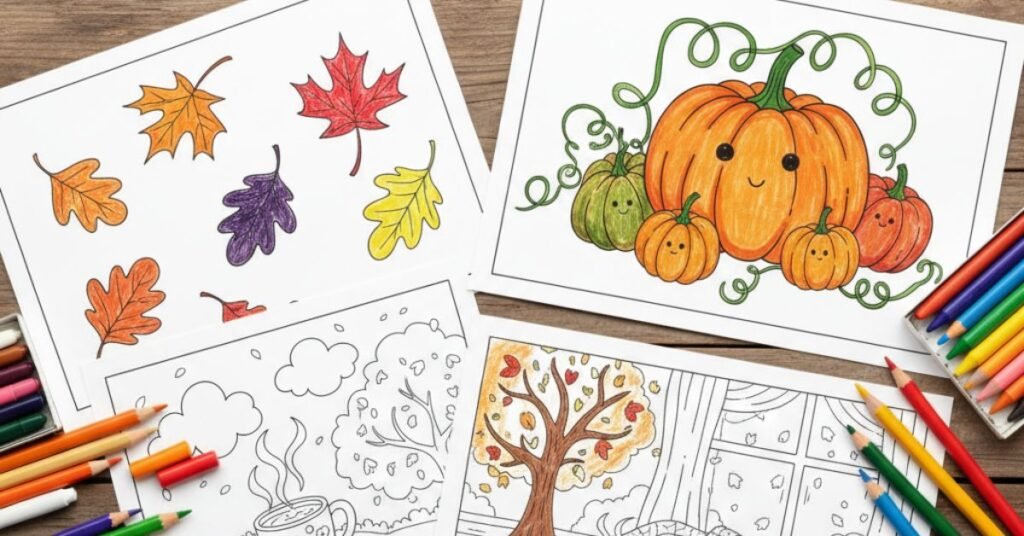
Autumn coloring pages capture the season through changing leaves, harvest baskets, windy walks, woodland animals, and warm indoor details. This ten-page collection offers a mix of broad shapes and layered scenes for children, families, teachers, and anyone planning a quiet seasonal activity. Each design can be colored realistically from observation or transformed with imaginative patterns and unexpected palettes.
The pages work well in September, October, or November, but they do not depend on a particular holiday. Use them for a nature table, weather unit, family craft afternoon, or a calm transition after outdoor play. For a closely related collection with additional seasonal subjects, browse fall coloring pages and choose scenes that complement rather than repeat the artwork here.
Notice Autumn Before Choosing Colors
Look at a real leaf, photograph, or view from a window before beginning. One leaf may contain green near the veins, yellow across the center, and brown around a dry edge. Encourage artists to layer two or three related shades instead of filling every leaf with a single flat orange. Observation makes even a simple page more interesting.
Autumn skies and shadows matter too. Clear days can use strong blue against warm foliage; cloudy days create softer grays and muted reds. A limited palette of rust, mustard, olive, brown, and deep blue produces a calm look, while brighter red, orange, purple, and teal create a lively classroom display.
Ten Seasonal Scenes to Print
Leaf Pile Adventure
A child jumps into a mound of maple and oak leaves while a scarf lifts in the breeze. Repeat several leaf colors across the pile to create movement without visual clutter.
Harvest Basket Still Life
Apples, small pumpkins, corn, and leaves fill a woven basket. Pencil strokes can follow the basket weave, while marker accents make the produce stand out.
Squirrel Gathering Acorns
A squirrel holds an acorn beside tree roots and fallen leaves. Layer brown, gray, and rust in the fur, then add a contrasting cool background.
Woodland Path in Fall
A winding path passes trees with dropping leaves and distant hills. Make nearby trunks darker and distant shapes lighter to create an easy sense of depth.
Pumpkin Patch Visit
Pumpkins of different shapes sit among vines, signs, and a small fence. Use more than one orange or invent striped and speckled varieties for a playful harvest scene.
Rain Boots and Leaves
A pair of boots rests beside an umbrella on a leaf-covered step. Glossy highlights on the boots and soft gray puddle reflections add convincing material contrast.
Owl in an Autumn Tree
An owl perches among patterned leaves and acorns. Keep the face light, deepen the surrounding branch shadows, and repeat one eye color in small leaf accents.
Cozy Window Reading
A book, warm drink, folded blanket, and leaf-filled window create an indoor scene. Choose muted background colors so the outdoor foliage remains the brightest feature.
Autumn Wreath Design
Leaves, berries, acorns, and a ribbon form a circular wreath. Plan a repeating color rhythm around the circle and leave a few light areas for breathing room.
Night Lantern Walk
A lantern glows beside a path covered in leaves under a crescent moon. Preserve a pale center around the flame and deepen colors gradually toward the page edges.
Leaf Shapes, Veins, and Easy Nature Study
Maple, oak, birch, and other leaves have different outlines and vein patterns. A child does not need to identify every species accurately to notice lobes, smooth edges, points, or symmetry. Trace the main vein with a fingertip, then color outward in the same direction. This gives pencil texture a natural structure.
Use fall leaf templates for tracing, garlands, or labels beside the colored scenes. Older children can write one observation inside each traced shape, such as “dry edge,” “three strong veins,” or “yellow spots.” The activity connects art with careful looking without inventing scientific claims.
Harvest Crafts and Classroom Uses
Seasonal Palette Strip
Cut a narrow strip of scrap paper and create five swatches inspired by one scene. Label them with descriptive names such as cider brown, fog blue, apple red, moss green, and lantern gold. Keep the strip beside the page while coloring to maintain a connected palette.
Leaf-and-Pumpkin Story Map
Choose three objects from the page and draw arrows showing the order in which a character discovers them. Write or dictate one sentence for each stop. Children who want to focus on gourds can pair the map with pumpkin coloring pages.
Classroom Season Timeline
Arrange several pages from early to late autumn. Early scenes may retain more green, middle scenes can use strong leaf color, and late scenes may show bare branches and cool weather clothing. Discuss that timing varies by location and weather rather than assigning one universal date.
Paper Wreath Extension
Color the wreath page, then trace additional shapes from leaf templates. Cut them with suitable supervision and layer them around a cardboard ring. Vary size and direction so the finished craft looks full without requiring many colors.
10 Printable Autumn Coloring Pages
Choose a design below, open the full-size image, and print it for your coloring activity.
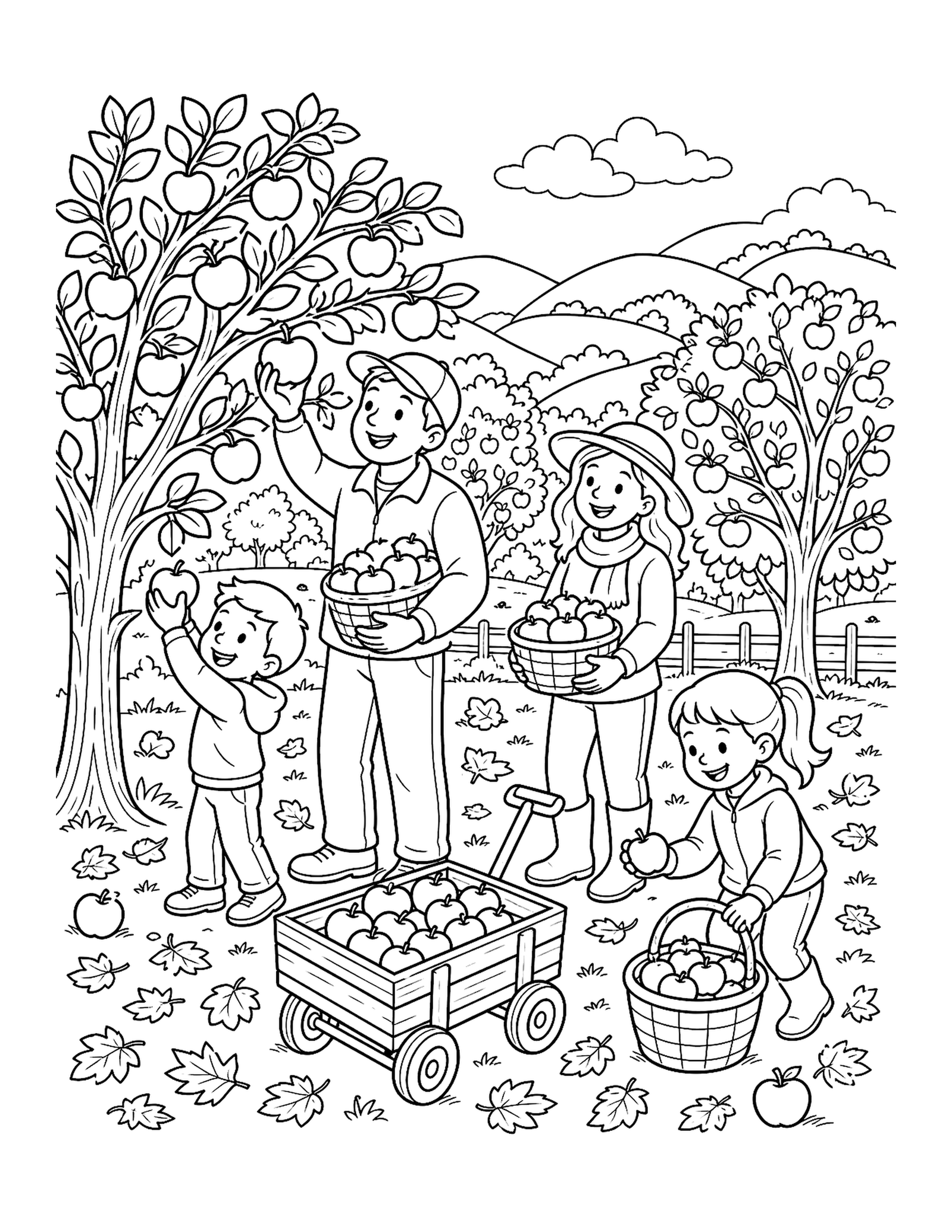
Family at an Autumn Apple Orchard
A cheerful family gathers apples among full orchard trees, fallen leaves, a wagon, and distant hills.
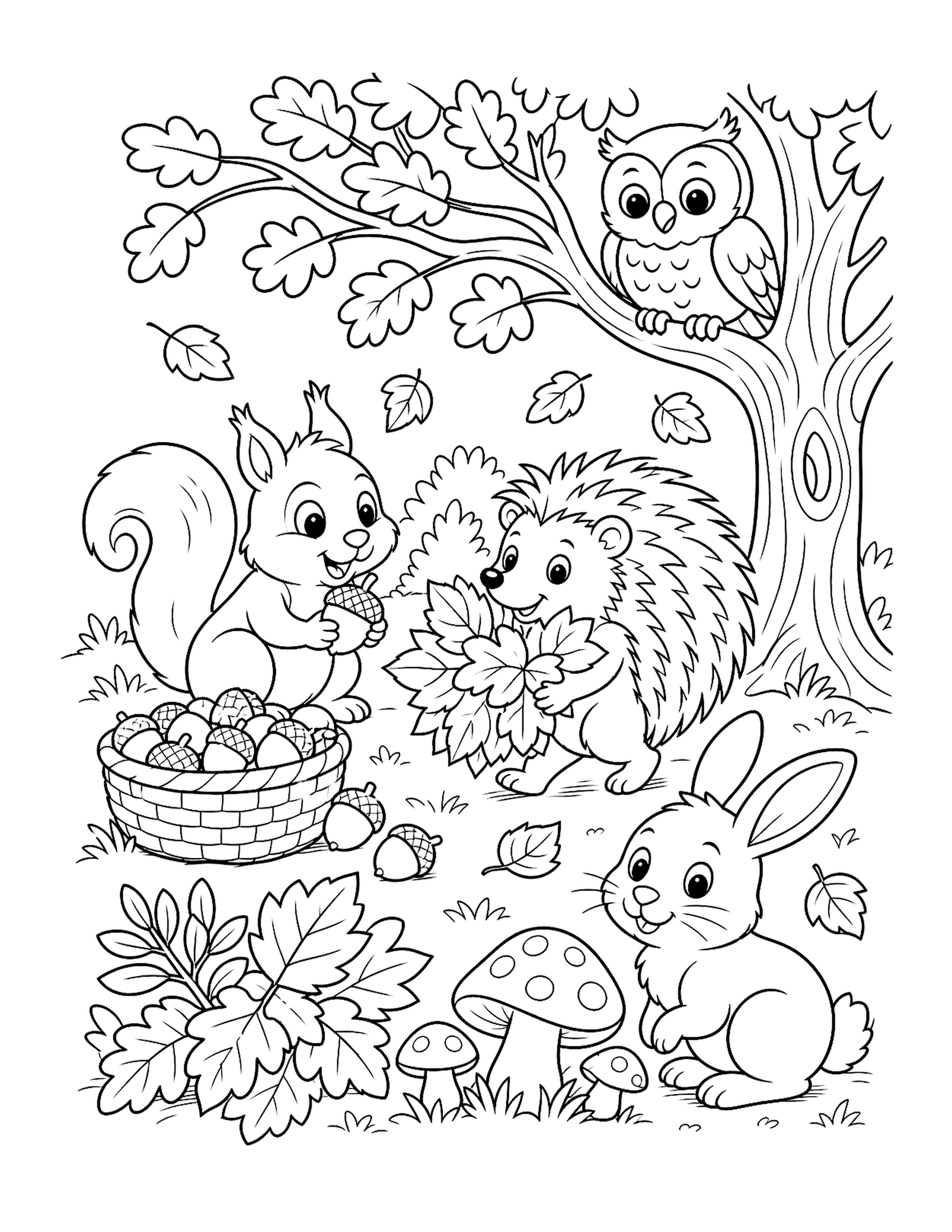
Woodland Animals Prepare for Autumn
Friendly forest animals gather acorns and leaves among mushrooms and autumn trees.
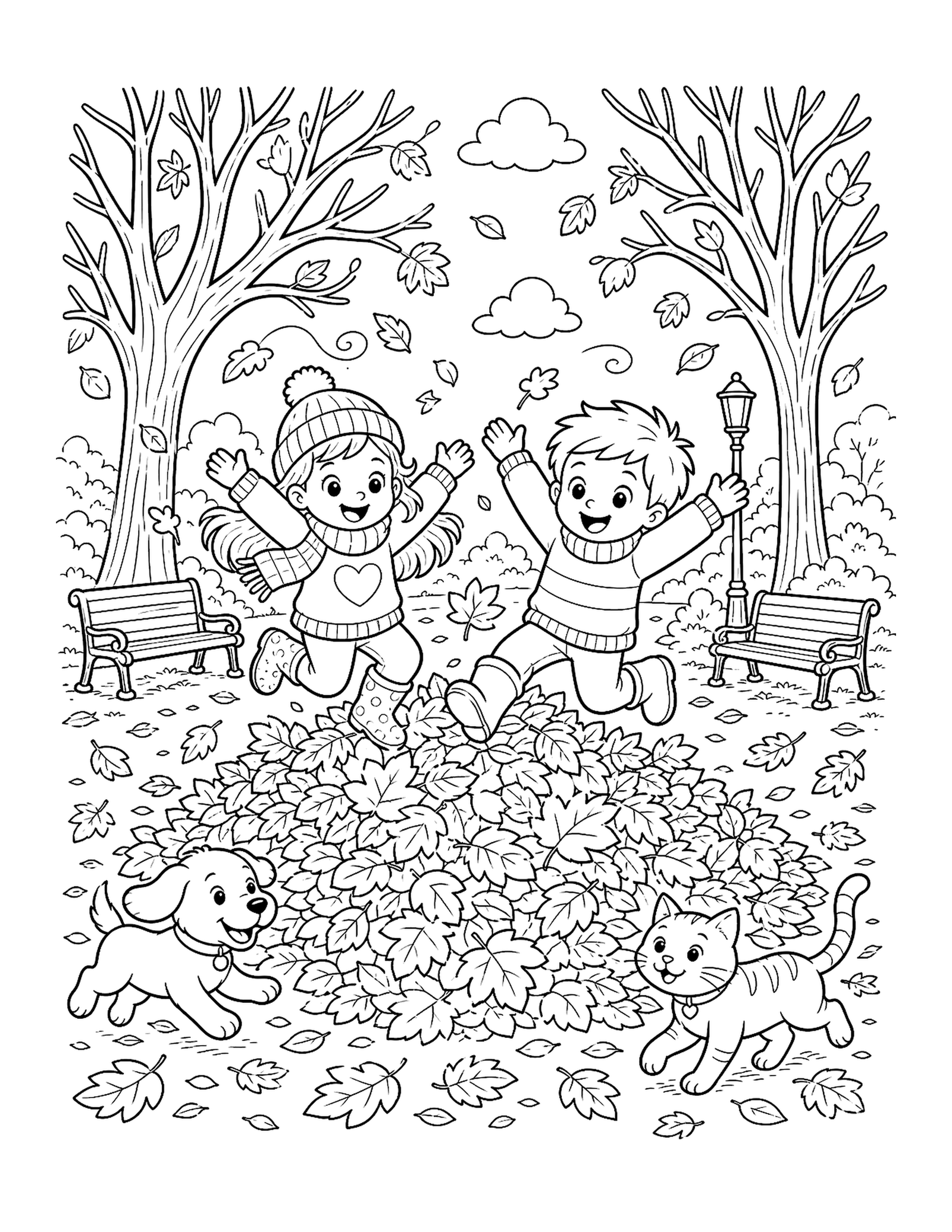
Children Jump in Autumn Leaves
Sweater-clad children enjoy a large pile of fallen leaves surrounded by park trees and benches.
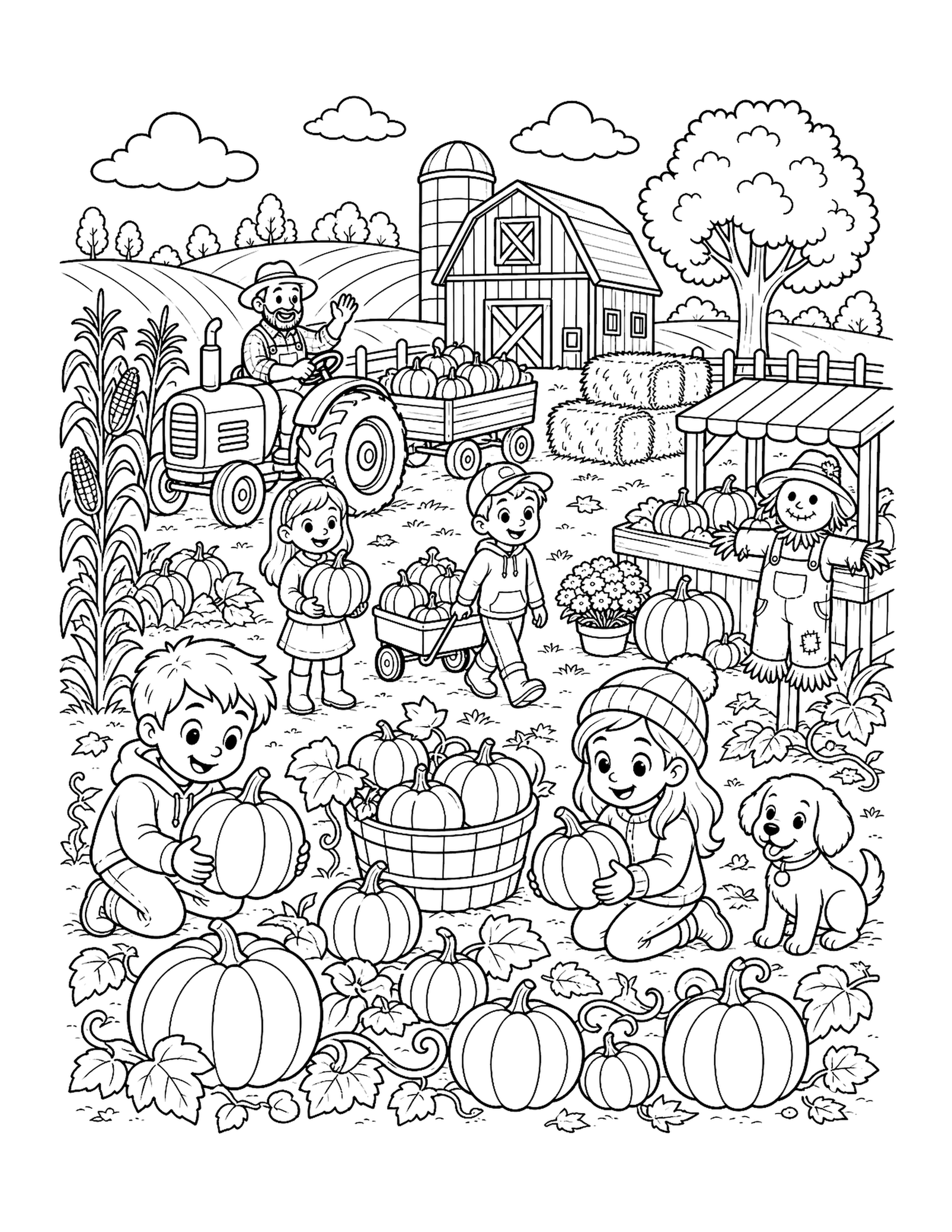
Pumpkin Farm Harvest
Children choose pumpkins while a farmer works near a tractor, hay bales, corn stalks, and barn.
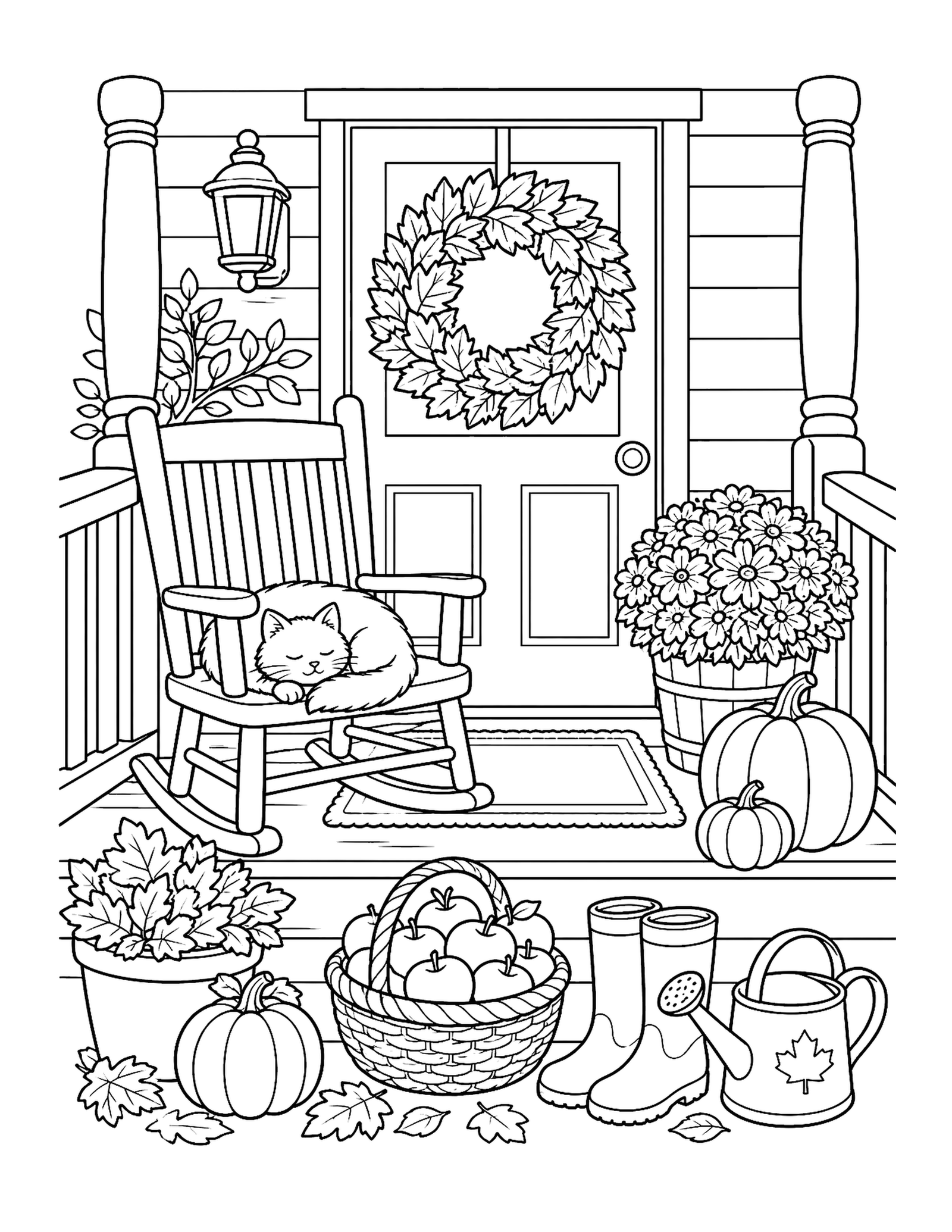
Cozy Autumn Porch
A welcoming porch displays seasonal pumpkins, an apple basket, boots, watering can, leaf wreath, and sleepy cat.
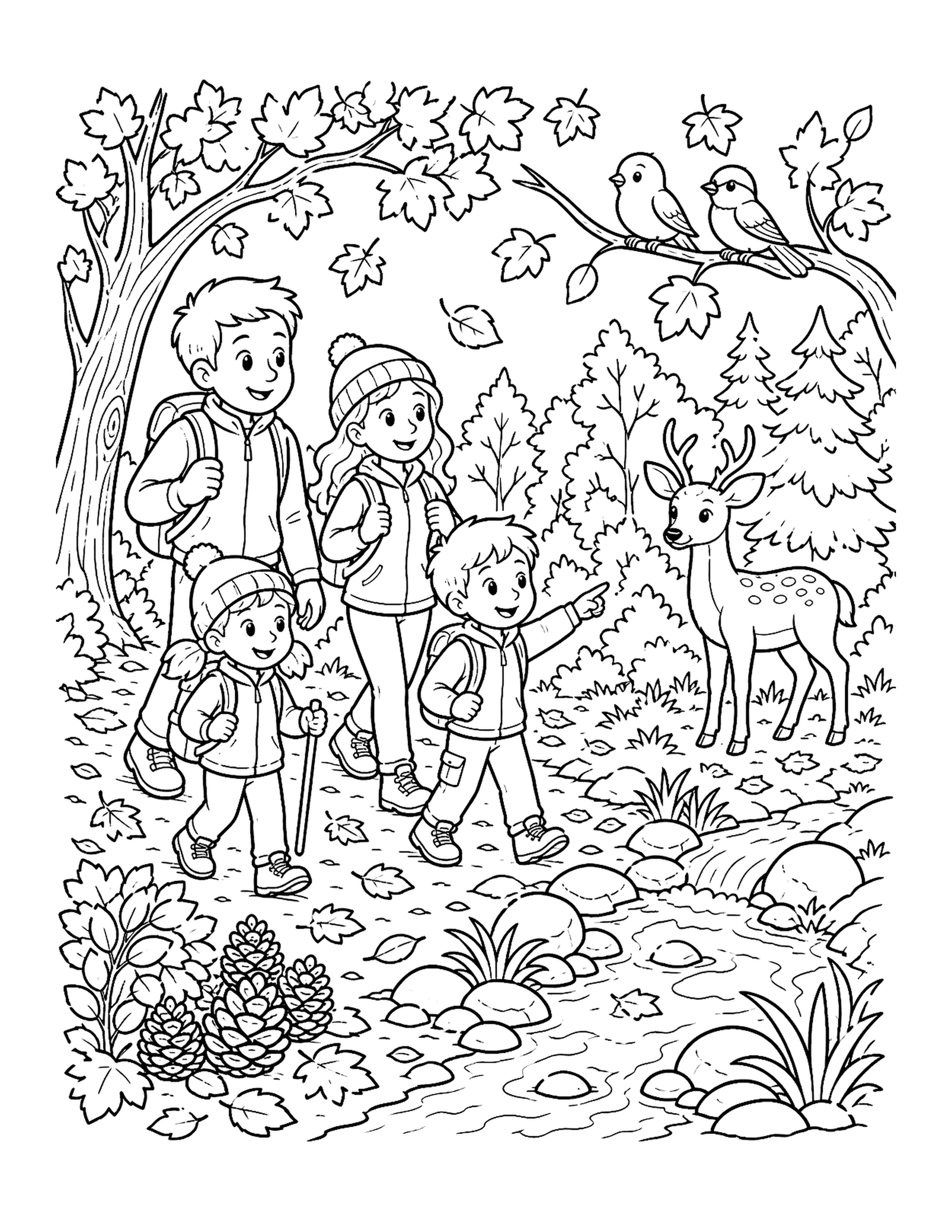
Family Autumn Woodland Hike
A family follows a leaf-covered trail while observing wildlife, pinecones, trees, and a gentle stream.
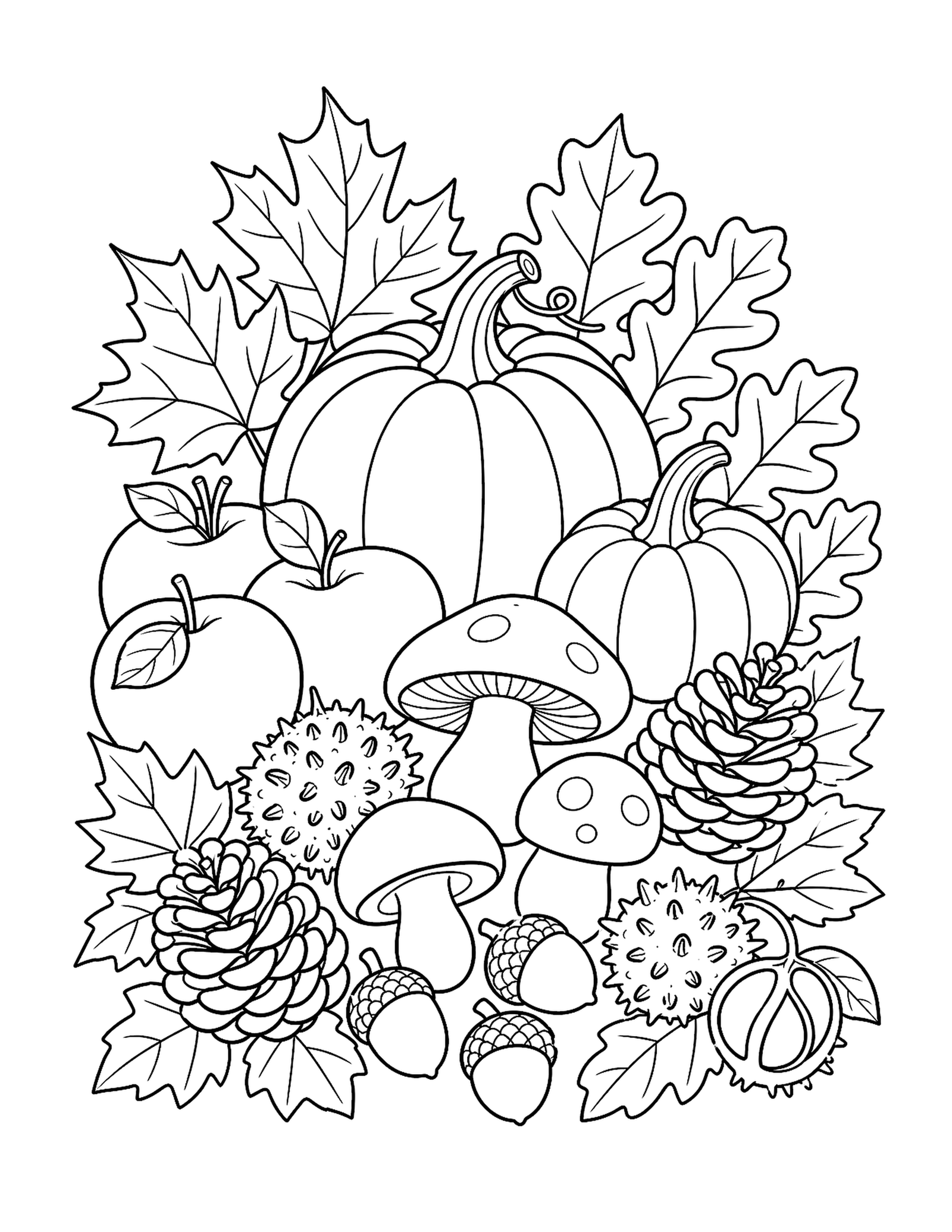
Autumn Nature Collection
A word-free nature collection brings together recognizable autumn leaves, fruits, seeds, fungi, and cones.
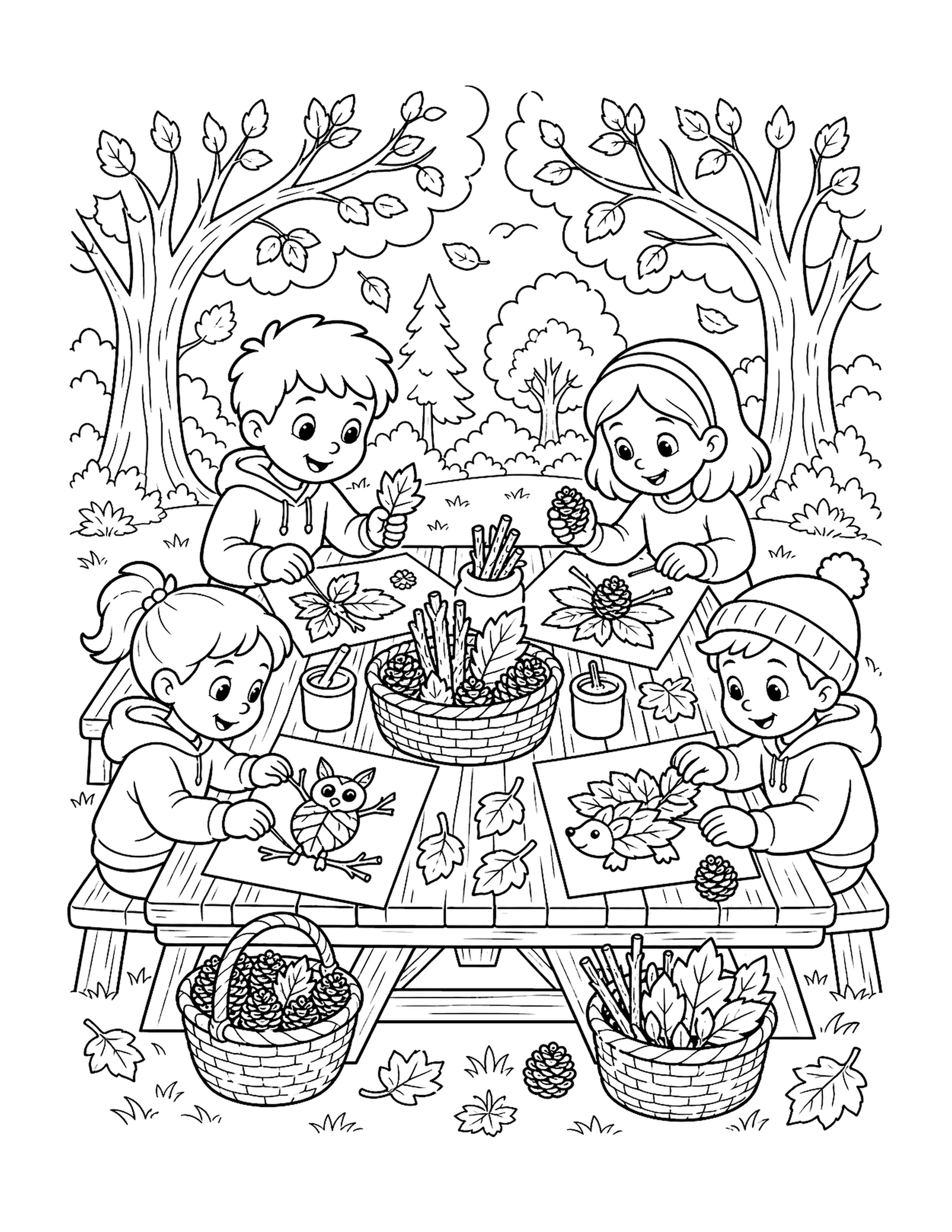
Children Make Autumn Crafts
Children create seasonal nature pictures at a picnic table using gathered leaves, pinecones, and twigs.
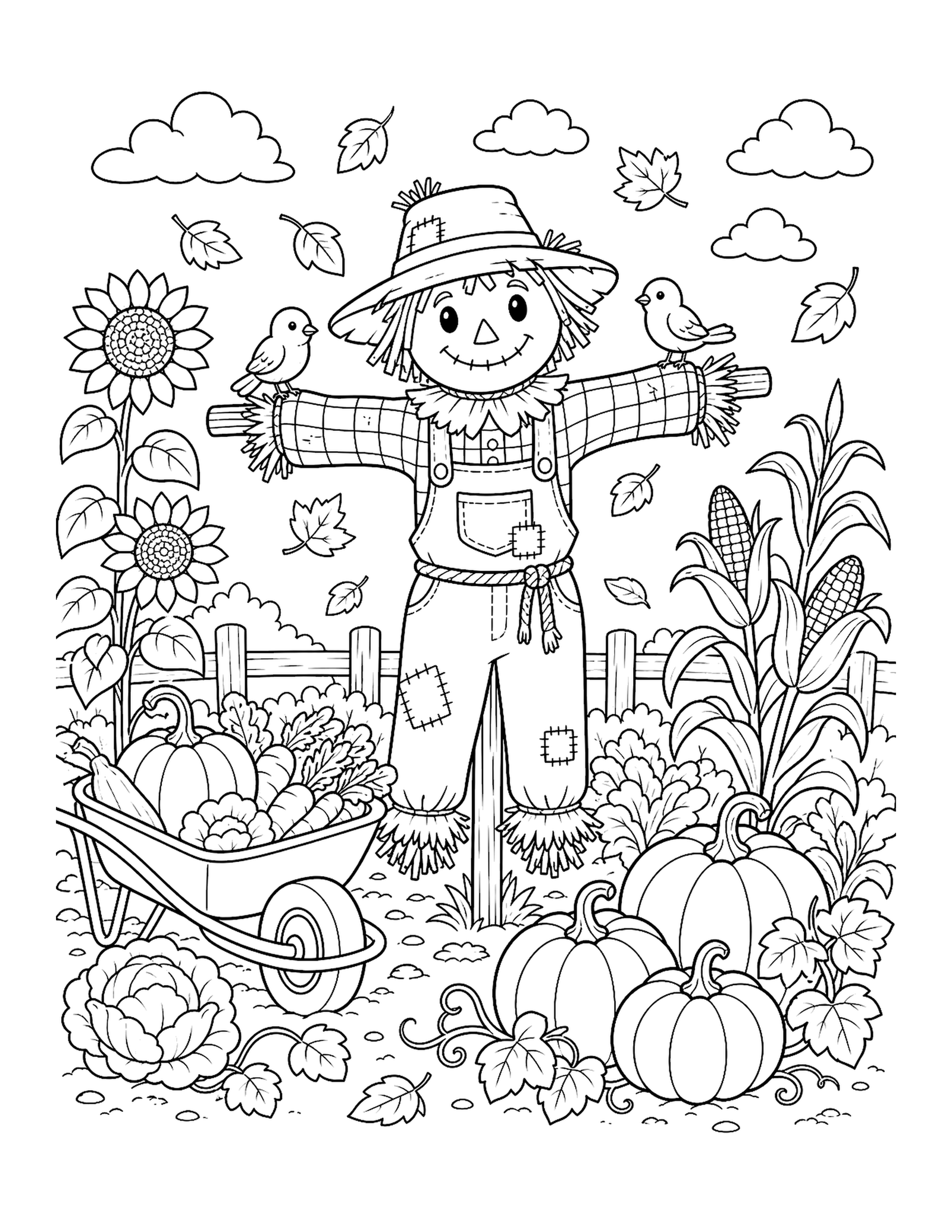
Friendly Scarecrow Garden
A friendly scarecrow watches over an autumn vegetable garden filled with harvest plants and birds.
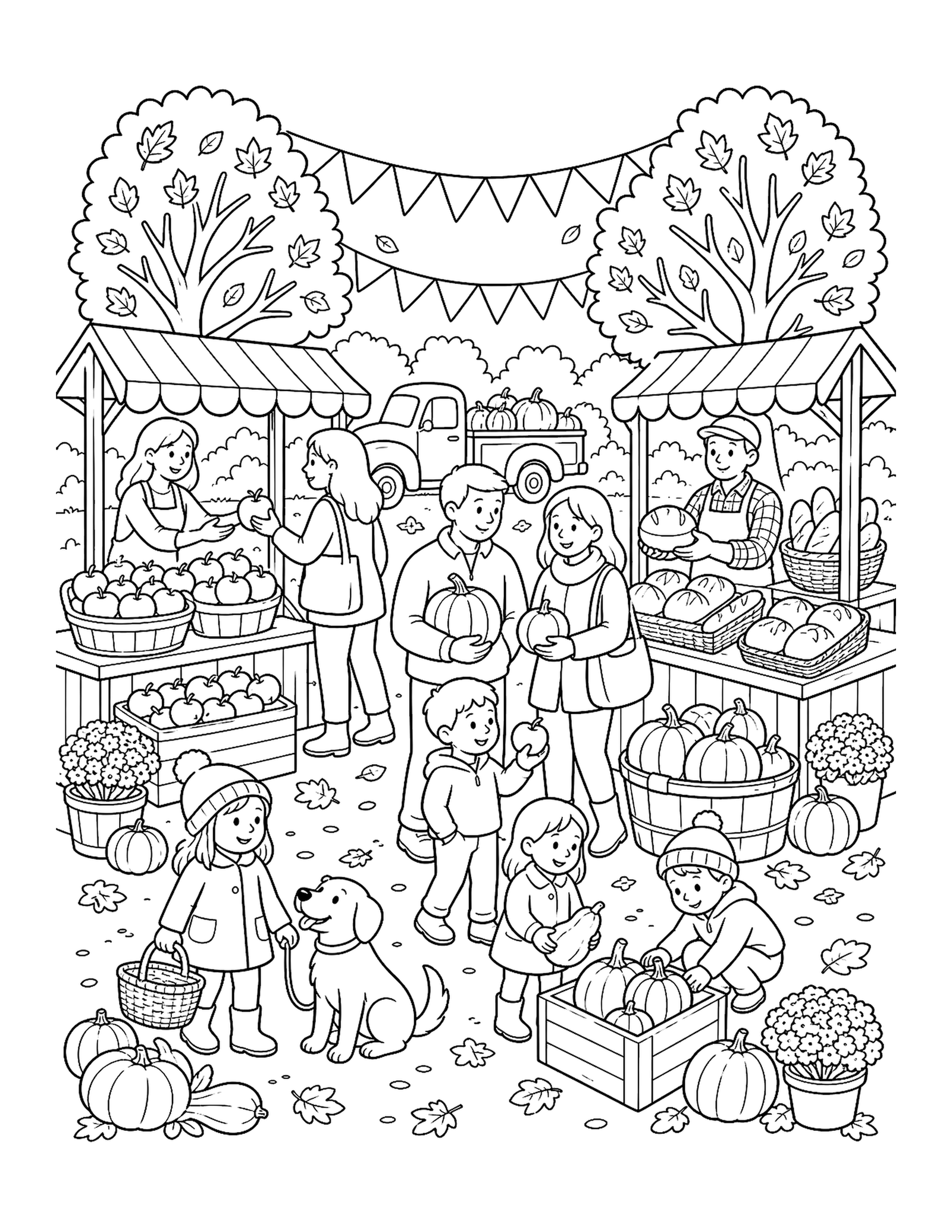
Autumn Farmers Market
Families browse simple outdoor stalls displaying autumn produce and bread beneath trees and bunting.
Printing and Using Seasonal Pages
Open the full-size page and inspect the print preview. Choose a fit setting that keeps the outer leaves, branches, and borders inside the printable area. Standard paper is suitable for pencils and crayons. Heavier printer-approved paper is preferable for watercolor pencils, markers, wreath pieces, or displays that will be handled repeatedly.
Place protective scrap paper underneath marker work, especially where dark sky or tree areas require multiple passes. Let gel pen, paint, or heavy marker layers dry completely. Store finished pages flat in a folder, or mount them on kraft, cream, navy, or dark green backing paper for a seasonal display.
More Printable Coloring Pages
- 20 Printable Santa Coloring Pages with Holiday Designs
- Discover Fun and Free Easter Colouring Printables for Kids
- January Coloring Pages: Fun Ideas for Kids and Adults
Autumn Coloring Pages FAQs
Which colors work besides orange and brown?
Try olive green, mustard yellow, deep red, plum, navy, muted teal, cream, and charcoal. Cool colors in the sky or shadows make warm foliage appear richer and prevent every scene from looking the same.
Can these pages be used without a holiday theme?
Yes. The collection focuses on weather, leaves, woodland life, harvest objects, and cozy routines. It can support general seasonal activities without being tied to Halloween or Thanksgiving.
How can younger children handle detailed leaf piles?
Invite them to color groups of nearby leaves with the same crayon instead of treating every small shape separately. Broad, confident coverage is more useful than expecting perfect edges.
What is a good quiet-time page?
The wreath, still life, owl, or reading-window designs have stable arrangements and repeating details. A child who wants movement may prefer the leaf pile, woodland path, or lantern walk.
How can I connect coloring with outdoor observation?
Collect only permitted fallen leaves, compare their edges and colors, and return natural material outdoors when appropriate. Use photographs when collecting is restricted. Ask the artist to add one observed detail to the printable scene.
Build Texture with Simple Marks
Autumn scenes contain many surfaces that can look distinct even within a limited palette. Use long strokes along wood grain, short clustered marks for animal fur, curved lines for pumpkins, crosshatched patches for woven baskets, and soft side-of-pencil shading for clouds. Test each mark on scrap paper, then repeat it consistently in the matching area.
Dry leaves rarely have perfectly smooth color. Add speckles, pale vein lines, or darker edges after the base layer is complete. Keep some areas quiet so the texture does not cover every inch of the page. A textured foreground against a softer background creates depth and directs attention to the seasonal objects nearest the viewer.
Create an Autumn Observation Journal
Select one printable scene each week and add a dated note about current weather, visible leaf color, daylight, or clothing. The note can be a sentence, a dictated observation, or a few labeled drawings. Over several weeks, the folder becomes a record of change rather than a collection of unrelated coloring sheets.
Avoid assuming that every place experiences the same autumn signs. Some regions change slowly, remain warm, or have different trees and harvests. Invite children to replace one printed detail with something observed locally. This makes the page more accurate to their experience and opens a respectful comparison with how the season looks elsewhere.
Seasonal Sorting Game
Write object names from the pages on small cards: acorn, scarf, pumpkin, puddle, apple, owl, lantern, and leaf. Sort them by natural object, clothing, food, animal, or tool, then sort again by indoor and outdoor use. Multiple correct groupings encourage explanation and flexible thinking. After sorting, choose two cards and add both objects to a new miniature scene. Explain whether the combination belongs indoors, outdoors, or in an imagined setting, and select colors that connect it to the larger page.
Carry the Season from Outdoors to the Page
Autumn coloring pages become more meaningful when they reflect something noticed: a wet path, a speckled leaf, a basket texture, or the contrast between a warm window and cool evening sky. Choose one scene, build a small seasonal palette, and add details gradually. The finished artwork can preserve a moment of the season while still leaving plenty of room for imagination.

Pingback: 10 plus Holiday and Seasonal Coloring Pages | Free Printable Christmas, Halloween & More
Pingback: 10 Printable Fall Coloring Pages with Leaves and Pumpkins