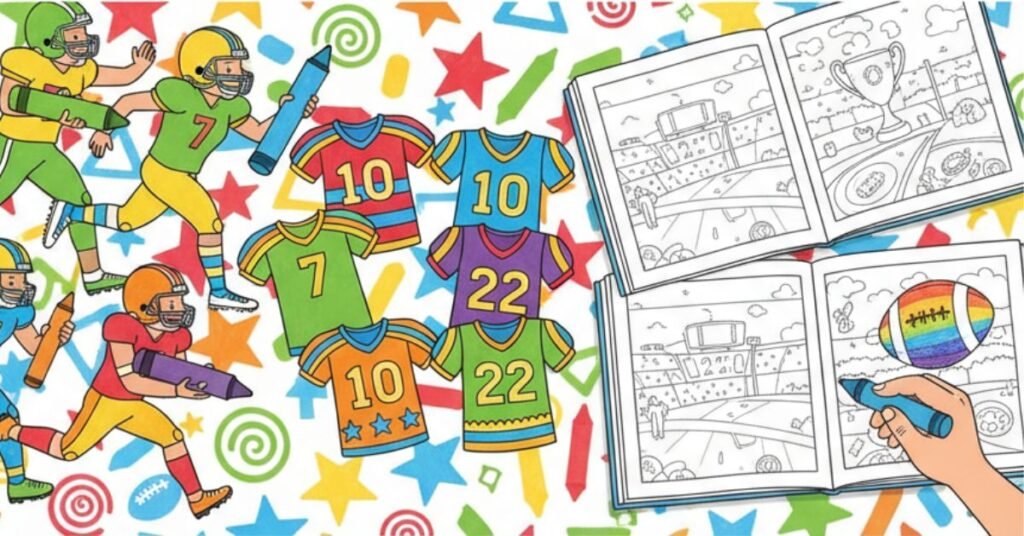
These football coloring pages turn familiar game-day moments into a hands-on art activity. The collection includes players in motion, a ball and helmet still life, a goal-post scene, a team huddle, a referee, a mascot, and a celebration. Children can choose realistic team colors, invent a brand-new uniform, or design a complete league of their own.
The pages suit quiet time at home, classroom sports themes, rainy-day practice breaks, and family watch parties. Younger colorists can begin with the large equipment shapes, while older children can add jersey patterns, crowd details, field markings, and shadows. If you are assembling a broader activity folder, our printable coloring pages collection offers more themes to place beside this sports set.
What You Will Find in This Football Collection
The ten designs move from simple objects to busy action scenes, so families can choose a page that matches a child’s attention span and coloring confidence. Some sheets focus on one clear subject, such as a football resting beside a helmet. Others invite storytelling through a quarterback preparing a pass, a receiver making a catch, or teammates celebrating after a successful play.
Football is also rich in visual details. Stripes, jersey numbers, laces, socks, gloves, flags, field lines, and stadium signs can all become small design decisions. Children do not need to follow an existing team palette. Creating an imaginary team name and selecting two or three repeat colors often makes the finished set feel connected.
10 Printable Football Coloring Pages
Choose a design below, open the full-size image, and print it for your coloring activity.
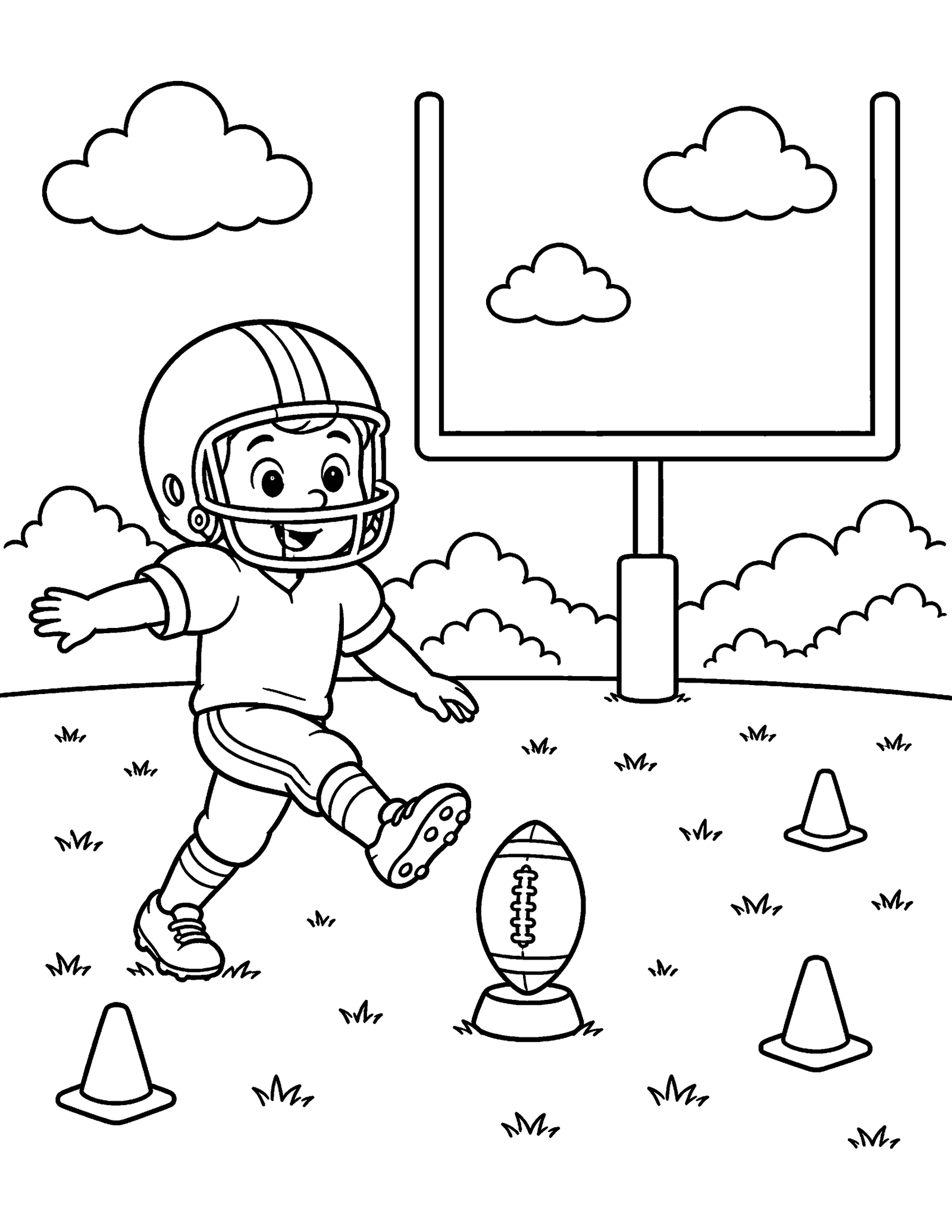
Football Field Goal Kicking Practice
A cheerful young player practices a field-goal kick on an open football field.
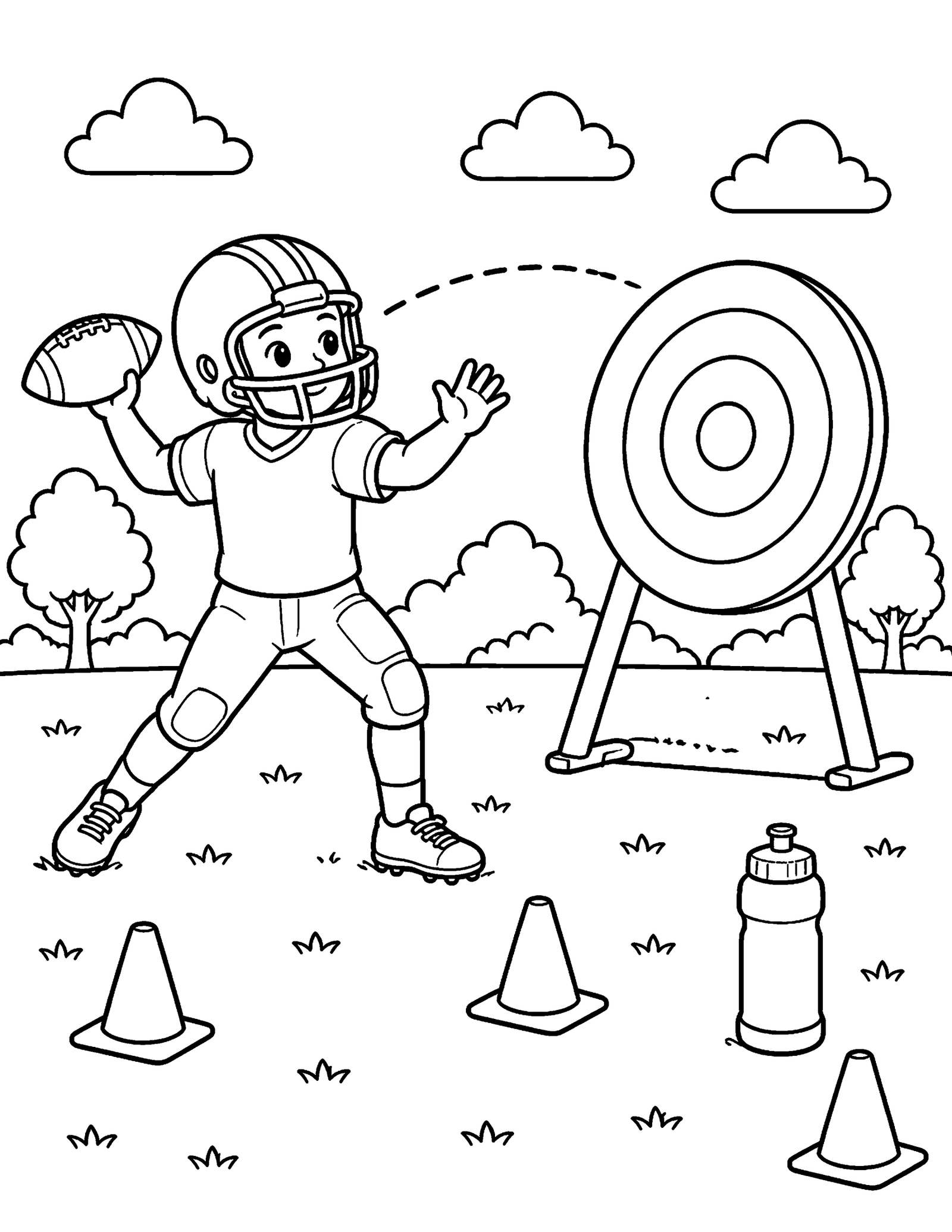
Quarterback Target Practice
A child quarterback develops passing accuracy with a large target and simple training equipment.
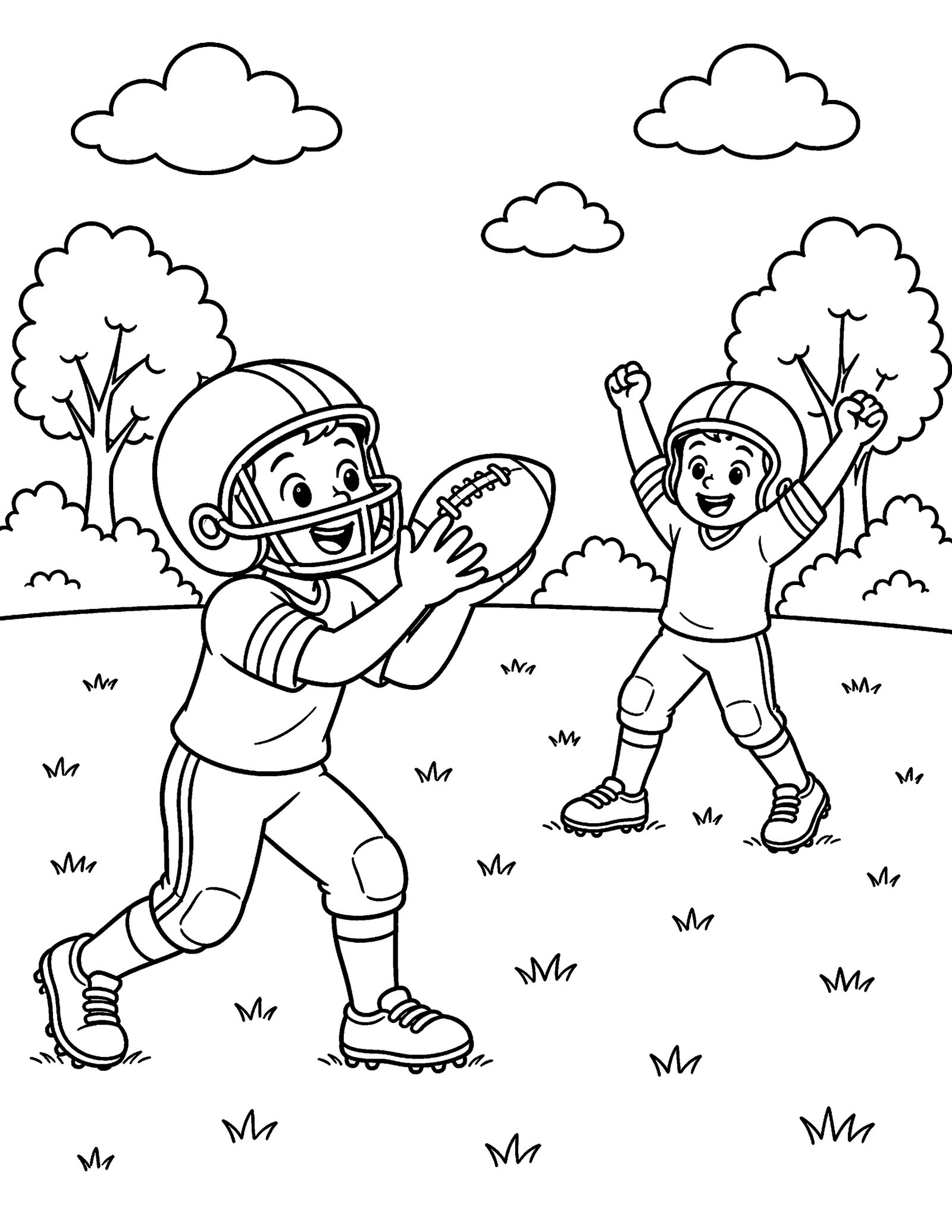
Children Playing Pass and Catch
Two friends enjoy a successful football pass-and-catch activity in a grassy park.
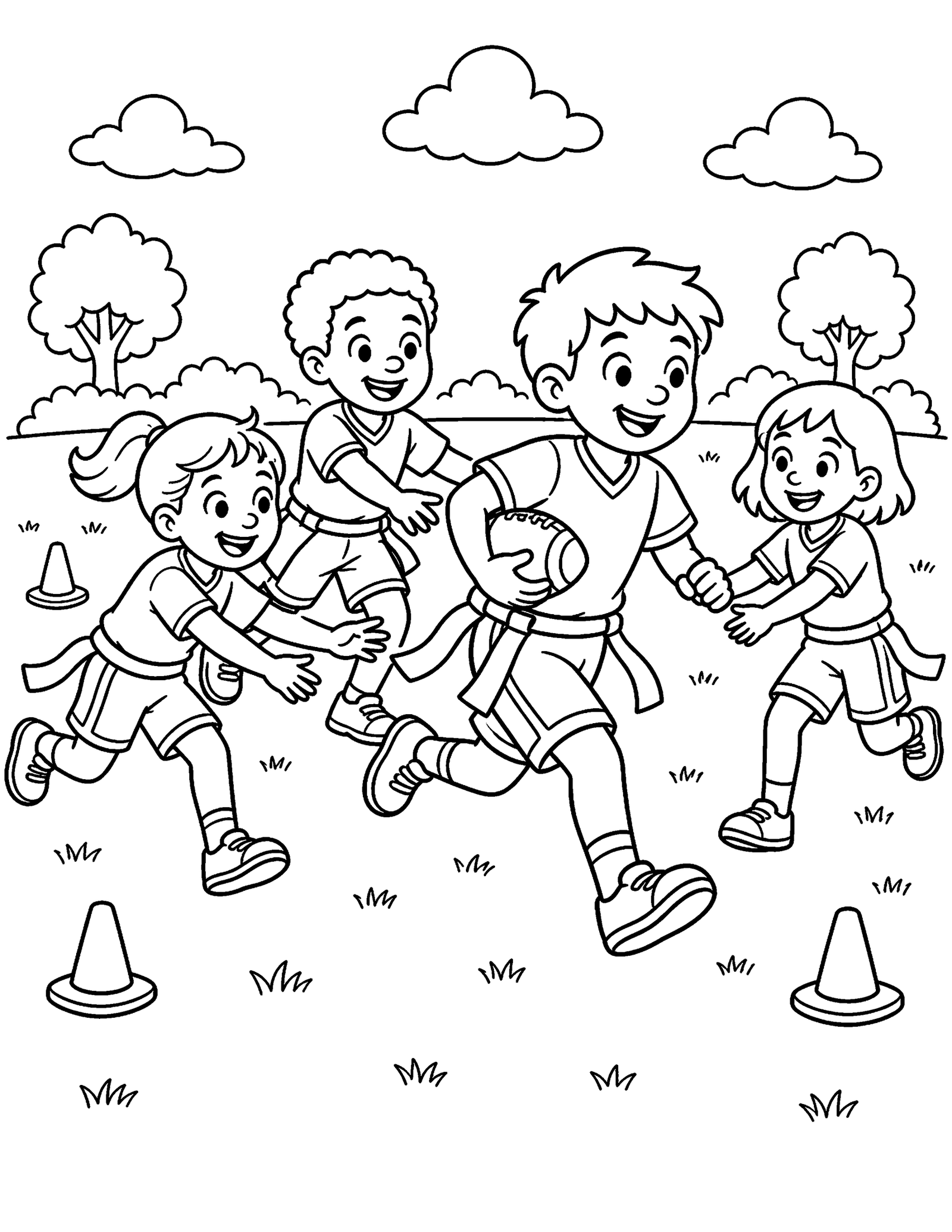
Kids Playing Friendly Flag Football
A lively group of children plays a friendly football game on an open field.
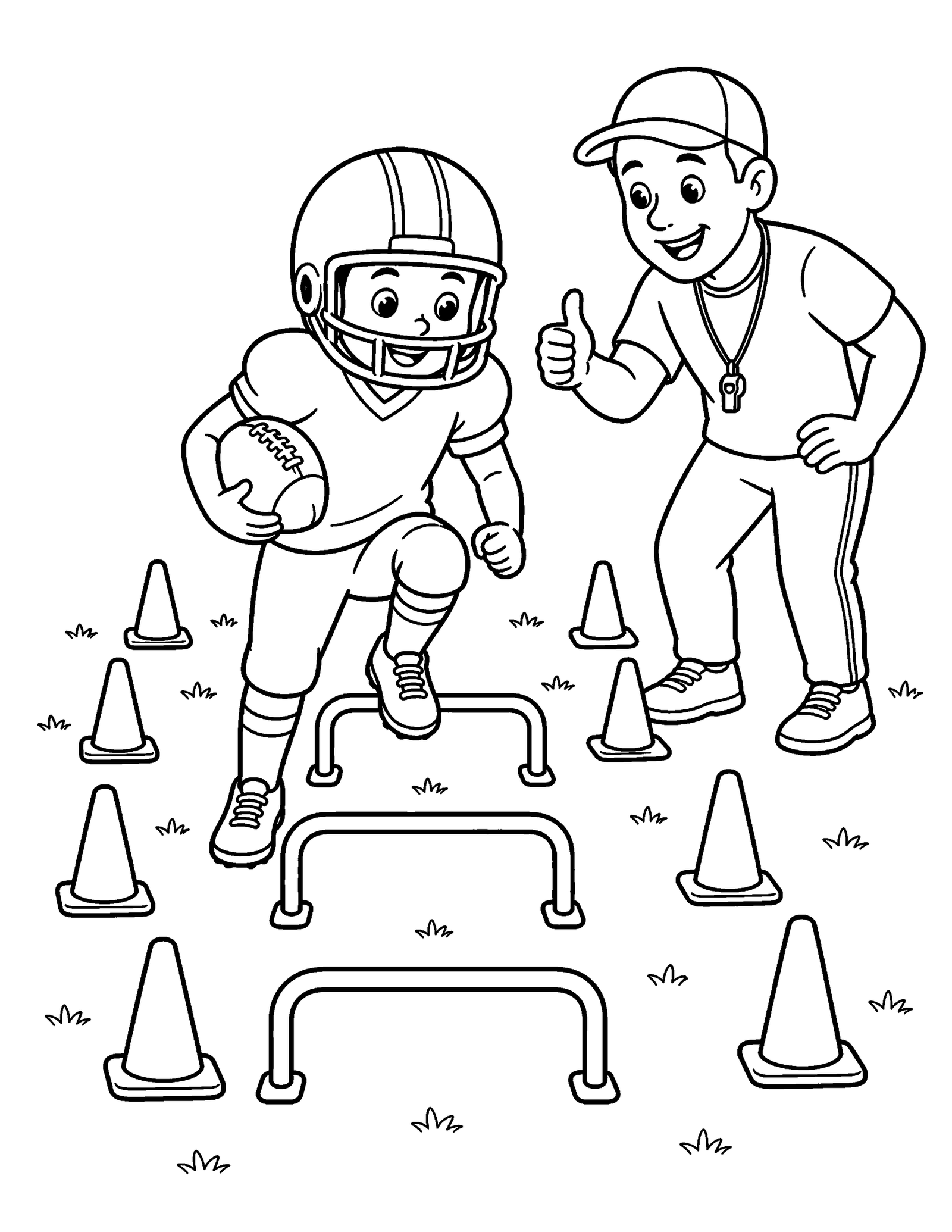
Football Agility Course Practice
A young player builds coordination by moving carefully through a football training course.
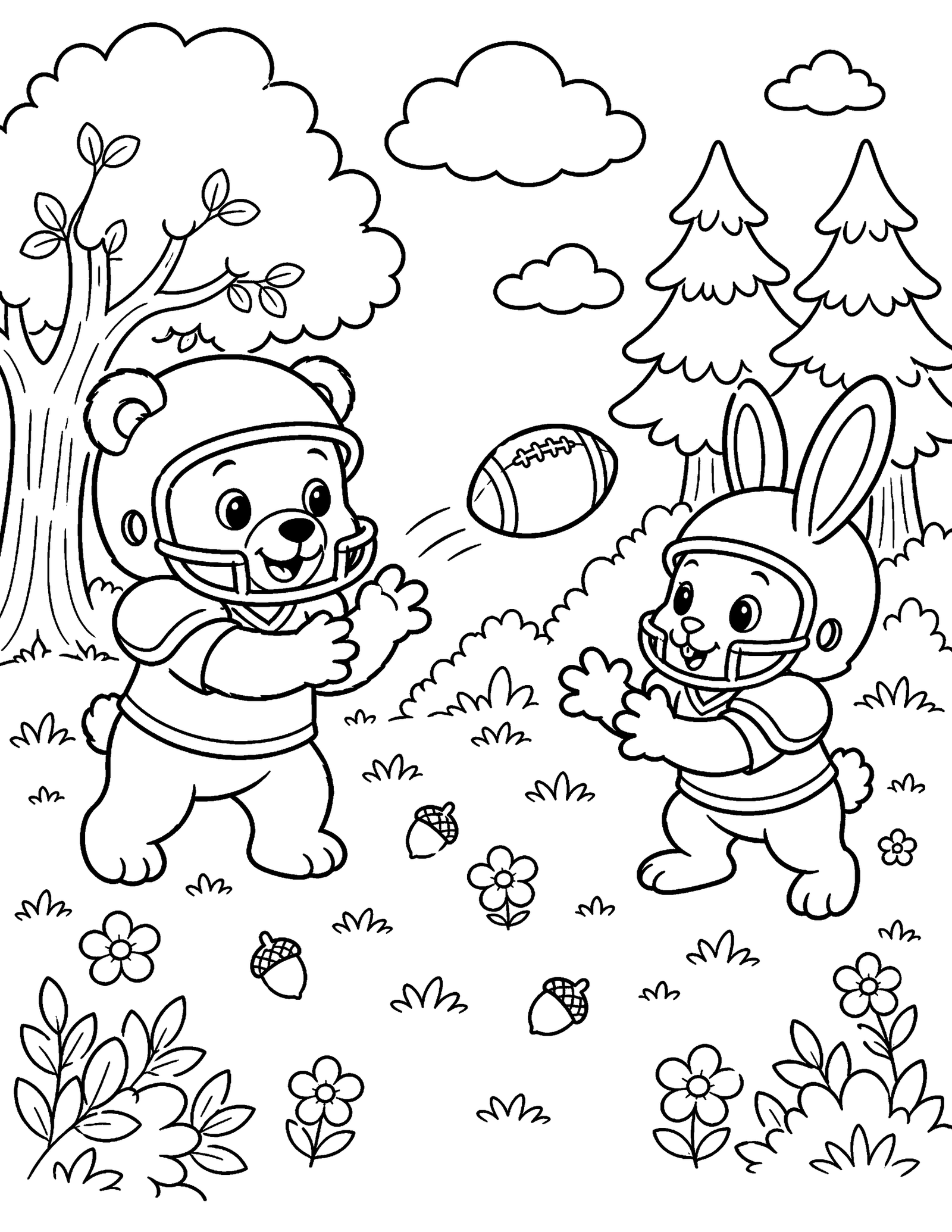
Bear and Rabbit Football Practice
Two original woodland animal friends enjoy a gentle football practice among trees and flowers.
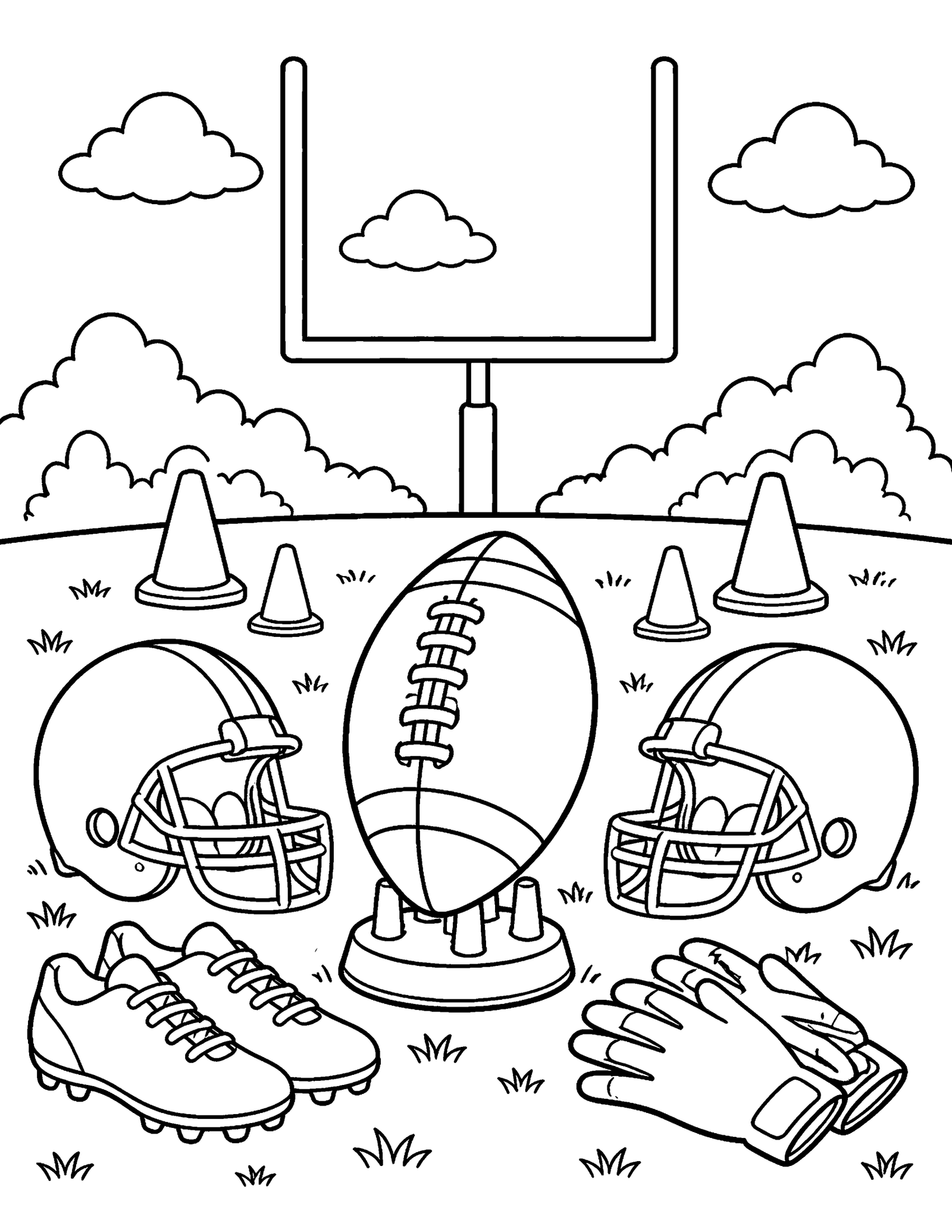
Football Equipment Collection
A neatly arranged collection introduces common football gear in a spacious coloring scene.
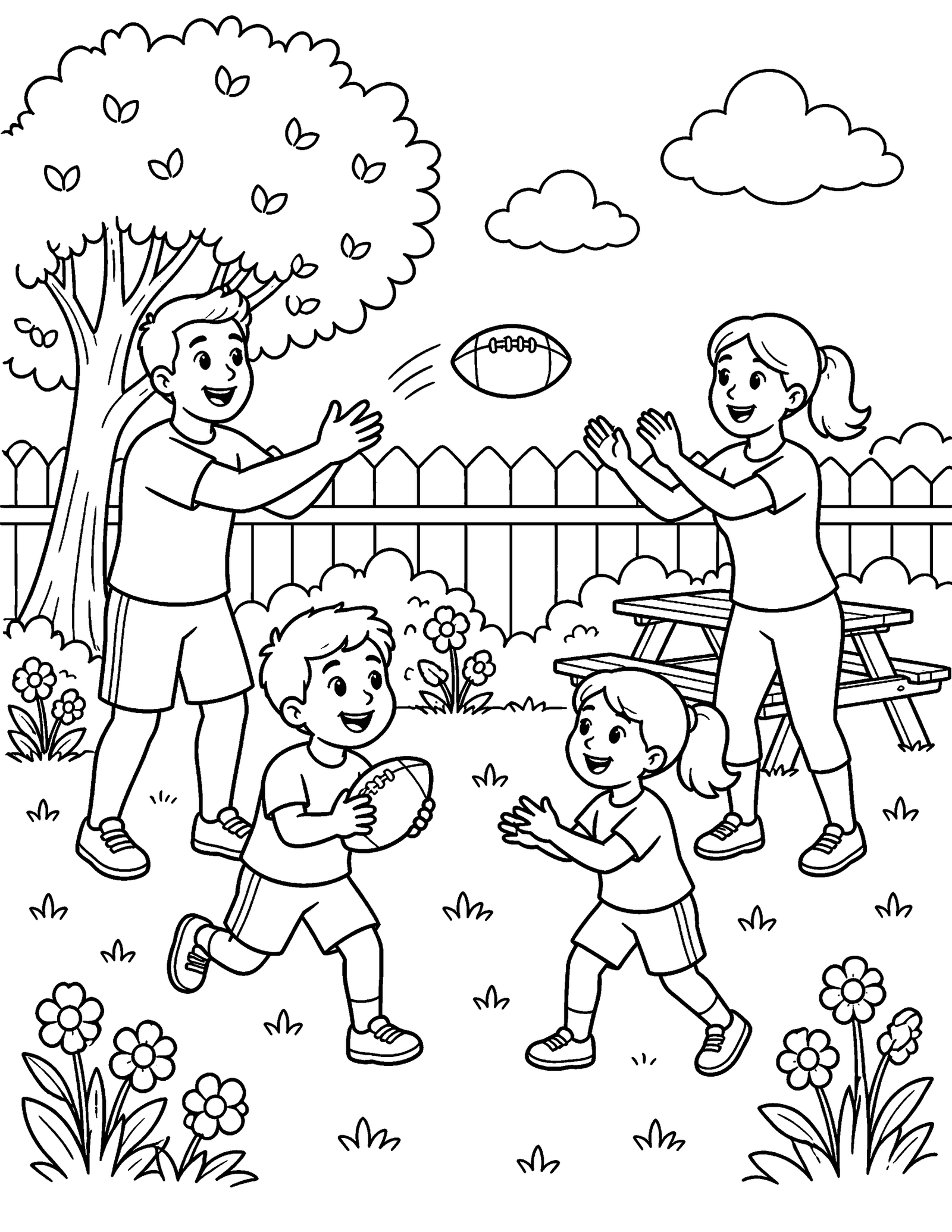
Family Backyard Football Game
A family shares an active and friendly football game beside a tree and picnic table.
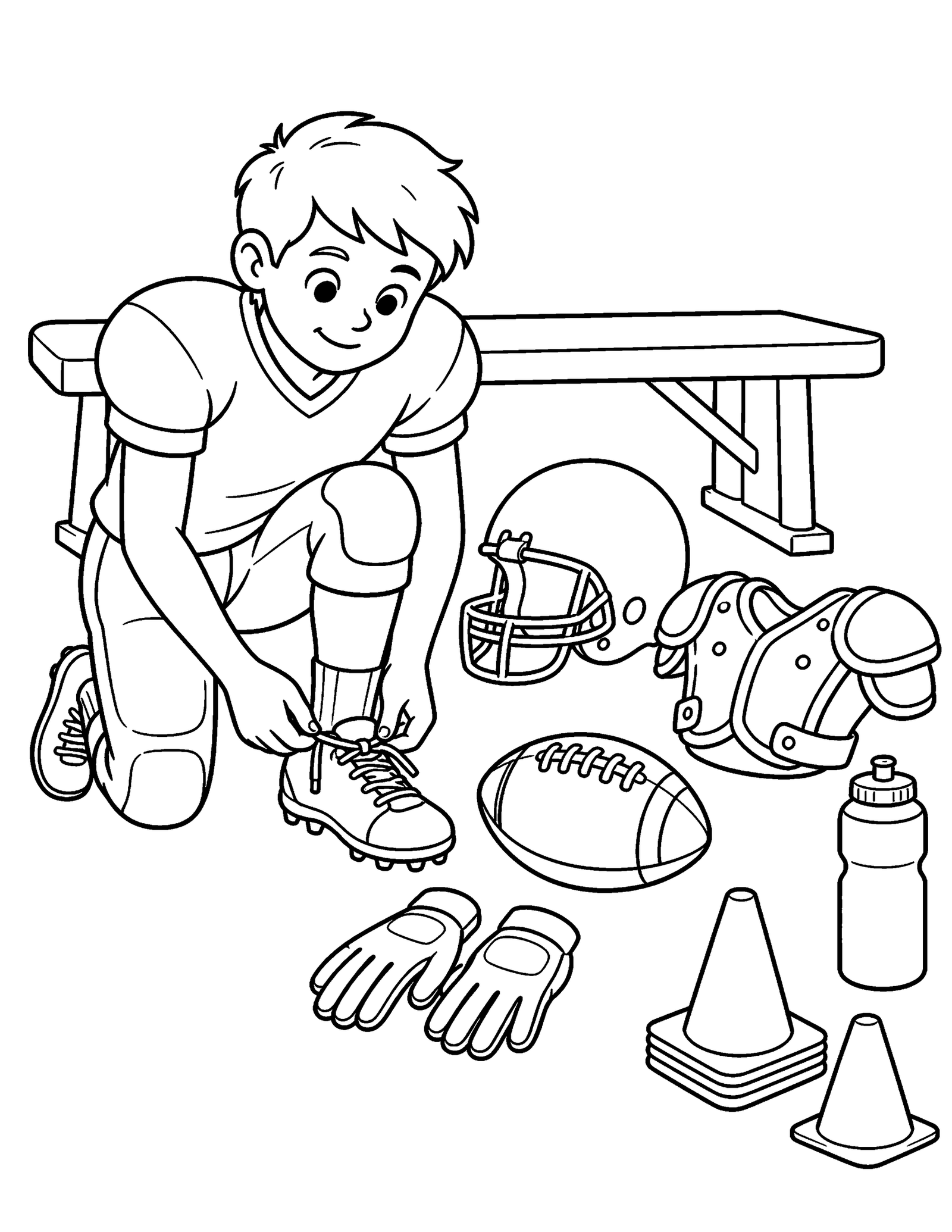
Young Player Preparing Football Gear
A child prepares safely for practice while keeping essential football equipment neatly arranged.
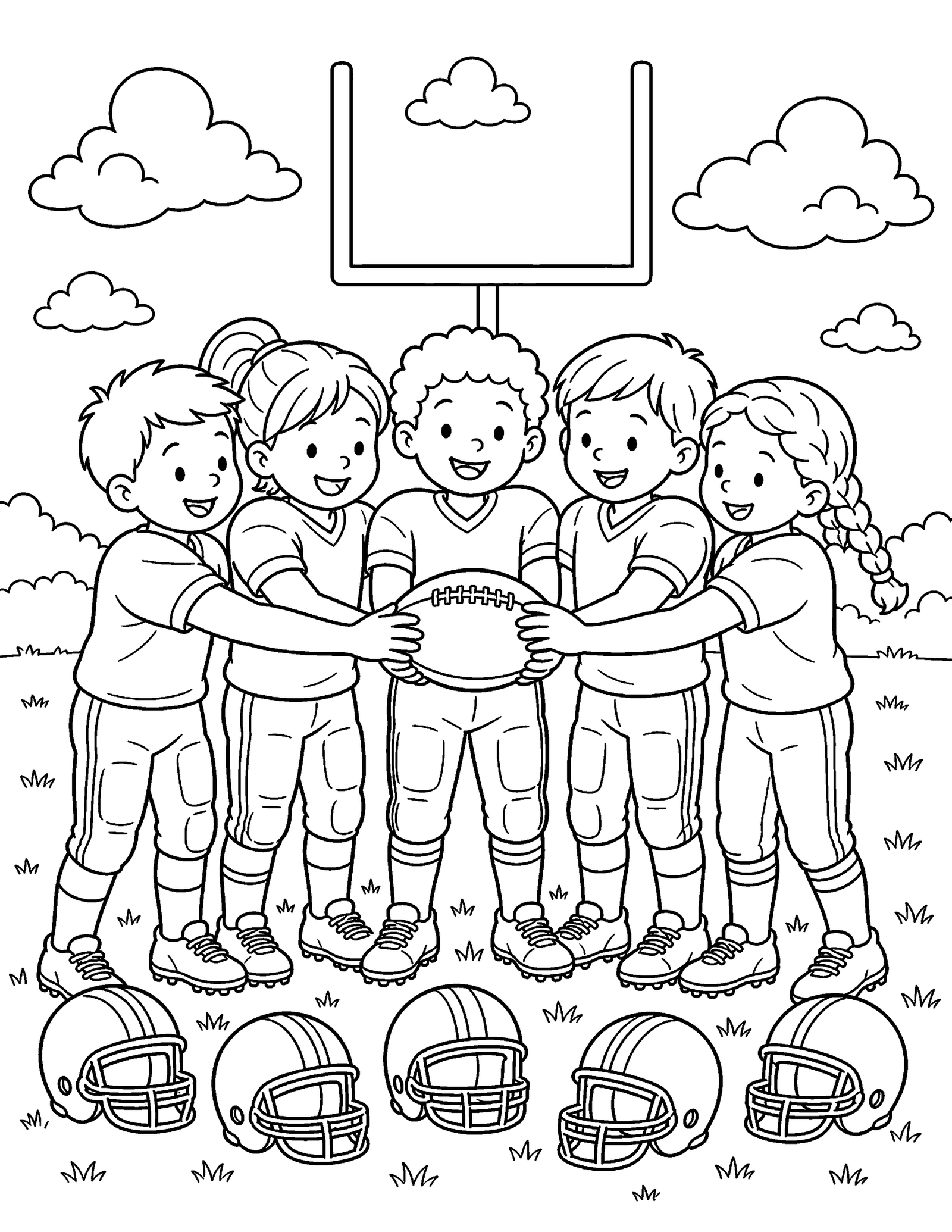
Children’s Football Team Huddle
A diverse group celebrates teamwork at the end of football practice.
Build a Team Color Plan
Before coloring, invite the child to select a home color, an away color, and one accent. Repeating those colors across jerseys, helmets, pennants, and the mascot builds visual consistency. A simple swatch test in the page margin can prevent a dark marker from covering small outlines.
Autumn shades work especially well for outdoor field backgrounds. Rust, gold, deep green, and sky blue can connect this set with our fall coloring pages. For a fictional night game, try a dark blue sky with bright stadium lights while leaving a narrow white glow around the players.
Game-Day Learning and Group Activities
A football page can support more than color practice. Ask children to label or point to the ball, helmet, goal post, jersey, whistle, and field. Older students can write a short play-by-play sentence beneath an action sheet, identify the beginning, middle, and end of the pictured moment, or calculate a pretend score from teacher-provided numbers.
For a small group, assign each child one page and one shared team palette. Display the completed pictures in game order: warm-up, kickoff, pass, catch, defense, score, and celebration. This sequencing task encourages discussion and makes ten separate pages look like one collaborative sports story.
At a family watch party, place several designs with colored pencils on a low table. Guests can color between plays without needing a complicated craft setup. Finished pages may become snack labels, table signs, or covers for a homemade score notebook.
Printing and Coloring Tips for Sports Pages
Open the full-size page, save it if needed, and print at “actual size” or “fit to printable area,” depending on your printer. Standard copy paper works for crayons and colored pencils. If children will use markers, choose heavier paper and place a spare sheet underneath to protect the table.
Start with broad areas such as the field, sky, and uniforms, then move to laces, facial features, and jersey details. Keeping one sharpened dark pencil for outlines can restore definition after lighter colors are added. Children who enjoy extra detail can draw spectators, a scoreboard, weather, or team banners in the open background.
Creative Projects After Coloring
Cut a colored equipment page into a pennant shape and mount it on cardstock for a bedroom or classroom banner. A player portrait can become the front of a sports-themed card, while the team huddle works well as a cover for a cooperation journal. Scan or photograph completed pages before cutting them if the child wants to preserve the original artwork.
Children can also compare this energetic set with other cool coloring pages and explain which lines create movement. Diagonal arms, bent knees, flying flags, and curved motion marks are useful visual clues. That observation can lead into drawing an original football pose on the back of the page.
Make the Pictures Feel Like a Real Game
A believable sports scene does not require advanced drawing. Encourage children to decide where the action takes place before they color: a community field on a sunny afternoon, a school stadium under lights, or a muddy practice ground after rain. That single decision guides the sky, turf, uniform, and crowd colors. It also gives a reason for small choices such as long sleeves, bright field markings, or a towel at a player’s waist.
Jersey numbers can support simple number recognition without placing words inside the original artwork. A parent can write several numbers on separate slips and let the child draw one before coloring a blank jersey area. Older children can create a roster on another sheet, assign positions, and keep the chosen palette consistent. This turns coloring into a light planning activity without making it feel like homework.
To explore foreground and background, color the nearest player with the strongest contrast and keep distant stadium details lighter. A sideline object can overlap part of the field, while small spectators can sit higher on the page. These choices create depth using size and placement rather than difficult realistic shading. They also help a busy action page remain easy to read.
When several pages are complete, ask the child to select a “play of the day” and explain the choice. Was the pose exciting, the color plan successful, or the background especially imaginative? Describing one artistic decision builds reflection and gives adults a more useful conversation prompt than simply asking whether the page was fun.
Adapt the Set for Different Ages
For preschoolers, cover most of the background with a spare sheet and reveal only the main ball, helmet, or player. Elementary-age children can add uniform stripes and field weather, while older children can design a coordinated ten-page team identity. The same printables therefore support short sessions, longer art practice, and mixed-age family tables without requiring everyone to complete the identical level of detail.
More Printable Coloring Pages
- Food Coloring Pages You Need to Try for Endless Fun
- 20 Printable Cool Coloring Pages Collection
- 20 Printable Animal Coloring Pages Collection
Frequently Asked Questions
Which football page is easiest for a young child?
The helmet-and-ball design has the largest enclosed areas and the fewest small details. The goal-post page is another manageable choice because the sky and field can be colored with broad strokes.
Can children invent their own team colors?
Yes. An original two-color uniform plus one accent color helps children make consistent choices across the entire set without copying a real team.
How can a teacher use these pages during a sports unit?
Use the pictures for equipment vocabulary, action verbs, story sequencing, or a shared team-color display. A short caption beneath each page can combine art with writing practice.
What supplies work well for field backgrounds?
Crayons cover large grass and sky areas quickly, while colored pencils are useful for uniforms and faces. Markers can create bold jerseys when printed on heavier paper.
Can finished pages become party decorations?
Yes. Mount selected sheets on colored cardstock, turn equipment pictures into pennants, or use player scenes as table signs for a football-themed gathering.
A Creative Finish
Football coloring pages give children a clear subject, plenty of movement, and many chances to make design decisions. Choose a simple equipment sheet or build a full ten-page game story, then personalize every uniform, field, and celebration for a creative sports session.